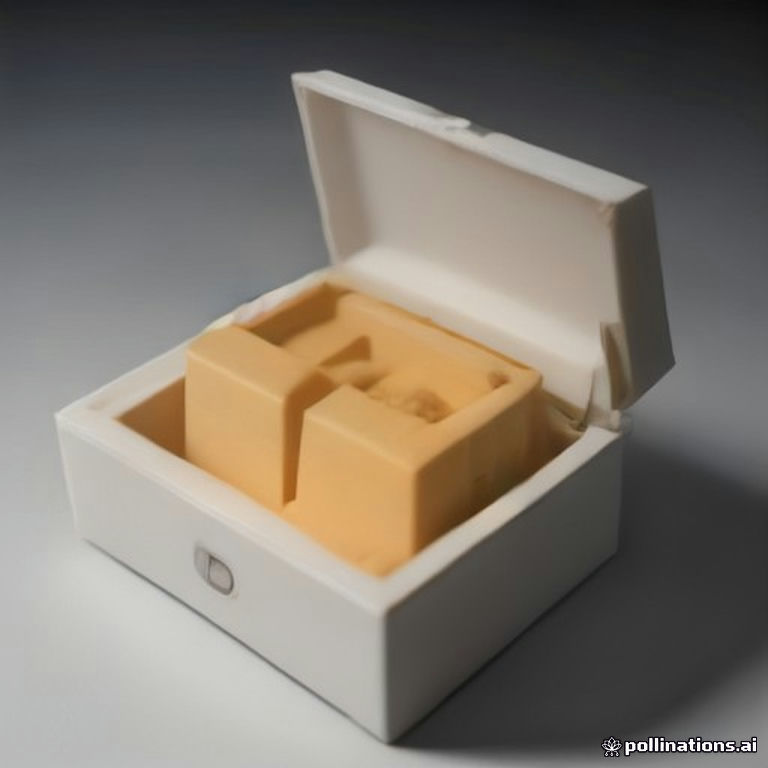
A Bandai-style toy box is a 2-piece rigid setup box (lid + base) built on 1200–1400 GSM grayboard, wrapped in 128–157 GSM soft-touch art paper, with a friction-fit lid, vacuum-release pinholes, and a molded pulp or PETG window insert. The premium unboxing feel is governed by lid clearance of 0.3–0.5 mm, hinge resistance, and ISTA 3A drop compliance—not by expensive tooling.

What exactly is ‘Bandai-style’ toy packaging, and which box architecture defines it?
It is a two-piece rigid setup box with a telescoping lid, a friction-fit base, and a window or insert tray—not a folding carton. The architecture is what buyers are really specifying when they search for a ‘Bandai-style’ prompt: a premium collectible-grade unboxing experience that protects a painted figure and displays it on shelf.
Structurally, the box is a rigid setup (also called a ‘rigid box’ or ‘set-up box’) built from a grayboard core laminated with a printed wrap. The lid telescopes over the base with a controlled friction fit; the base holds a molded pulp or thermoformed PETG insert that cradles the figure. According to TAPPI T411, caliper is measured with a digital micrometer under standard conditioning, and rigid box cores are typically specified at 1000–1400 GSM (roughly 1.2–1.6 mm caliper).
Q: Why do collectible toy brands specify rigid boxes instead of folding cartons?
A: Rigid boxes deliver 3–5× higher compressive resistance and a tactile ‘premium’ feel that folding cartons cannot match. The grayboard core (1200–1400 GSM) resists shelf compression and drop impact, while the soft-touch wrap creates the signature matte hand-feel. For procurement, specify 1200 GSM minimum for boxes over 200 mm tall to avoid lid warp under stacked retail display loads.
What materials and calipers actually go into a Bandai-style rigid box?
The core stack is grayboard + printed wrap + insert, and the exact calipers determine both cost and durability. A typical premium build uses 1200–1400 GSM grayboard, 128–157 GSM art paper wrap with soft-touch lamination, and a molded pulp or PETG insert.
| Component / Layer | Substrate Material | Caliper / Basis Weight (GSM) | Finishing & Surface Treatment | Eco / Compliance Standard |
|---|---|---|---|---|
| Lid & base core | High-density grayboard (recycled fiber) | 1200–1400 GSM (1.4–1.6 mm) | V-groove ±0.2 mm tolerance; PVA glue | FSC Recycled; EU PPWR (2024/1991) fiber recyclability |
| Outer wrap | Art paper / C1S | 128–157 GSM | Soft-touch matte lamination; spot UV | PFAS-free coating; soy-based ink |
| Insert tray | Molded bagasse fiber or PETG | 2.5–3.0 mm wall | Die-cut cavity; ±0.5 mm fit tolerance | ASTM D6400 compostable (bagasse); recyclable PETG |
| Window film (if used) | PET or rPET | 0.3–0.5 mm | Anti-scratch hard coat | EU PPWR recyclability; PFAS-free |
Per ISO 186:2020, paper and board must be conditioned at 23°C ± 1°C and 50% ± 2% RH before caliper and strength testing; out-of-condition samples can read 5–8% thicker and mask warp risk. For procurement, lock the grayboard at 1200 GSM minimum and specify wrap adhesion ≥1.5 N/cm peel strength to survive 30-day ocean transit.
How does the unboxing physics work—what controls the ‘premium’ feel?
Three mechanical variables control the unboxing experience: lid clearance, vacuum release, and hinge/lift resistance. Get these tolerances right and a $2.80 box feels like a $9 box.
Lid clearance: the gap between lid inner wall and base outer wall is typically 0.3–0.5 mm. Below 0.3 mm the lid binds and scuffs the wrap; above 0.5 mm the lid rattles and loses the ‘suction’ feel. Vacuum release: 1–2 pinholes of 0.8–1.2 mm diameter in the base or lid allow air to escape, controlling a 2–3 second drop descent instead of a sudden pop. Hinge resistance: for book-style or magnetic-closure lids, a 0.5–1.0 N·m opening torque reads as ‘quality’ without feeling stiff.
Drop protection must be validated under ISTA 3A General Simulation Performance Testing, which includes a 760 mm free-fall drop sequence and random vibration. A rigid box with a 1200 GSM core and a molded pulp insert typically passes ISTA 3A for a 0.5–1.5 kg figure; adding a 2 mm EVA foam pad under the insert raises the drop height margin by 20–30%.
Q: Why do some rigid boxes ‘pop’ open or feel loose after a few openings?
A: The likely cause is wrap compression and fiber relaxation at the lid/base interface. After 5–10 open/close cycles, the 128 GSM wrap compresses by 0.05–0.1 mm, widening clearance. Specify a 0.4 mm nominal clearance and use a 157 GSM wrap on the base for better dimensional stability; avoid 100 GSM wraps on high-cycle boxes.
Which standards and tests should procurement mandate in the PO?
A rigid toy box PO should cite ISTA 3A for drop/vibration, ASTM D642 for compression, TAPPI T411 for caliper, and EU PPWR (2024/1991) for recyclability. These four clauses cover 90% of transit and compliance risk.
ISTA 3A covers the full parcel journey: preconditioning, random vibration, and drop sequences. ASTM D642 measures compressive resistance—for a 200 mm tall rigid box, a typical target is ≥350 N to survive 3-high retail stacking. TAPPI T411 governs caliper measurement; a ±0.15 mm variance is the practical manufacturing tolerance. Under EU PPWR (2024/1991), fiber-based packaging must be designed for recyclability, and PFAS-free coatings are mandatory for paper wraps.
For procurement teams, add a ‘Governing Standard / Test Protocol’ column to your spec sheet: lid clearance → in-house gauge (0.3–0.5 mm); drop → ISTA 3A; compression → ASTM D642; caliper → TAPPI T411; recyclability → EU PPWR. This turns a subjective ‘premium feel’ into a pass/fail PO clause.
How can scaling brands replicate 80% of this experience at 40–60% lower cost?
Downgrade the core, not the wrap: use 1000 GSM grayboard instead of 1400 GSM, keep a 128 GSM soft-touch wrap, and replace the PETG insert with molded bagasse. This preserves the tactile and visual cues—the two things buyers actually perceive—while cutting board cost by 25–30% and insert cost by 40–50%.
The cost-down levers are concrete: (1) core board 1400 → 1000 GSM saves ~25–30% on the largest BOM line; (2) PETG insert → molded bagasse saves 40–50% and improves recyclability; (3) spot UV reduced to one panel saves 8–12% on finishing; (4) standard 0.4 mm lid clearance eliminates hand-fitting labor. Combined, these deliver 40–60% unit-cost reduction while retaining the soft-touch wrap and friction-fit lid that define the premium feel.
Validate before tooling: TadaPack’s zero-tooling CAD sampling produces a functional white-box prototype in 3–5 days, so you can test lid clearance, drop performance, and insert fit before committing to a 1,000-unit MOQ. Use the free calculators at tadapack.com/tools to model board caliper, compression targets, and freight cube before the PO.
What are the most common manufacturing defects, and how do you prevent them?
The two highest-frequency rigid box defects are grayboard warp and wrap edge-lifting, both driven by moisture and adhesive control. Catch them at the floor level with four checks.
Grayboard warp occurs when the board absorbs moisture unevenly; at 80% RH, a 1400 GSM board can bow 1.5–2.5 mm across a 200 mm span. Prevention: condition board at 23°C/50% RH per ISO 186:2020 for 24 hours before lamination, and store wrapped sheets flat under 5 kg/m² load. Wrap edge-lifting happens when PVA adhesive is under-applied or the wrap is over-stretched; target ≥1.5 N/cm peel strength and a 45-durometer creasing matrix for clean V-grooves.
- Step 1 — Incoming board check: measure caliper with a digital micrometer per TAPPI T411; reject lots outside ±0.15 mm.
- Step 2 — Conditioning: hold board and wrap at 23°C ± 1°C, 50% ± 2% RH for 24 hours per ISO 186:2020.
- Step 3 — Lamination & V-groove: apply PVA at 18–22 g/m²; cut V-grooves to ±0.2 mm depth tolerance with a 45-durometer matrix.
- Step 4 — Fit & drop validation: verify lid clearance 0.3–0.5 mm with a go/no-go gauge; run ISTA 3A drop sequence on 3 samples per SKU.
For ocean freight, add a desiccant pack (5–10 g per box) and specify a moisture-barrier polybag inside the master carton; container sweat across Pacific routes can push internal RH above 85% and trigger edge-lifting within 30 days.
Frequently Asked Questions
Q: What GSM grayboard is used in Bandai-style toy boxes?
A: Typically 1200–1400 GSM high-density grayboard, giving 1.4–1.6 mm caliper. For cost-down, 1000 GSM retains 80% of the stiffness at 25–30% lower board cost.
Q: What lid clearance delivers the best unboxing feel?
A: 0.3–0.5 mm nominal clearance with 1–2 vacuum-release pinholes of 0.8–1.2 mm diameter, producing a controlled 2–3 second drop descent.
Q: Which test standard should be in the PO for drop protection?
A: ISTA 3A General Simulation Performance Testing, supplemented by ASTM D642 compression and TAPPI T411 caliper checks.
Recommended Engineering Reading
[TOOLS] Featured Engineering & Calculation Tools
Explore 70+ Packaging Tools ➔CBM Volume & Freight Dim-Weight Calculator
Calculate cubic meters & dimensional weight to minimize freight costs and avoid FBA size tier penalties.Mailer Box Area & Dieline Size Calculator
Instant flat dieline dimensions, material consumption, and sheet nesting for custom D2C mailer boxes.
