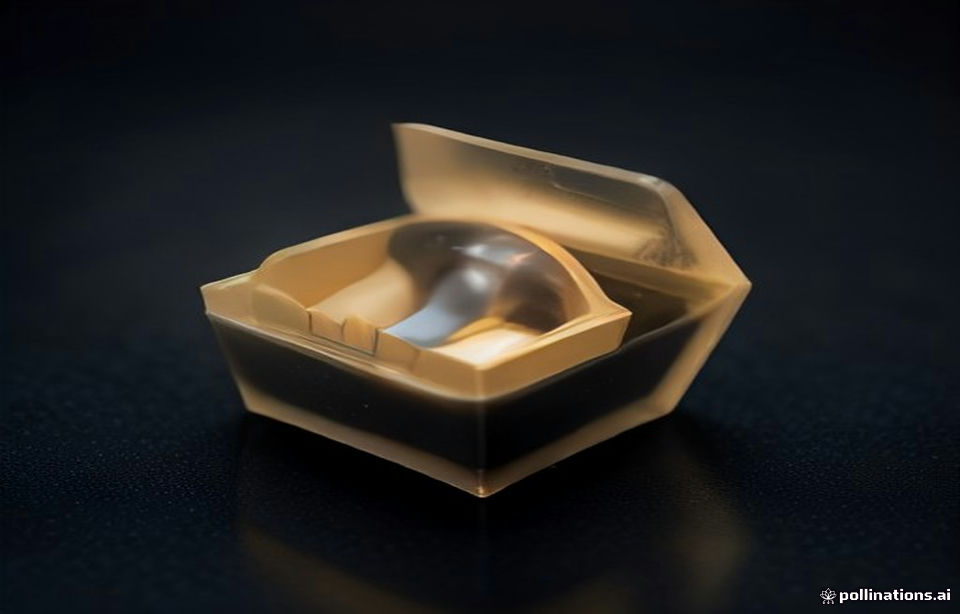
Executive Teardown Summary: The Crybaby (Pop Mart) packaging system is a 1-piece tuck-end folding carton (0.45-0.55mm caliper, 250-350gsm CCNB/FBB core) with full-bleed 4-color offset print, matte/spot-gloss lamination, and a vacuum-formed PET blister insert that locks the collectible figure and blind-box secrecy. Tab-lock closures replace glue. Core compliance drivers: EU PPWR (2024/1991) recyclability, ISTA 3A transit validation, and low-flake mono-material construction. The architecture is highly replicable at SME cost points.
1. Structural Architecture: Why the Blind-Box Carton Works
The global designer-toy blind-box economy runs on packaging physics as much as on IP hype, and 2026 blind-box SKUs now move through the same Amazon FBA and Port of Rotterdam corridors as any industrial B2B shipment. Stripped of the artwork, the Crybaby carton is a textbook reverse-tuck or straight-tuck-end folding carton: a one-piece die-cut substrate wrapped around a vacuum-formed cavity tray, closed by friction-fit tuck flaps and a tamper-evident sticker that doubles as the secrecy seal. The engineering objective is threefold: conceal contents until purchase (blind-box integrity), survive multi-drop e-commerce transit, and present a shelf face rigid enough to resist pallet compression in retail secondary packs.
Substrate selection is the load-bearing decision. Pop Mart-class cartons typically run 300-350gsm coated recycled board (CCNB) or 250-300gsm folding boxboard (FBB), laminated to 120gsm printed art paper on premium series. At this caliper, board stiffness (bending resistance per ISO 2493) is what prevents the “soft squeeze” failure that leaks figure identity through tactile probing at shelf.
2. Material & Engineering Spec Sheet
| Component / Layer | Substrate Material | Caliper / Basis Weight (GSM) | Finishing & Surface Treatment | Eco / Compliance Standard | Governing Standard / Test Protocol |
|---|---|---|---|---|---|
| Carton body | CCNB or FBB folding boxboard | 0.45-0.55mm caliper / 300-350gsm | 4-color offset, matte lamination with spot UV | Recyclable mono-board, EU PPWR (2024/1991) design-for-recycling | ISO 2493 bending resistance / TAPPI T411 |
| Premium wrap layer | Printed art paper over grayboard (limited series) | 120gsm wrap on 1.0-1.5mm grayboard | Soft-touch lamination, foil stamping | Soy/vegetable inks, low-VOC adhesives | ISO 186:2020 sampling & conditioning |
| Inner cavity tray | Vacuum-formed PET or recycled-PET (rPET) | 0.30-0.50mm sheet | Cryogenic-crease hinges, flocked optional | rPET content per EU PPWR recycled-content targets; PET alternative for PFAS-free policy | ASTM D642 compressive resistance |
| Closure system | Die-cut tuck tabs + tamper seal sticker | Same substrate as body | Crease matrix 0.5mm, tab friction fit ±0.15mm | Zero-plastic closure (mono-material) | ASTM D1974 closure integrity |
| Master shipper | Corrugated C-flute, ECT-32 | ~4.0mm flute caliper | Flexo one-color | Curbside recyclable, FTC Green Guides 16 CFR Part 260 claims | ECT per TAPPI T811; ISTA 3A sequence |
All values are typical engineering design ranges for manufacturing reference, not proprietary brand test records. Conditioning of all board substrates should follow ISO 186:2020 (23°C ± 1°C, 50% ± 2% RH) before any compressive or bending verification.
Q: If the inner figure is fully cradled in a blister tray, why is an ECT-32 shipper still mandatory — isn’t the carton enough?
A: Direct answer: the ECT-32 C-flute master shipper is the component that actually absorbs stacking and vibration loads; the folding carton at 0.45-0.55mm caliper has negligible column compression capacity on its own. Mechanically, blind-box cases ship 12-24 units per master, creating 25-40kg dead stacks that concentrate load on the bottom-corner carton flaps — exactly where ISTA 3A drop sequences (10 drops, worst-case orientation) initiate flap popping. Procurement recommendation: validate the master case to ASTM D642 compression with a safety factor of 4-5x expected warehouse stack height, and never rely on the primary carton for stacking load paths.
3. Unboxing Mechanics & Kinematics
The signature Crybaby unboxing moment is a controlled-release sequence: the outer tuck flap opens with calibrated hinge resistance, the tamper sticker breaks audibly, and the figure reveals through a staged lift from the blister cavity. Engineering controls behind this:
- Tuck-tab friction window: Tab engagement depth of 4-6mm with ±0.15mm die-cut registration produces an opening force of roughly 8-15N — high enough for secrecy, low enough to avoid board fiber tear. Per ASTM D1974-style closure checks, tabs should survive a 3-psi internal push without popping.
- Blister cavity retention: Vacuum-formed trays use 0.3-0.5mm draw depth with 2-3mm lip undercuts; retention force targets 5-10N so the figure cannot rattle under ISTA 3A random vibration (ASTM D4728-derived PSD profile) yet releases smoothly by hand.
- Transit survival: Under ISTA 3A General Simulation (26 drops + vibration for parcelized e-commerce), the system pass-criteria are: no carton delamination, no tab failure, no figure scuffing. The blister tray is the primary shock isolator; board crushing must stay under 5% dimensional deflection.
- Stack loading: Per ASTM D642, the C-flute master should achieve a BCT (box compression strength) comfortably above the McKee-formula estimate for its ECT rating; ECT-32 typically supports 12-16kg per unit in a standard 40x30x30cm master geometry — a hypothetical worked example, always verify against your own stack height.
4. SME Replicability & Cost-Down Roadmap
An SME can capture 80%+ of the premium unboxing effect at 40-60% lower unit cost by substituting intelligently. Follow this 4-step sourcing SOP:
- Step 1 — Substrate downshift: Replace FBB/premium wrap with 300gsm CCNB + matte lamination. You lose ~10% board whiteness but retain identical caliper feel; unit savings of 25-35% on board spend. Verify Cobb 60 ≤35 g/m² for ocean transit.
- Step 2 — Tray material swap: Replace PVC blister with recycled-PET (0.30mm) or molded bagasse pulp tray (2.0-2.5mm wall). Molded pulp with ±0.5mm cavity tolerance satisfies rattle-retention specs and eliminates plastic entirely — aligned with EU PPWR (2024/1991) recyclability mandates.
- Step 3 — Zero-tooling validation: Order CAD-based structural samples (no steel rule dies) before committing to tooling; TadaPack’s short-run prototyping delivers fit-check samples in days, letting you iterate tab depth and cavity geometry without die charges.
- Step 4 — Transit qualification: Run ISTA 3A on 6 random samples from the pilot lot, conditioned at 23°C/50% RH per ISO 186:2020. Pass/fail against delamination, tab pop, and cavity-rattle criteria before release of the production PO.
For freight cost control, note that Amazon FBA dimensional-weight pricing (divisor 139 in US market) penalizes oversized masters; a 10% reduction in master-case footprint frequently offsets the entire secondary-pack cost delta. Use TadaPack’s free calculators at https://tadapack.com/tools to model dimensional weight, BCT estimates, and MOQ-vs-unit-cost curves before locking carton dimensions.
5. Defect Diagnostics & Logistics Landing Matrix
Two defects dominate floor reports for this carton class:
- Flap popping in transit: Root cause is tab engagement under 3mm or crease-matrix hardness mismatch (above ~50 durometer creasing rule burns the score, reducing flap springback). Corrective action: tighten die registration to ±0.15mm and re-cut crease channels 0.3mm wider than board caliper.
- Wrap-layer delamination (ocean containers): 30-day Pacific or Atlantic crossings with 85%+ RH container sweat drive adhesive failure on laminated art paper. Corrective action: specify wet-strength adhesive and a moisture-barrier master liner; derate pallet stacking load by 20-25% for coastal-humidity DCs versus dry inland warehouses (a 0.80 stacking derating factor is a common engineering assumption — validate per your lane).
Landing points: inbound to the California Inland Empire (ONT8/LGB3 FBA nodes) faces chronic summer humidity plus long dwell in unconditioned trailers — prioritize Cobb control. Texas DFW triangle is drier but experiences extreme thermal cycling that softens hot-melt. Rotterdam multimodal rail/road requires PPWR-conformant recyclability declarations on the packing list for smooth customs and retailer onboarding.
Disclaimer: This article is an independent packaging engineering study and material breakdown for educational and manufacturing reference. TadaPack is not affiliated with or endorsed by the referenced brand. All numerical parameters are typical engineering design ranges or hypothetical worked examples, not proprietary brand test data.
Recommended Engineering Reading
[TOOLS] Featured Engineering & Calculation Tools
Explore 70+ Packaging Tools ➔CBM Volume & Freight Dim-Weight Calculator
Calculate cubic meters & dimensional weight to minimize freight costs and avoid FBA size tier penalties.Mailer Box Area & Dieline Size Calculator
Instant flat dieline dimensions, material consumption, and sheet nesting for custom D2C mailer boxes.
