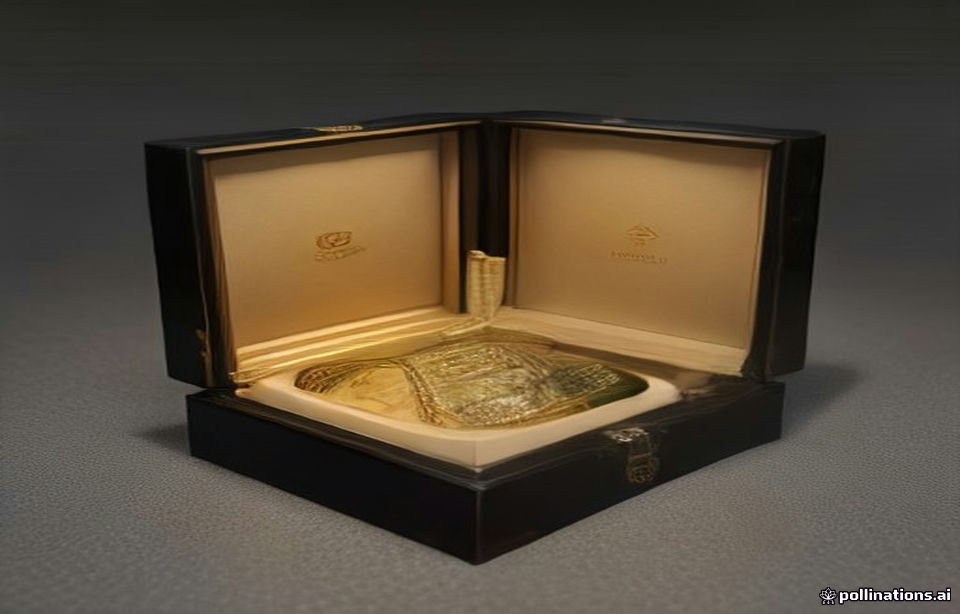
For most CBD e-commerce SKUs, ECT-32 single-wall corrugated mailer boxes with child-resistant pulp inserts deliver the lowest landed cost per unit while meeting ASTM D642 compressive resistance and ISTA 3A parcel-network requirements. Rigid 1200gsm grayboard constructions justify a 3-5x unit-cost premium only for premium tincture lines and dispensary shelf presence, provided recyclability is engineered per EU PPWR (2024/1991) and FTC Green Guides (16 CFR Part 260) substantiation rules.
- ECT-32 corrugated mailers (E-flute or B-flute, ~1.5mm and ~3.0mm caliper respectively) are the default DTC CBD workhorse; they must sustain a hypothetical BCT of 320N+ for 3-unit master stacks in parcel networks under ISTA 3A drop sequences.
- Rigid grayboard boxes (1200-1800gsm wrapped in 157gsm art paper) deliver magnetic-closure luxury cues but raise unit cost from roughly $0.35-0.60 (hypothetical wholesale benchmark) to $1.40-2.80 at 5,000-unit MOQs.
- Child-resistant closure requirements under the US Poison Prevention Packaging Act (PPPA, 16 CFR 1700) typically drive the insert decision — CR pulp inserts in corrugated often outperform CR rigid shells on cost and PPWR recyclability scoring.
- EU PPWR (2024/1991) recyclability grading and PFAS-free grease-barrier mandates make uncoated kraft corrugated the safest EU-market substrate; avoid laminated rigid wraps with mixed-material adhesives unless disassembly is engineered in.
- Validate every construction with ASTM D642 compression testing and Cobb 60 water absorption below 30 g/m² before committing to full-run tooling.
The Verdict: Corrugated Wins on Cost, Rigid Wins on Perception
As CBD category ad costs compressed and retail shelf competition intensified through 2026, packaging spend has split into two engineered camps: high-volume DTC brands standardizing on corrugated mailers, and premium tincture/gummy lines using rigid boxes as a margin-justifying retention asset. The engineering answer is not aesthetic preference — it is a material-physics and cost-per-protected-unit decision. A 30ml tincture bottle in 300gsm glass weighs ~180g; an ECT-32 E-flute mailer with a molded pulp insert handles this reliably in single-parcel networks per ISTA 3A General Simulation protocols. The same bottle in a rigid 1200gsm grayboard shell buys shelf presence but requires a separate corrugated shipper anyway for parcel transit, effectively doubling board mass and dimensional-weight exposure under Amazon FBA and carrier DIM rules.
The decision matrix below compares the two dominant constructions across the seven dimensions procurement directors actually score RFPs on. Where a governing standard applies, it is named explicitly.
Dimension-by-Dimension: Rigid Grayboard vs Corrugated Mailer
| Criterion | Rigid Grayboard Box | Corrugated Mailer (E/B-Flute) | Governing Standard / Test Protocol |
|---|---|---|---|
| Board construction | 1200-1800gsm grayboard + 157gsm art/kraft wrap | ECT-32 single-wall E-flute (~1.5mm) or B-flute (~3.0mm); ECT-44 for master cartons | TAPPI T411 (caliper); TAPPI T811 (ECT) |
| Compressive resistance | Decoration-driven; shell BCT typically exceeds load needs for light CBD SKUs | ECT-32 corrugated supports hypothetical 3-stack column loads in parcel distribution per McKee-derived BCT estimates | ASTM D642; BCT per ASTM D642 fixtures |
| Transit qualification | Requires outer shipper; inner box tested as secondary | Qualifies directly as primary parcel packaging | ISTA 3A; distribution cycle per ASTM D4169 DC-13 |
| Moisture sensitivity | Wrap delamination risk at elevated humidity; specify Cobb 60 < 30 g/m² liners | Flute softening under container sweat; high-humidity stacks need derating | TAPPI T441 (Cobb 60); ISO 2247 (conditioned vibration) |
| Recyclability (EU market) | Mixed-material wrap/adhesive laminates can fail PPWR recyclability grading unless mono-material design used | Uncoated kraft corrugated scores highest; PFAS-free barrier mandated | EU PPWR (2024/1991); EU Directive 94/62/EC Annex II |
| Unit cost (hypothetical, 5,000 units) | $1.40-2.80 including magnet closure and wrap | $0.35-0.60 litho-laminated or flexo-printed | — |
| Compliance-critical feature | CR rigid shells or paired CR jars drive cost upward | CR pulp inserts integrate at low marginal cost | PPPA 16 CFR 1700.20; ASTM D3475 CR classification |
【💡 Packaging Engineer’s Quick Q&A】
Q: If the McKee formula derives BCT from ECT, why do enterprise CBD retail POs still mandate ASTM D642 box compression testing on finished boxes?
A: Direct answer — because McKee is a predictive model with ±10-20% variance against real box geometry, ventilation holes, and CR insert cut-outs. Underlying reason — CBD mailers routinely carry die-cut CR windows and tear strips that locally reduce compression strength far below the unperforated prediction; ASTM D642 measures the actual failed geometry. Procurement recommendation — use McKee for initial board selection, then certify the finished CAD design with ASTM D642 at the 3-stack worst-case load before PPAP-style approval of the PO.
Pros and Cons at a Glance
| Construction | Pros | Cons |
|---|---|---|
| Rigid grayboard | Premium unboxing retention cue; high perceived value supports $60+ tincture sets; low-volume structural wrap does not flute-crush under display loads | 3-5x unit cost; still needs outer shipper; mixed-material laminates complicate EU PPWR recyclability scoring; grayboard warping risk at humidity > 65% RH |
| Corrugated mailer | Lowest landed cost; direct ISTA 3A qualification; mono-material kerbside recyclable; CR pulp inserts cheap to integrate; flat-pack freight density cuts inbound freight 40-60% vs pre-assembled rigid | Limited shelf-luxury perception; E-flute print surface needs litho-lamination for photo-grade graphics; B-flute caliper adds dimensional-weight penalty on small SKUs |
Where Each Option Fits in a 2026 CBD Portfolio
Corrugated mailer (default): DTC subscription gummies, single-tincture e-commerce orders, and FBA inbound SKUs where dimensional-weight penalties dominate. Specify ECT-32 E-flute for retail-weight units and ECT-44 BC-flute master cartons (per ASTM D4169 distribution cycles) for consolidated case-pick lanes into California Inland Empire (FBA ONT8/LGB3) and Texas DFW distribution triangles.
Rigid grayboard (selective): Holiday gift sets, dispensary shelf SKUs above $50 retail, and influencer-seeding kits where unboxing retention is a measurable revenue lever. Engineer the rigid shell as a presentation layer only, with a certified corrugated shipper handling transit — never ask the rigid box to survive parcel networks unprotected.
Hybrid (growing segment): Litho-laminated E-flute ‘soft-touch rigid’ mailers, where a printed 350gsm CCNB top liner laminated to corrugated approximates rigid aesthetics at ~60% of rigid cost while preserving mono-material recyclability. For EU-bound SKUs, confirm no PFAS-containing grease barriers are specified, per PPWR-aligned restrictions and FTC Green Guides substantiation on any compostability claims.
How to Decide: A Four-Step Engineering SOP
Before releasing a PO, run this verification sequence — it applies to either construction and takes under two weeks with a competent converter.
- Step 1 — Define load case and compliance stack: Record product mass, SKU count per carton, and channel (parcel vs pallet). For parcel CBD, target a design BCT with ≥2.0x safety factor over the hypothetical 3-stack column load; for CR SKUs, lock the PPPA 16 CFR 1700.20 closure mechanism before structural design freezes.
- Step 2 — Select board and caliper: ECT-32 E-flute (~1.5mm) for lightweight retail units; ECT-44 for master cartons; 1200gsm grayboard minimum for rigid shells. Verify Cobb 60 ≤ 30 g/m² on any exposed liner and caliper variance within ±0.15mm per TAPPI T411 spot checks.
- Step 3 — Prototype and test: Cut short-run prototypes, condition per ASTM D685 (23°C, 50% RH), then run ASTM D642 compression plus ISTA 3A parcel sequences on the worst-case geometry (including die-cut CR apertures).
- Step 4 — Validate cost and compliance before tooling: Model landed cost including dimensional-weight freight and PPWR recyclability grading for EU lanes; run scenarios through TadaPack’s free calculation tools (https://tadapack.com/tools) before committing long-run tooling spend.
Common defect — flap popping on corrugated mailers: Root cause is usually insufficient creasing matrix depth or low-tack adhesive on litho-lam glue laps. Corrective action: specify a 45-durometer creasing matrix matched to the E-flute caliper and verify glue-lap width ≥ 12mm; re-test with ISTA 3A drop orientation 8 (flap-impact face).
Common defect — grayboard wrap delamination after ocean transit: Container-sweat humidity cycling above 65% RH degrades cold-glue bonds on mixed wraps. Corrective action: upgrade to hot-melt or water-based adhesives rated for tropical service, source grayboard with Cobb 60 ≤ 30 g/m² wrap liners, and add a 0.04mm VCI or poly overwrap for 30-day Pacific/Atlantic ocean lanes.
Whether you land on rigid or corrugated, the cheapest error is committing full-run tooling to an unvalidated design. TadaPack’s structural prototyping service produces testable short-run samples in days, and the calculators at https://tadapack.com/tools let you model BCT safety factors, dimensional-weight freight, and per-unit cost trade-offs before the PO is signed.
Recommended Engineering Reading
[TOOLS] Featured Engineering & Calculation Tools
Explore 70+ Packaging Tools ➔CBM Volume & Freight Dim-Weight Calculator
Calculate cubic meters & dimensional weight to minimize freight costs and avoid FBA size tier penalties.Mailer Box Area & Dieline Size Calculator
Instant flat dieline dimensions, material consumption, and sheet nesting for custom D2C mailer boxes.
