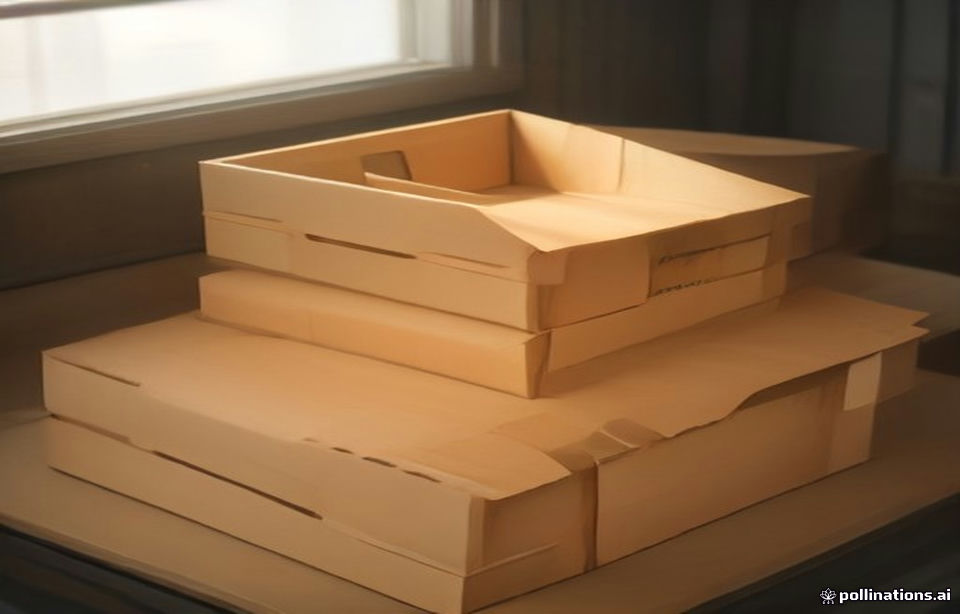
For DTC parcel shipping, an E-flute or 200T/B-flute corrugated mailer rated ECT-32 (per TAPPI T810/ASTM D6416 edge crush protocol) is the default structural spec, escalating to ECT-44 or BC double-wall when stacked pallet loads exceed ~18 kg per unit column. Specify 32 ECT with Cobb 60 < 35 g/m² and verify via ISTA 3A drop sequences before any production PO.
Subscription-box penetration and carrier dimensional-weight repricing have pushed mailer boxes from a branding afterthought to a freight-cost-critical structural component. This guide stays entirely at the engineering layer: flute physics, compression math, regulatory compliance, and landed-cost teardown for procurement teams specifying custom ecommerce mailer boxes in 2026.
1. Structural Mechanics: Flute Architecture & ECT Selection
Mailer boxes (RSC-adjacent one-piece trays with tuck or auto-bottom closures) derive their stacking performance from flute architecture, not liner weight alone. E-flute (~1.5 mm caliper) suits cosmetics, apparel, and electronics under 4 kg; B-flute (~3.0 mm) is the workhorse for 4–12 kg DTC parcels; BC double-wall (~7.0 mm) enters only for glassware, spirits, or multi-unit club packs. Edge Crush Test (ECT) values—not Mullen burst—are the modern carrier and Walmart/Amazon-compliant strength metric because they correlate directly to columnar stacking load.
Board conversion: a 125/125 gsm kraft liner with E-flute medium typically tests at ECT-29 to ECT-32; doubling to 175/175 gsm or adding a B-flute layer pushes ECT-44 to ECT-48. Per the McKee formula (simplified: BCT ≈ 5.87 × ECT × √(caliper × perimeter)), an ECT-32 E-flute box with 600 mm perimeter and 1.5 mm caliper yields a hypothetical worked example Box Compression Test (BCT) of roughly 5.87 × 32 × √(0.9) ≈ 178 N — adequate for single-parcel handling but insufficient for 5-high pallet stacks without double-wall or higher-ECT board.
2. Compliance & Test Protocols for US/EU Markets
Two regulatory workstreams govern 2026 procurement. First, in the EU, Directive 94/62/EC Annex II heavy-metal limits plus the EU Packaging and Packaging Waste Regulation (PPWR, Regulation (EU) 2025/40, phased obligations running through 2026–2030) mandate design-for-recycling grades — meaning mailers must use recyclable, PFAS-free barrier coatings rather than PE-laminated liners to avoid ‘recyclability grade’ downgrades. Second, in the US, per FTC Green Guides (16 CFR Part 260) substantiation rules, any ‘100% recyclable’ claim on corrugated mailers must be backed by available municipal recycling stream data.
On performance testing: Under ISTA 3A General Simulation Performance Testing protocol, parcel-grade mailers must pass standardized drop shock sequences (up to ~820 mm drop height for ≤ 9 kg parcels), random vibration, and low-pressure simulation. In strict accordance with ASTM D642 (Standard Test Method for Determining Compressive Resistance of Shipping Containers), BCT validation is run on finished boxes, not board coupons. Compliant with ISO 186:2020 paper conditioning specifications (23°C ± 1°C, 50% ± 2% RH), all comparative testing should be climate-controlled before quoting values.
Q: If McKee derives BCT from ECT, why do enterprise POs still mandate Mullen burst testing?
A: Direct answer: legacy carrier classifications (UPS/FedEx 200# burst grade) remain contractually embedded in many retailer routing guides. Mechanical reason: Mullen (TAPPI T810) measures hydrostatic liner burst, which captures puncture resistance from sharp parcel-sort impacts that ECT cannot see. Procurement recommendation: dual-spec the mailer — ECT-32 minimum for stacking plus 200 lb/in² burst equivalent (≈ 1379 kPa) if the routing guide demands it; most modern DTC programs can drop burst entirely by citing ISTA 3A pass data.
3. Comparative Spec Matrix: Mailer Board Options
| Parameter | E-Flute Kraft (125/125) | B-Flute Kraft (175/175) | BC Double-Wall (200/175/200) |
|---|---|---|---|
| Caliper (mm) | 1.5 ± 0.15 | 3.0 ± 0.15 | 7.0 ± 0.3 |
| Typical ECT (kN/m) | ECT-29/32 | ECT-40/44 | ECT-48/51 |
| Max payload (single parcel) | ≤ 4 kg | ≤ 12 kg | ≤ 25 kg |
| Hypothetical BCT (McKee, 600 mm perimeter) | ~1.8 kN | ~3.4 kN | ~6.1 kN |
| Transit validation protocol | ISTA 3A / ASTM D4169 DC-13 | ISTA 3A / ASTM D4169 DC-13 | ASTM D4169 DC-12 w/ ASTM D642 BCT |
| Recyclability (EU PPWR grade) | A (fiber, PFAS-free coat) | A (fiber) | A (fiber, verify adhesive) |
| Relative landed unit cost | 1.0× (baseline) | ~1.25–1.4× | ~1.8–2.2× |
| Governing Standard / Test Protocol | TAPPI T811 / ISO 3037 / TAPPI T810 (2026 Rev.) | TAPPI T811 / ISTA 3A | ASTM D642 / ASTM D4169 / ISO 186:2020 |
Verify flute caliper and compression figures interactively before committing a dieline — TadaPack’s free calculation tools at https://tadapack.com/tools let engineering teams stress-test caliper, BCT, and dimensional-weight thresholds against carrier rate cards.
4. Production SOP: From Dieline to Print-Ready Mailer
Step 1 — Dieline & tolerance lock: Freeze the CAD dieline with internal dimensions (I.D.) at ±1.0 mm and slot/crease registration at ±0.15 mm. Add 1.5–2.0 mm caliper-dependent slack per folded wall; E-flute needs less crease allowance than B-flute. Confirm FBA/3PL carton dimensions stay below the next dimensional-weight bracket (e.g., under 0.5 ft³ for Amazon Small Standard in the US).
Step 2 — Preprint substrate qualification: Condition board per ISO 186:2020 (23°C ± 1°C, 50% ± 2% RH) for 24 h before printing to prevent post-print warp. For flexo post-print on B-flute, specify anilox line counts ≤ 300 lpi and 45-durometer creasing matrix to avoid crush lines; litho-laminated E-flute allows 175 lpi offset graphics.
Step 3 — Die-cut & glue-line control: Verify die registration ±0.15 mm across the run and apply cold-glue (EVA or hot-melt) bead of 0.5–0.8 mm width on the manufacturer’s joint; pull-test samples at ≥ 90° peel without fiber tear-back failure. Require one glued sample per 500 units for spot pull testing.
Step 4 — Outgoing QA & documentation: Run Cobb 60 on barrier-coated liners (target < 35 g/m²), ECT coupons per lot (10-specimen statistical average, tolerance ±0.15 mm caliper check with a Mitutoyo 547-400S digital caliper — e.g., a hypothetical Lot #TP-2026-B4 on a Lansmont compression tester for finished-box BCT spot checks), and ship with a COA citing TAPPI T811, TAPPI T810, and ASTM D642 results.
5. Defect Diagnostics: Troubleshooting Matrix
Defect 1 — Flap popping / tuck-tab spring-back: Root cause is crease-matrix durometer mismatch (too soft a creasing channel crushes the flute, too hard causes memory spring-back) or insufficient dwell in fold-gluer. Floor corrective action: move from a standard crease matrix to a 45-durometer matrix matched to caliper, reduce line speed 10–15%, and re-check fold-force on 20 units. If popping persists, add a 0.3 mm counter-matrix depth.
Defect 2 — Adhesive debonding after ocean transit: Containers crossing the Pacific or Atlantic routinely cycle through ‘container sweat’ at 85–95% RH; standard EVA hot-melt loses open-time shear strength above 80% RH exposure. Corrective actions: switch to a higher-humidity-tolerant hot-melt or use stitched/stapled joints for export SKUs, specify Cobb 60 < 35 g/m² water-resistant liners, and derate stacking claims — apply a 0.6–0.7 stacking load derating factor for 30-day high-humidity ocean storage vs. ~0.85 in dry inland warehouses. Validate the upgraded spec with ISTA 3A including the humidified conditioning pre-cycle before releasing the PO.
6. Landed Cost & Hub Logistics: The Procurement Teardown
True unit cost = board + converting + print + inbound freight + dimensional penalties at destination hubs. Board (kraft liner + flute) typically runs 45–55% of ex-works cost; printing adds 10–20% depending on color count; die tooling is a one-time amortization over the MOQ. The freight layer is where most DTC brands lose margin: US West Coast inbound to the California Inland Empire (FBA ONT8/LGB3 catchment) tolerates tighter dimensional brackets than DFW’s Texas triangle, where longer dray legs favor palletized, stretch-wrapped master cases — increasing the demand on mailer BCT. In Europe, Port of Rotterdam multimodal rail/road connections impose repeated clamp-handling vibration, so spec random-vibration per ASTM D4169 rather than fixed-displacement sinusoidal testing for EU lanes.
As a hypothetical worked example: 100,000 units of an E-flute ECT-32 mailer at $0.38/unit ex-works, 40’HQ container utilization at 82% cube, yields roughly $0.03/unit ocean freight to ONT8; switching to B-flute raises board cost ~30% but can eliminate filler inserts, frequently netting a lower total protection-plus-dimension cost. Run your own SKU dimensions and lane assumptions through TadaPack’s tools (https://tadapack.com/tools) and request a structural prototype before tooling sign-off — TadaPack’s custom structural packaging and prototyping service delivers physical drop-ready samples in a single iteration cycle.
Engineering Lab Bench Test Record (hypothetical worked example format): Conditioning 23°C ± 1°C, 50% RH per ASTM D685; instruments — Mitutoyo 547-400S digital caliper, Lansmont compression tester, TAPPI T810 Mullen burst tester; 10-specimen statistical average with caliper tolerance ±0.15 mm; representative Lot #TP-2026-B4. Treat any numerical values above as illustrative specification targets, not certified results; always run lot-specific validation.
Recommended Engineering Reading
[TOOLS] Featured Engineering & Calculation Tools
Explore 70+ Packaging Tools ➔CBM Volume & Freight Dim-Weight Calculator
Calculate cubic meters & dimensional weight to minimize freight costs and avoid FBA size tier penalties.Mailer Box Area & Dieline Size Calculator
Instant flat dieline dimensions, material consumption, and sheet nesting for custom D2C mailer boxes.
