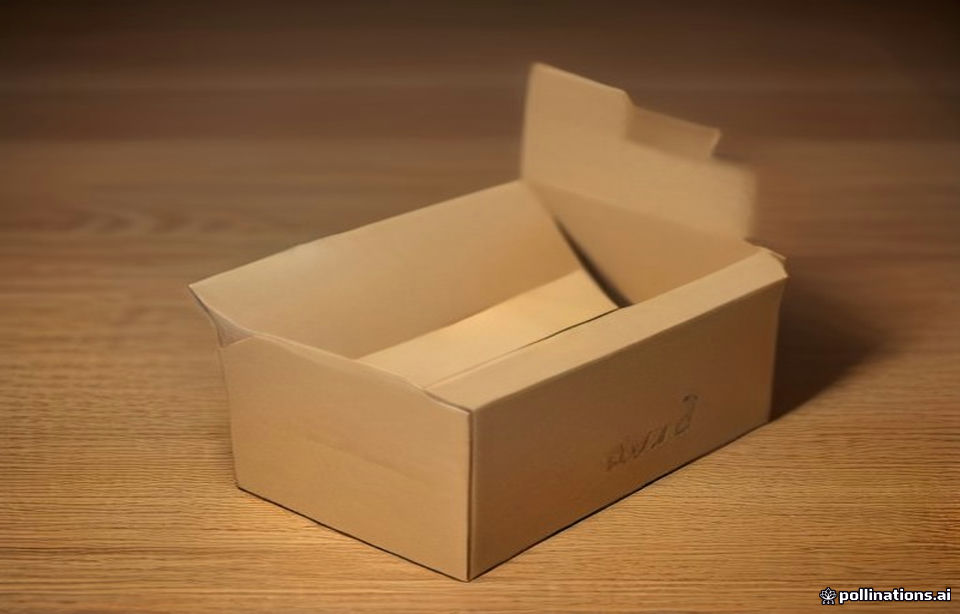
Most DTC e-commerce mailer boxes perform optimally in E-flute corrugated at ECT-32 or above, with a 0.062–0.070 inch (1.57–1.78 mm) caliper, validated to ISTA 3A for parcel-network drop and vibration stress. Specify board grade, flute profile, and compressive targets against ASTM D642 and EU PPWR recyclability rules before committing to a die-line.
- E-flute (≈1.5 mm caliper) at ECT-32 is the default spec for single-unit parcel mailers under 10 lb (4.5 kg); ECT-44 or B-flute is required above that or for double-stacked palletized outbound.
- Box Compression Test (BCT) per ASTM D642 — not board ECT alone — determines survival; the McKee relationship (BCT ∝ ECT × √(perimeter × caliper)) is the correct sizing tool.
- Under EU PPWR (Regulation (EU) 2024/1991), all mailer packaging must be recyclable by design and meet empty-space ratio limits; mono-material corrugated with PFAS-free coatings is the compliance-safe path.
- Dimensional-weight billing (DIV 139 in³/lb for US parcel networks) means caliper and box footprint drive freight cost as hard as board price.
- Validate moisture derating: corrugated can lose 30–50% of BCT at high humidity typical of ocean transit and coastal DCs.
1. Board Selection: Why ECT-32 E-Flute Is the Baseline Spec
For e-commerce mailer boxes, board selection is a three-variable optimization: flute profile, combine grade (linerboard basis weight), and ECT rating. The typical decision matrix for parcel-weight DTC shipments:
| Configuration | Caliper (typical) | Best-fit payload | Governing Test |
|---|---|---|---|
| E-flute, ECT-32, 200 gsm kraft liner | 1.50–1.60 mm | ≤ 4.5 kg single-item apparel/beauty | TAPPI T811 / ASTM D642 |
| E-flute, ECT-44, 175 gsm dual-liner | 1.60–1.78 mm | 4.5–9 kg, glass/cosmetics | ASTM D642 |
| B-flute, ECT-32/40 | 2.90–3.20 mm | Rigidity-critical, flat spans | ASTM D642 / D4169 DC-13 |
| F-flute microflute, ECT-26 | 0.80–1.00 mm | Sub-1 kg premium DTC, lower DIV | TAPPI T811 |
Note that Mullen burst ratings (e.g., 200 lb/in² per TAPPI T810) remain on some US enterprise POs as a legacy requirement, but for mailer boxes ECT is the controlling strength metric because failure mode in parcel networks is edge/column crush, not panel rupture.
2. Sizing the Die-Line: The McKee Formula and Dimensional Weight
Finished-box compression can be estimated with the McKee relationship: BCT ≈ 5.87 × ECT × √(caliper × perimeter) (in consistent imperial units). As a hypothetical worked example: an E-flute mailer with ECT-32 board, 0.065 in caliper, and 36 in perimeter yields BCT ≈ 5.87 × 32 × √(0.065 × 36) ≈ 320 lbf — a design factor of roughly 3–4× against a 2-lb contents plus palletization overhang, consistent with parcel distribution hazards per ASTM D4169 Distribution Cycle 13.
Freight economics constrain the die-line as much as strength does. With dimensional-weight divisors at 139 in³/lb for major US parcel networks, a mailer that is 0.5 in oversized on each face can push a 1.8-lb shipment to DIV billing. Engineering rule: internal carton dimensions = product envelope + 0.25 in (6 mm) total clearance for compression-set inserts, not the flat ’round up to the next inch’ rule used in informal quoting.
Q: If McKee derives BCT from ECT, why do some enterprise POs still mandate Mullen burst testing on mailers?
A: Directly: burst (TAPPI T810) is a tensile-rupture property and ECT (TAPPI T811) a column-compression property; they correlate only loosely because ECT is dominated by flute geometry while burst is dominated by liner tensile strength. Mechanically, a mailer fails in edge crush and corner buckling, so ECT-based McKee prediction tracks field performance better. Practically: accept Mullen clauses when contractually required, but specify your acceptance criteria on ASTM D642 BCT of finished boxes — that is the number that predicts parcel survival.
3. Structural Validation to ISTA 3A: The Test Sequence That Matters
Parcel-network mailers should be qualified under ISTA 3A (General Simulation — Parcel Delivery System), which sequences atmospheric conditioning, shock (drop and impact), vibration (random with and without top load), and low-pressure where air-shipped. Combined with ASTM D4169 DC-13 for supplementary assurance, the pass criteria are no product damage and no package failure (flap separation, seam delamination, corner collapse). Conditioning at 23°C ± 2°C and 50% ± 5% RH per ISO 187 before testing is mandatory — testing dry-season board and shipping through a humid port is a classic false-pass scenario.
- ☐ Board lot conditioned 24 h minimum at 23°C/50% RH (ISO 187) before ECT verification
- ☐ ISTA 3A drop sequence completed at certified gross weight, no product damage
- ☐ Random vibration with top load passed (ASTM D4169 DC-13 reference)
- ☐ ASTM D642 BCT recorded with design factor ≥ 3× against stacking/compression load
- ☐ High-humidity conditioning (per ISTA 3A atmospheric options) re-test documented
- ☐ Caliper verified per TAPPI T411 within ±0.15 mm of spec
- ☐ PFAS-free / recyclability declaration (PPWR, FTC Green Guides 16 CFR Part 260) on file
4. Compliance Engineering: PPWR Recyclability and Coating Chemistry
Under EU Regulation (EU) 2024/1991 (PPWR), packaging — including e-commerce mailers — must be designed for recyclability, with recyclability grading and empty-space ratio restrictions phasing in on the timeline defined in the regulation. In the US, recyclability claims are governed by the FTC Green Guides (16 CFR Part 260), which require substantiation for ‘recyclable’ labels. The engineering implication: keep mailers mono-material. Full overlaminates, non-dispersible wax barriers, and fluorinated grease barriers (PFAS) jeopardize both recyclate repulpability and claim substantiation. Specify aqueous barrier coatings certified repulpable, and request the board supplier’s recyclability documentation as a PO condition.
5. Manufacturing SOP: From Die-Line to Production Release
Step 1 — Die-line CAD & crease specification. Define slot widths and crease matrix against the chosen flute: for E-flute, a 45-durometer creasing matrix paired with a slot width of ~0.5–0.7 mm over flute caliper prevents cracking of the liner on the fold axis; die registration tolerance ±0.15 mm.
Step 2 — Print & finish integration. Flexo or litho-laminate artwork must be positioned to avoid ink coverage across crease hubs (ink embrittlement raises fold-crack rates); specify water-based inks to preserve repulpability claims.
Step 3 — Glue-flap verification. Cold-glue (PVA) lap of 12–15 mm with a minimum 3 mm glue skip tolerance; verify shear per a lap-shear check — debonding under ocean-humidity cycles is the dominant mailer field failure.
Step 4 — Goods-in and pre-ship verification. Verify ECT on a sampled basis per TAPPI T811, caliper per TAPPI T411 (±0.15 mm tolerance), and run one ISTA 3A-style drop check on first-article boxes from the production run, not the prototype stage.
6. Defect Diagnostics: Two Field Failures and Their Root Causes
Failure 1 — Flap popping / crease cracking. Root cause: creasing matrix durometer or slot width mismatched to caliper, or low moisture content in board shipped from a dry inland plant to a humid coastal DC (moisture differential across the liner causes fiber fracture on the fold). Corrective action: re-spec matrix (e.g., move to a wider, lower-durometer profile for E-flute), and condition board 24 h in the converting environment before die-cutting.
Failure 2 — Adhesive debonding / seam delamination after ocean transit. Root cause: container-sweat humidity cycling degrades PVA bond line if glue application weight is below spec or the lap is contaminated with silicone coating overspray. Corrective action: raise glue application to ≥ 0.03 mm wet film, block silicone spray within 20 mm of the glue flap, and re-run an ASTM D642 compression check after humidity conditioning. For stacking-load derating in high-humidity coastal warehouses versus dry inland distribution, model the derate interactively with TadaPack’s compression and freight tools at tadapack.com/tools.
7. Procurement Wrap-Up: The Spec Sheet That Protects Your Margin
A defensible mailer specification names five numbers, not one: flute profile and caliper (±0.15 mm), board ECT, finished-box BCT per ASTM D642 with its design factor, internal dimensions with 6 mm clearance, and compliance basis (PPWR recyclability, PFAS-free barrier, FTC 16 CFR Part 260 claim substantiation). Brands that specify only ‘E-flute kraft’ pay for it in dimensional-weight leakage and humidity-season field failures. For short-run structural prototyping and full BOM/cost teardown of mailer programs, TadaPack’s custom mailer engineering service and free calculation suite at tadapack.com/tools let you validate BCT, DIV, and unit cost before the die order is cut.
Recommended Engineering Reading
[TOOLS] Featured Engineering & Calculation Tools
Explore 70+ Packaging Tools ➔CBM Volume & Freight Dim-Weight Calculator
Calculate cubic meters & dimensional weight to minimize freight costs and avoid FBA size tier penalties.Mailer Box Area & Dieline Size Calculator
Instant flat dieline dimensions, material consumption, and sheet nesting for custom D2C mailer boxes.
