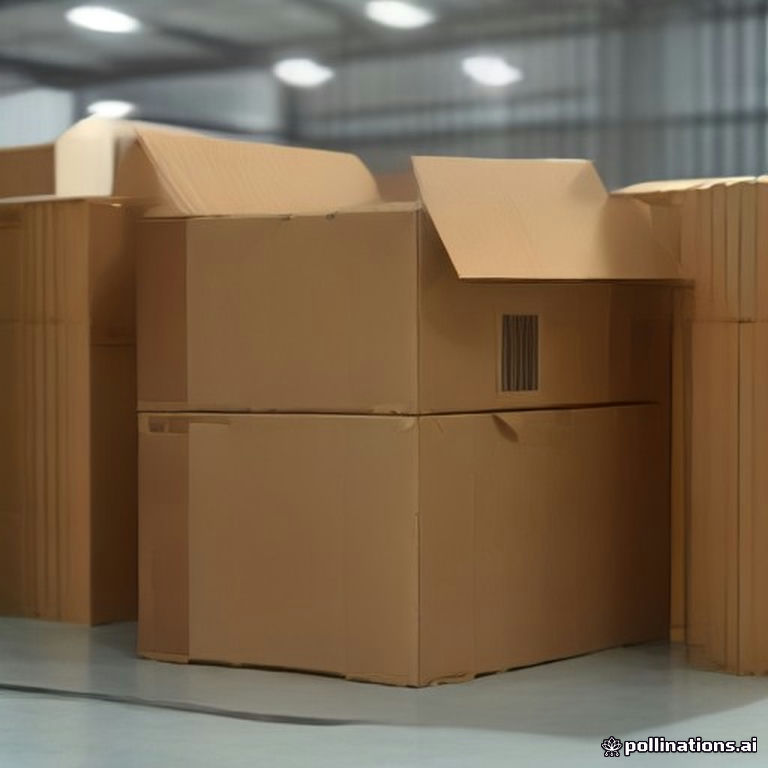
A fully mono-material corrugated e-commerce system achieves PPWR recyclability compliance by eliminating plastic tapes, void fill, and coated liners—relying instead on ECT-32 to ECT-44 single-wall C/B flute builds, PFAS-free barrier chemistry, and water-activated kraft tape. Compression margins must be validated via the McKee BCT formula and ISTA 3A drop sequences before scaling any PPWR-ready SKU.
As EU PPWR (Regulation 2025/40) design-for-recyclability grading obligations move from statute into procurement contracts, DTC brands face a hard engineering question: how do you strip a shipping pack down to mono-material corrugated without collapsing its transit survival rate? This whitepaper answers that question at the dieline level.

1. From SPC Design-for-Recyclability Guidance to Monolithic Corrugated Architecture
The Sustainable Packaging Coalition’s design-for-recyclability framework is straightforward in intent: a package is only as recyclable as its least-recyclable component. Applied to e-commerce, that principle disqualifies three entrenched features—polypropylene pressure-sensitive tape, PE-based void pillows, and PE/PP laminated linerboards. Per EU Directive 94/62/EC Annex II and the PPWR packaging waste reduction mandates, corrugated must reach recyclability-by-design thresholds by the 2030 performance grades, meaning any design locked into procurement now should already clear the future bar.
The engineering translation is a three-layer elimination strategy:
- Adhesive substitution: Replace PS tape with water-activated kraft tape (WAT) or full hot-melt flap closure—both pulp-fiber compatible in repulping per INGEDE Deinkability assessment methodology.
- Barrier substitution: Replace PE extrusion coatings with PFAS-free grease/water barrier chemistries (bio-wax or aqueous dispersion barriers) that stay below the Cobb 60 delamination risk band.
- Structural substitution: Replace void fill and interior cushions with corrugated-in-corrugated suspension design—scored integral inserts on the same substrate, generated from the same CAD dieline file.
2. BCT Compression Optimization: The McKee Formula in Procurement Practice
Corrugated compression is not specified by feel—it is derived. The McKee equation remains the industry baseline:
BCT ≈ 5.87 × ECT × √(t × Z)
where ECT is edge crush (kN/m or lb/in), t is combined board caliper (mm or in), and Z is box perimeter. For a hypothetical worked example: an ECT-32 board (32 lb/in ≈ 5.6 kN/m), 0.194-inch caliper C-flute, 30-inch perimeter yields BCT ≈ 5.87 × 32 × √(0.194 × 30) ≈ 450 lb. Apply a stacking safety factor of 4–5 for warehouse columns of 5–6 pallets high with derating for humidity, and the allowable unit column load falls to roughly 90–110 lb—your hard ceiling for stack design.
Key optimization levers, ranked by cost efficiency:
- Flute migration over grammage: Moving E-flute to B/C single-wall or BC double-wall raises caliper t, which enters the McKee equation under a square root—high leverage per gram of fiber added.
- Perimeter discipline: Every 25mm of perimeter you remove from an oversized shipper reduces required BCT headroom and cuts both fiber weight and dimensional-weight freight simultaneously.
- Ventilation-hand-hole penalties: Die-cut hand holes near vertical faces reduce effective ECT contribution by 5–10%; relocate them ≥38mm from score lines or eliminate them for reinforced handle variants.
In strict accordance with ASTM D642, final validation must be physical: McKee is a design predictor, not a certificate. Typical industrial tolerance on conditioned BCT samples is ±7% run-to-run at constant board grade; any design deriving less than 1.15× between predicted and tested BCT should trigger liner substitution review. Verify your own numbers interactively via the TadaPack calculators at https://tadapack.com/tools.
Q: If McKee derives BCT from ECT, why do overseas enterprise POs still mandate Mullen burst testing?
A (direct): Because burst (per TAPPI Standard T810, 2026 Revision) validates linerboard tensile/rupture integrity that ECT alone does not capture—particularly for staple puncture, pallet fork tear, and rough-handling rupture modes.
(mechanism): McKee assumes failure by column buckling; it says nothing about panel rupture under concentrated point loads. Mullen burst ≈ 200 PSI for 32-ECT-class kraft is a legacy proxy for fiber quality that Asian and European QA specs still treat as a lot-release gate.
(procurement recommendation): Accept dual-spec POs—ECT for structural design, burst for incoming material QC—but negotiate equivalence clauses: modern 100% recycled linerboards can pass ECT targets with lower burst values; a rigid burst floor silently forces virgin-fiber pricing onto your BOM.
3. ISTA 3A Drop & Vibration Protocols for Mono-Material E-Commerce Packs
Under ISTA 3A General Simulation Performance Testing protocol—the standard sequence for parcel-system e-commerce units ≤70kg—mono-material corrugated packs face a defined hazard set. Standard conditioning per ISO 186 / ASTM D685 (23°C ± 1°C, 50% ± 2% RH) precedes all testing; atmospheric conditioning is not optional because 12-point moisture swing between lab and warehouse can swing BCT by 15–20%.
Representative ISTA 3A structural milestones (always verify against the current ISTA published schedule for your weight class):
- Drop sequence: 9–10 drops per ASTM D5276-defined orientation matrix, with drop heights scaling down as packaged weight rises (e.g., 460mm for 18–27kg class, 760mm for ≤9kg).
- Random vibration: PSD-profile truck spectrum per ASTM D4728 methodology, 1-hour top-and-bottom sequence, exposing flute crush at suspension contact points.
- Atmospheric preconditioning option: ISTA 3A permits and recommends tropical/humidity conditioning when shipping routes justify it—mandatory for Pacific-bound lanes (see Section 4).
Pass criteria for mono-material designs: no loss of closure integrity (WAT seam must hold), no product protrusion through scored integral inserts, and ≤5% permanent box distortion. Typical industrial design target is 1.2× margin between ISTA 3A drop energy survival and the worst-case parcel-handling histogram.
| Test Parameter | ECT-32 C-Flute Build | ECT-44 BC Double-Wall | Governing Standard / Test Protocol |
|---|---|---|---|
| Combined caliper (typical) | 4.0–4.6mm (±0.15mm) | 6.5–7.5mm (±0.20mm) | TAPPI T411 (caliper) |
| BCT, 30-in perimeter (hypothetical) | ≈450 lb | ≈780 lb | ASTM D642 / McKee derivation |
| Burst strength, kraft liner | ≥200 PSI typical | ≥275 PSI typical | TAPPI T810 (2026 Revision) |
| Drop sequence | ≤9kg: up to 760mm | 18–27kg: 460mm | ISTA 3A / ASTM D5276 |
| Vibration exposure | Truck PSD random, 1h top/bottom | ASTM D4728 within ISTA 3A | |
| Cobb 60 water absorption limit | ≤100–120 g/m² liner; >150 g/m² signals barrier failure risk | TAPPI T441 / ISO 535 | |
| Recyclability labeling | How2Recycle ‘Widely Recyclable’ claim eligibility | FTC Green Guides 16 CFR Part 260 | |
4. Multi-Regional Logistics Hubs & Ocean-Transit Derating
A mono-material pack is more moisture-sensitive than a PE-laminated one—by design. That means regional logistics stress must be engineered, not discovered.
- Pacific lanes (Shanghai/LA–Long Beach → Inland Empire FBA nodes ONT8/LGB3): 25–35 days door-to-door with container sweat cycles. Flute softening accumulates: an unbarriered C-flute can lose 10–15% ECT after tropical conditioning. Apply a 0.80 stacking derate factor on units stored in high-humidity coastal DCs versus 0.90 for dry inland Southwest warehouses; order ISTA 3A atmospheric preconditioning at 38°C/85% RH per the ISTA tropical schedule for SKUs routed through humid ports.
- DFW distribution triangle (Texas): Dry, hot inland conditions; risk inverts to flute cracking and score-line fiber fracture from over-drying—specify moisture content at 8–10% board MC and verify per ISO 186 sampling plans.
- Port of Rotterdam → EU multimodal rail/road: Atlantic transit plus RH swings through barge-rail transfer. Stack derating at 0.82 for bonded warehouse storage near coastal terminals; PPWR recyclability grading means a moisture-failed mono-material pack cannot be rescued by adding plastic film—fix it structurally with BC double-wall or barrier-coated liner instead.
Cobb 60 testing (TAPPI T441) is your incoming QC gate: liner Cobb 60 exceeding roughly 120 g/m² for unbarriered kraft, or barrier-coated boards drifting above their certificate spec by >20%, predicts adhesive debonding and delamination risk under ocean humidity. Run the derating math on TadaPack’s stacking calculators at https://tadapack.com/tools before committing pallet column heights.
5. Factory SOP: Mono-Material Conversion & Defect Diagnostics
4-Step TadaPack Conversion SOP:
- Step 1 — Substrate lock: Select ECT grade against the McKee-derived stacking requirement plus regional derate; condition all evaluation board per ISO 187 (23°C, 50% RH) for ≥24h; record caliper on a TAPPI T411-compliant micrometer with ±0.15mm tolerance gates.
- Step 2 — Dieline conversion: In CAD, replace interior cushion allowances with scored integral suspension geometry; set score-to-perforation registration at ±0.15mm; specify creasing matrix paired to 45-durometer creasing rules to prevent liner fracture on 100% recycled substrate.
- Step 3 — Closure & barrier QC: Qualify WAT bonding at 60–80°C activation with 2–3s dwell; pull Cobb 60 and burst (TAPPI T810) on each incoming liner lot; block any lot outside certificate bands.
- Step 4 — Validation ladder: Run ASTM D642 BCT on 10 conditioned samples, then full ISTA 3A sequence including (for ocean-routed SKUs) humidity preconditioning; release only with the Section 2 safety factors intact.
Defect diagnostics matrix:
- Flap popping on drop (WAT seam splits): Root causes—insufficient adhesive activation temperature, recycled liner with high Cobb absorbing starch adhesive before set, or flap score depth >50% of caliper. Correctives: raise activation to spec band, switch to higher-solids WAT, and re-gauge score matrix depth.
- Adhesive debonding / flute delamination after ocean transit: Root cause—container sweat raising board MC above ~14%, breaking the starch bond at single-facer lamination. Correctives: specify wet-strength-grade adhesive, add desiccant or container liner protocol, and derate stacking to the 0.80 coastal factor; never patch with plastic film—it breaks mono-material recyclability and the FTC Green Guides (16 CFR Part 260) substantiation behind the label claim.
6. How2Recycle Labeling & Cost Teardown for PPWR-Ready SKUs
Per FTC Green Guides (16 CFR Part 260) substantiation rules, a ‘Widely Recyclable’ claim requires that ≥60% of US consumers have access to recycling facilities for the packaging type—corrugated clears that bar comfortably, but only if the pack is genuinely mono-material. A single PP tape strap downgrades the practical claim posture; How2Recycle guidance differentiates ‘Widely Recyclable’ boxes from ‘Check Locally’ components. For EU SKUs, align on-box marks with PPWR harmonized labeling timelines and maintain a recyclability dossier (substrate spec, adhesive chemistry, barrier declaration) per member-state EPR scheme requirements.
Hypothetical worked cost matrix (per 1,000 shippers, 400×300×250mm, ECT-32 C-flute):
- Baseline: PE-taped box + air pillows: ~$1.05–1.25/unit fiber + materials, plus dimensional-weight penalty on the void volume.
- Mono-material conversion: WAT tape (+$0.03), integral scored insert (+$0.05 die-cut), PFAS-free barrier where specified (+$0.06–0.10) — net fiber uplift ≈ 8–12%, offset by 10–18% dimensional-freight reduction from perimeter discipline and eliminated void fill. Payback typically lands within 2–3 peak-season lanes.
For structural prototyping and short-run validation of converted dielines, TadaPack’s custom structural packaging services support single-digit sample quantities before you commit to production tooling.
Recommended Engineering Reading
[TOOLS] Featured Engineering & Calculation Tools
Explore 70+ Packaging Tools ➔CBM Volume & Freight Dim-Weight Calculator
Calculate cubic meters & dimensional weight to minimize freight costs and avoid FBA size tier penalties.Mailer Box Area & Dieline Size Calculator
Instant flat dieline dimensions, material consumption, and sheet nesting for custom D2C mailer boxes.
