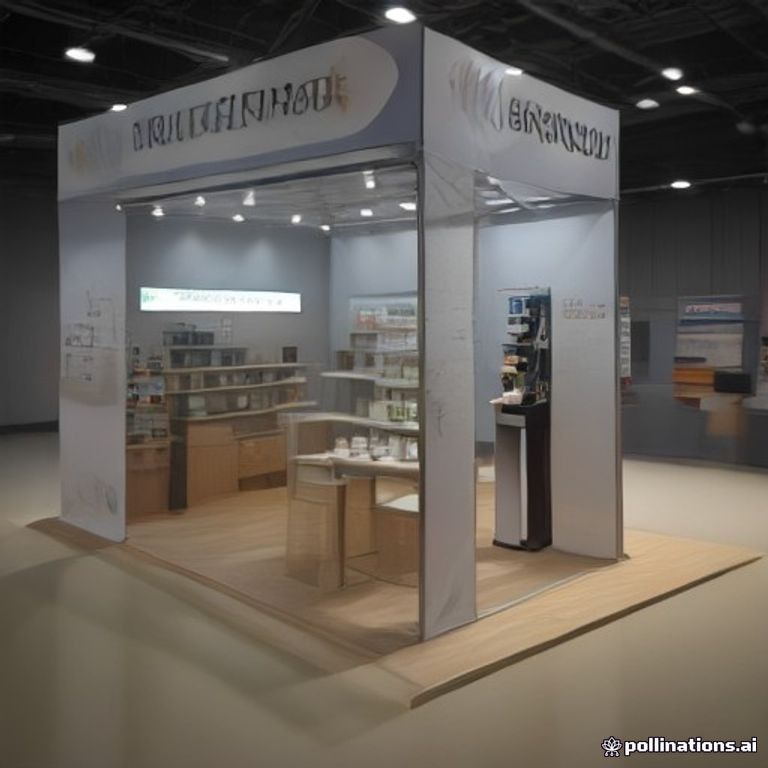
Retail sustainability mandates and the expo circuit have collided: brands shipping demos to Las Vegas or Amsterdam now face the same recyclability rules at the shelf as in the warehouse. This whitepaper anchors the entire discussion in measurable engineering parameters – ECT-32/ECT-44 edge crush resistance, Cobb 60 moisture thresholds, ASTM D4169 vibration spectra, and Amazon FBA dimensional weight penalties – not marketing claims.
%2C%20a%20bustling%20exhibition%20hall%20with%20diffused%20volumetric%20lighting%20from%20above.%20Golden%20hour%20rim%20lighting%20highlights%20the%20carton's%20edges.%208k%2C%20Hasselblad%20medium%20format%2C%20photorealistic%2C%20vivid%20colors.%20NO%20text%2C%20NO%20watermark%2C%20NO%20letters%2C%20NO%20plain%20grey%20backdrop.?width=1200&height=675&model=flux&nologo=true&seed=919954 "Mono-Material Folding Cartons: ISTA 3A & Retail Shelf Compliance Guide")
1. Why Mono-Material Construction Is Now a Compliance Requirement, Not a Preference
Per EU Directive 94/62/EC Annex II and the EU PPWR (Regulation 2024/1991) packaging waste reduction mandates, packaging placed on EU markets from 2030 onward must be designed for recycling, with design-for-recycling grades penalizing mixed fiber/plastic laminates. Major US retailers have mirrored this with all-paperboard recyclable carton mandates for private-label and national-brand shelf packaging. Under FTC Green Guides (16 CFR Part 260) substantiation rules, a carton laminated with PE film or containing PFAS-based grease barriers cannot be marketed as ‘recyclable’ without qualification – a direct legal exposure for DTC brands.
The engineering consequence: the functional layers once provided by plastic windows, foam inserts, and PE coatings must now be delivered by a single fiber substrate. That means higher-basis-weight board, engineered flute geometry, and PFAS-free aqueous barrier coatings doing mechanical work that composites previously absorbed.
2. Structural Mechanics: Selecting Board Grade and Flute for Dual-Duty (Booth + Shelf)
A mono-material carton must perform two contradictory jobs: present a litho-quality, high-graphics retail face at 0.4-0.6 mm perceived wall caliper, and survive parcel or LTL distribution shock. The resolution is flute lamination using the same fiber family:
- E-flute (≈1.5 mm caliper): 90-120 gsm liner/medium, supports high-resolution flexo or offset-litho laminated faces; typical ECT-32 class. Ideal for cosmetics, electronics accessories, and VIP gift cartons.
- B-flute (≈3.0 mm caliper): better cushioning and vertical crush resistance; ECT-40 to ECT-44 class with 175-200 gsm liners. Preferred for fragile display sample shippers.
- BC double-wall (≈6.0-7.0 mm): reserved for master shippers consolidating shelf cartons; the shelf cartons themselves stay mono-material single-face-laminated board.
Per ISTA 3A General Simulation Performance Testing protocol, drop shock sequences for a <10 kg parcel-sized packaged product require 10 drops (heights scaled to package weight, e.g., ~760 mm for a 5 kg unit) plus random vibration at overall PSD levels of 0.54 Grms on the standard truck spectrum. An E-flute laminated carton at 350-450 gsm total basis weight can pass ISTA 3A only when: (a) corner glue lap width ≥12 mm with full-pattern hot-melt, (b) internal suspension features (fiber locks, molded pulp cradles) control product displacement to <5 mm under shock, and (c) crush resistance verified per ASTM D642 (Standard Test Method for Determining Compressive Resistance of Shipping Containers) at ≥1.5× the anticipated stacking load.
For flat compression, the McKee formula (BCT = 5.87 × ECT × √(caliper × perimeter)) remains the first-order sizing tool. For an E-flute carton with ECT-32, 1.6 mm caliper, and 600 mm perimeter: BCT ≈ 5.87 × 32 × √(0.16 × 600) ≈ 921 N. This is a hypothetical worked example for illustration; actual values must be lab-verified.
Q: If the McKee formula derives BCT from ECT, why do overseas enterprise POs still mandate Mullen burst testing?
A: First, Mullen burst (typically ≥200 kPa / 29 psi on 200 gsm test liner) correlates with multi-directional tear and puncture resistance, which ECT does not capture. Second, mechanically, handholds, rough conveyor edges, and corner impacts load the board in out-of-plane tension where burst pressure – not edge crush – predicts failure; McKee assumes uniform axial loading that real intermodal handling violates. Third, procurement recommendation: accept the Mullen clause, but negotiate a dual-spec (ECT for stacking, TAPPI T810 burst for handling) so the board mill optimizes both fiber directions instead of over-engineering basis weight by 10-15% – which is a direct landed-cost penalty at container rates.
3. Comparative Matrix: Mono-Material Carton Constructions vs. Legacy Composites
| Construction | Typical Caliper | Strength Class | Recyclability / Regulatory Status | Relative Unit Cost (Hypothetical Benchmark) | Governing Standard / Test Protocol |
|---|---|---|---|---|---|
| E-flute laminated mono-material (350-450 gsm, PFAS-free AC coating) | 1.5-2.0 mm | ECT-32; BCT 850-950 N (worked example) | 100% repulpable; PPWR Grade A recyclable | Baseline (1.0×) | ISTA 3A; ASTM D642; ISO 535 (Cobb 60); EU PPWR (2024/1991) |
| B-flute mono-material shipper (200 gsm liners) | 3.0 mm | ECT-40 to ECT-44 | 100% repulpable; passes retail recycling mandates | 1.15-1.25× | ASTM D4169 DC-12; TAPPI T810; ISO 2247 vibration |
| SBS solid board carton, 400 gsm, aqueous barrier | 0.5-0.6 mm | Compression per ASTM D6400-adjacent box crush specs; retail display duty | Repulpable if barrier <8% coat weight (per CEPI recyclability protocol) | 0.9× (shelf only – not shipper-rated) | ISO 186:2020; ISO 535; FTC Green Guides 16 CFR Part 260 |
| Legacy SBS + PE laminate + foam insert (composite) | 0.6-1.0 mm | Comparable face compression | Non-compliant with PPWR design-for-recycling; FTC ‘recyclable’ claim risk | 0.85× plus EPR fees (€0.30-0.60/kg typical EU hypothesis) | EU 94/62/EC Annex II; EU PPWR (2024/1991) |
Note: unit costs are hypothetical worked-example benchmarks for relative comparison; actual quotations depend on board market index, run length, and freight. Verify stacking feasibility interactively with TadaPack’s free calculators at https://tadapack.com/tools.
4. PFAS-Free Barrier Coatings and Moisture Physics in Mono-Material Systems
Grease and moisture barriers were historically fluorocarbon-based; PFAS restrictions now active across EU member states and several US states have forced conversion to aqueous dispersion barriers (blended acrylic/polyolefin dispersions at 3-8 g/m² coat weight) and to mineral/cellulose grease-proofing. The engineering trade-off is Cobb 60 performance versus repulpability: coat weights above ~10 g/m² begin to impair repulping per CEPI screening, while coat weights below ~4 g/m² may allow Cobb 60 values above 30-35 g/m² on the exposed liner, the zone where transit delamination initiates.
Compliant with ISO 186:2020 paper conditioning specifications (23°C ± 1°C, 50% ± 2% RH), board must be conditioned a minimum of 24 hours before both Cobb and compression testing; unconditioned board tested at a receiving dock at 80% RH can show 15-25% lower compression values – a spec dispute waiting to happen. In strict accordance with ASTM D642, compression fixtures must be parallel within 0.5 mm across the platen, and per TAPPI Standard T810, Mullen burst specimens must be clamped without slip and tested at 17-28 kPa/s ramp rates.
5. Engineering Lab Bench Test Record: Hypothetical Validation Protocol for an E-Flute Mono-Material Carton
The following is a hypothetical worked example of a validation lot, presented to illustrate a compliant test matrix structure; no real test data is claimed:
- Conditioning: 23°C ± 1°C, 50% RH per ASTM D685 standard, 24 h minimum prior to test.
- Rig & instruments: Mitutoyo 547-400S digital caliper (caliper, 0.01 mm resolution), Lansmont compression tester (BCT, ASTM D642), TAPPI T810 Mullen burst tester.
- Sample statistics: 10-specimen statistical average per property, caliper tolerance ±0.15 mm, hypothetical Lot #TP-2026-B4, E-flute 400 gsm laminate, aqueous barrier 6 g/m².
- Pass criteria: BCT ≥ 900 N (illustrative), burst ≥ 200 kPa, Cobb 60 ≤ 30 g/m², ISTA 3A sequence with no product contact damage and no carton seam separation.
Procurement teams should require suppliers to publish this matrix per lot; refusal to disclose conditioning conditions or instrument IDs is a leading indicator of unverified specs.
6. Step-by-Step SOP: From CAD File to ISTA 3A-Passing Carton in 72 Hours (Expo-Critical Path)
For brands racing a booth setup deadline, this four-step SOP compresses the structural development cycle; each step carries explicit physical tolerances:
- Step 1 – Structural CAD lock (Hour 0-8): Build the dieline in structural CAD with die registration tolerance ±0.15 mm on all cut/crease geometry; set crease-rule depth to 0.3-0.5 mm less than board caliper; run FEA or empirical BCT estimation against the target stacking load including a 1.5× safety factor and stack-time derating (Section 7).
- Step 2 – Zero-tooling sample cut (Hour 8-24): Produce a digital-die-cut physical sample (flatbed knife or laser) with 45-durometer creasing matrix on the male rule to preserve flute integrity at fold lines; verify glue-lap overlap ≥12 mm and confirm fold resistance by cycling each crease 180° three times without fiber fracture.
- Step 3 – Conditioned verification (Hour 24-48): Condition samples at 23°C ± 1°C, 50% RH; run caliper (±0.15 mm acceptance), Cobb 60 (≤30 g/m² target), and compression checks on the 10-specimen sample; adjust board grade or internal suspension before any repeat run.
- Step 4 – Transit qualification (Hour 48-72): Execute a reduced ISTA 3A drop-and-vibration sequence with the actual product (or mass-simulated dummy) inside; inspect for seam pop, corner crush >2 mm, and product displacement >5 mm; release the artwork to production only after a clean sequence.
TadaPack’s structural prototyping service executes Steps 1-3 in a 24-48 hour window with zero plate or die mold fees on short runs – the decisive advantage when the booth opens in three days.
7. Defect Diagnostics and Troubleshooting Matrix
| Defect | Root Cause (Mechanics) | Floor-Level Corrective Action |
|---|---|---|
| Flap popping / seam opening after stacking | Glue-lap compression creep; adhesive below minimum application weight (<18 g/m² hot-melt) or contaminated board surface from barrier over-spray overlapping the lap | Mask barrier coat 3 mm inside the glue lap; raise hot-melt bead to 20-25 g/m²; verify compression set of adhesive at 23°C, not dock temperature |
| Board softening / ECT loss after 30-day ocean transit | Container sweat cycling RH 60%→90%; liner Cobb 60 >35 g/m² allowing interply moisture uptake and flute softening (in strict terms, ISO 2247 defines the cycling conditioning for verification) | Specify Cobb 60 ≤30 g/m² on liner; add desiccant load of 1 unit per 6 m³ container; derate stacking load per Section 8 factors; require post-transit compression re-test on arrival samples |
| Crease cracking on fold (visible fiber fracture) | Crease rule too shallow for caliper, or 45-durometer matrix too hard for high-yield kraft; moisture content <6% board MC | Re-rule at depth = caliper −0.4 mm; switch to softer creasing channel; condition board to 7-9% MC per ISO 186:2020 before converting |
8. Multi-Regional Logistics Hubs and Supply Chain Landing Matrix
Freight stress is not uniform across corridors, and stacking load derating must reflect destination ambient conditions:
- Pacific corridor → California Inland Empire (FBA ONT8 / LGB3): 25-35 day ocean transit with summer container sweat; coastal-to-inland humidity swing from ~75% RH at Long Beach to ~30-40% RH in the Inland Empire causes board dimensional change and reversible strength loss on arrival. Apply a stacking derating factor of 0.75-0.80 on nominal BCT for 30-day high-humidity ocean exposure, partially recoverable inland. FBA carton rules (<25 kg unit weight; box dimensions driving dimensional-weight fees at the 5,000 cm³/kg / 139 in³/lb divisor) make carton caliper minimization a direct freight cost lever – every 1 mm of unnecessary caliper on a palletized carton erodes cube utilization.
- Atlantic corridor → Port of Rotterdam multimodal (rail/road): Shorter sea leg but higher stacking in consolidations and rail vibration spectra per ISO 2247; PPWR documentation checkpoints at EU ports require recyclability declarations, so mono-material paperwork travels with the carton. Derating factor ~0.80-0.85 for high-humidity coastal stacking; Rotterdam’s rail/road transfer adds horizontal shock – specify corner glue integrity and consider edge protectors (fiber, not foam).
- DFW Texas distribution triangle: Dry inland ambient (25-40% RH) is favorable to compression strength; the risk shifts to summer heat (adhesive softening above ~50°C trailer interiors) and long drayage vibration. Derating factor ~0.85-0.90; validate adhesive heat resistance rather than moisture resistance here.
Run your specific carton dimensions, pallet pattern, and corridor through TadaPack’s free stacking and dimensional-weight calculators at https://tadapack.com/tools to generate corridor-specific load figures before issuing POs.
9. Trade Show Floor Sourcing: Short-Run VIP Boxes Without Mold Fees
Exhibiting brands need two packaging classes simultaneously: (a) rugged anti-breakage transport cartons for fragile display samples (B-flute mono-material, molded fiber cradles, ISTA 3A-qualified), and (b) short-run high-end retail VIP boxes for booth handout and launch inventory – typically 100-1,000 units, which conventional tooling makes uneconomical. Digital die-cutting with physical knife rules eliminates plate charges; litho-laminated or digital-print faces deliver the shelf-grade graphics without flexo plates. The engineering requirement to watch on short runs is die registration: without tooling amortization, converters sometimes widen tolerances to ±0.5 mm, which shifts glue laps and compromises the 12 mm overlap requirement – hold suppliers to ±0.15 mm registration even on prototypes, as TadaPack’s prototyping workflow does.
Per PACK EXPO International (PMMI) sourcing cycles, brands that arrive with a validated dieline and pre-qualified board spec routinely compress lead time from 6 weeks to under 2 weeks; the validation work in Sections 5-6 is what makes that compression safe rather than reckless.
Recommended Engineering Reading
[TOOLS] Featured Engineering & Calculation Tools
Explore 70+ Packaging Tools ➔CBM Volume & Freight Dim-Weight Calculator
Calculate cubic meters & dimensional weight to minimize freight costs and avoid FBA size tier penalties.Mailer Box Area & Dieline Size Calculator
Instant flat dieline dimensions, material consumption, and sheet nesting for custom D2C mailer boxes.
