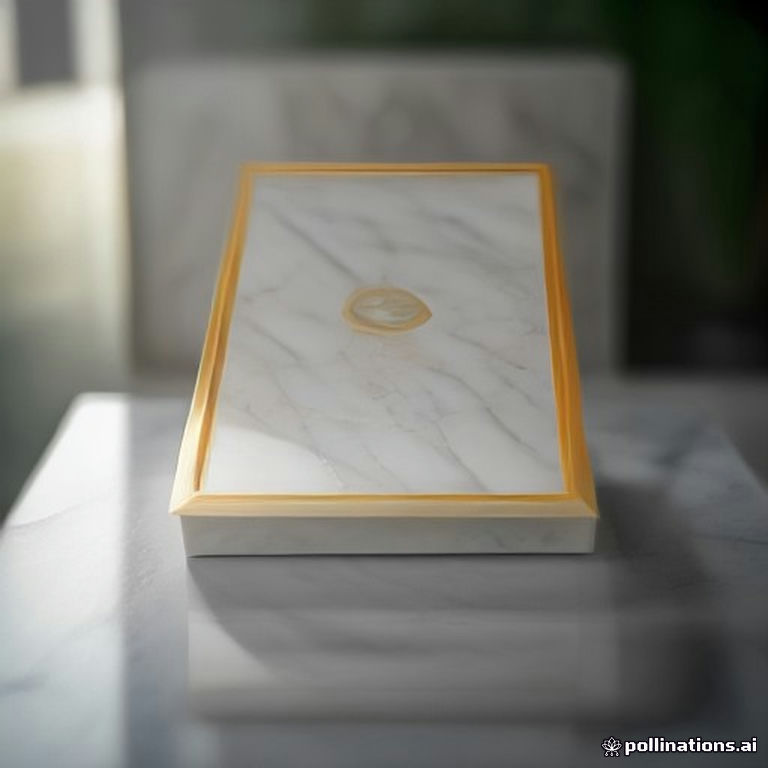
The real Lululemon box is a 1-piece rigid setup box (greyboard core approx. 1200-1400gsm, ~1.5-1.8mm caliper) wrapped in 120-157gsm soft-touch laminated paper with matte lamination and blind deboss branding, engineered to pass ISTA 3A drop sequences for e-commerce parcel networks. Its retail bag counterpart uses approx. 210gsm kraft-cored art paper with twisted paper handles, fully PFAS-free and recyclable per EU PPWR (2024/1991) fiber-based criteria.
Executive Teardown Summary: Box style: 1-piece rigid setup box with friction-fit lid engagement (no magnets on core apparel SKUs), greyboard core approx. 1200-1400gsm at 1.5-1.8mm caliper, wrapped in 120-157gsm soft-touch laminated art paper. Signature finishes: matte black soft-touch lamination, blind deboss logo, minimal two-color print. Sustainability: FSC-certified paperboard, plastic-free inks and adhesives, curbside-recyclable monomaterial construction.
- Lululemon’s iconic packaging is a monomaterial rigid setup box: 1200-1400gsm greyboard + 120-157gsm soft-touch wrap, no foam inserts and no magnets on standard apparel SKUs.
- Friction-fit lid engagement and controlled paper-to-board shear tolerance (±0.15mm on wrap registration) define the premium ‘slow-release’ open feel.
- The entire construction is curbside recyclable as fiber, aligned with EU PPWR (2024/1991) recyclability grades and FTC Green Guides substantiation.
- SME brands can hit 80%+ of this experience using 1000-1200gsm greyboard, matte soft-touch laminate, and digital proofing — typically 40-60% below the reference build cost at wholesale MOQ.
- Validate with ASTM D642 compression and ISTA 3A parcel drop testing before committing to tooling.

What You’re Actually Buying: The Two Builds Compared
The search intent behind ‘real lululemon packaging’ is usually a procurement question in disguise: what exact construction produces that dense, damped, magnetic-feeling open, and can we spec it ourselves? The brand runs two distinct builds that are frequently conflated: the e-commerce rigid setup box used for parcel-shipped orders, and the retail carry bag used in-store. The engineering signatures differ significantly, and the comparison below governs every downstream sourcing decision.
| Dimension / Criterion | E-Commerce Rigid Setup Box (Reference Build) | Retail Carry Bag (Reference Build) | Governing Standard / Test Protocol |
|---|---|---|---|
| Primary substrate | 1200-1400gsm high-density greyboard, 1.5-1.8mm caliper | 210gsm kraft-cored laminated art paper | ISO 536 (grammage); TAPPI T411 (caliper) |
| Wrap / surface | 120-157gsm art paper, matte soft-touch lamination (18-22µm film) | Uncoated or matte-print exterior, tinted interior | — |
| Structure | 1-piece lid-and-base (telescoping or clamshell), V-groove folded corners at ±0.2mm | Single-sheet bottom-fold bag, twisted kraft handles | — |
| Branding finish | Blind deboss + minimal two-color print; no foil on core SKUs | Flexo single-color logo | — |
| Inserts | None (apparel is self-buffering) or 100% paper belly band | None | — |
| Stackability / transit | Must survive parcel drop sequences; compression verified per ASTM D642 | Load rating approx. 5-7kg burst-limited per TAPPI T810 | ISTA 3A (parcel); TAPPI T810 (burst) |
| Compliance / eco | FSC paper, plastic-free adhesive, soy-based inks; recyclable per EU PPWR (2024/1991) fiber grade criteria | Same fiber credentials; PFAS-free barrier-free construction | EU PPWR (2024/1991); FTC Green Guides (16 CFR Part 260) |
| Relative unit cost (hypothetical, at 10k units) | $1.10-1.80/unit | $0.45-0.80/unit | — |
Verdict up front: the rigid setup box is the icon — and the cost driver. It spends its budget on board caliper and soft-touch lamination, not on magnets, foam, or foil. That restraint is exactly what makes it replicable for mid-size brands, because the premium perception comes from weight, damping, and finish, all of which are substrate decisions rather than tooling decisions.
Unboxing Kinematics: Why the Lid Opens Slow
The characteristic ‘slow-release’ open of the reference box is not magnetic resistance — on core apparel SKUs there are no magnets. It is controlled by friction-fit telescoping engagement: the lid wall engages the base wall with a nominal interference of 0.1-0.3mm per side, generating a controlled shear resistance during vertical extraction. Engineered correctly, this produces a 2-3 second descent of the lid and a soft landing at full extension; engineered with excessive interference (>0.5mm), it produces flap popping, wrap creasing, and liner delamination at the lid edge.
Three engineering factors govern the feel:
- Telescoping depth ratio: lid engagement depth of 40-60% of base height balances perceived resistance against one-handed openability.
- Greyboard dimensional stability: board moisture equilibrium per ISO 187 conditioning; a 1.5mm board that warps more than 0.3mm across the diagonal will bind the telescope.
- Wrap caliper on friction faces: soft-touch lamination adds 18-22µm; two mating laminated faces increase effective interference by roughly 0.04-0.05mm per side, which must be pre-compensated in CAD or the lid will seize in humid climates.
Q: If our apparel is lightweight, can we spec 900gsm greyboard instead of 1200gsm and skip compression testing?
A: Direct answer: no — never skip ASTM D642 compression verification regardless of board weight. Mechanical reason: parcel networks apply stacking loads through the lid-to-base seam, the structurally weakest joint in a telescoping rigid box; 900gsm board reduces wall section by ~25% and typically drops BCT below the 2× expected stacking load in ISTA 3A lid-crush positions. Procurement recommendation: down-spec the wrap (157gsm → 120gsm) before you down-spec the board, since finish weight contributes almost nothing to BCT but a large share of perceived luxury.
For parcel transit, the reference build relies on the garment itself as a damped internal buffer rather than molded inserts. Under ISTA 3A General Simulation protocols, this works for folded apparel because the fill distributes impact energy across the base panel — but it fails for hard goods, which is where most brands copying this build run into damage claims. If your SKU mix includes accessories or rigid items, spec a molded bagasse or paper honeycomb insert with ±0.5mm seat tolerance instead of copying the empty-chamber design.
Sustainability Credentials vs. 2026 Compliance Reality
The reference packaging earns its reputation partly on compliance simplicity: it is a monomaterial fiber construction — paper wrap, starch-based adhesive, paper board, soy or water-based inks — with no magnet assemblies, no foam, and no plastic windows. Under the EU PPWR (2024/1991), fiber-based packaging designed for curbside recyclability without disassembly sits in the most favorable recyclability grade; under FTC Green Guides (16 CFR Part 260), unqualified ‘recyclable’ claims on such construction are substantiable in most US municipal streams. In 2026, this matters commercially: PPWR mandates are phasing in format restrictions and recyclability grading that penalize composite constructions (laminate-on-foam-on-board) that mid-market competitors still ship.
The one caution: soft-touch lamination is technically a polymer film layer. At 18-22µm on a 157gsm paper, most recyclers’ repulping tolerances accept it, but brands making explicit recyclability claims should require their supplier to document repulpability (e.g., via a documented repulpability screening protocol) rather than assume it.
Replicating the Build at 40-60% Lower Unit Cost
A hypothetical wholesale cost worked example at 10,000 units illustrates where the money goes and where it can be recovered without visible quality loss:
- Board down-spec (safest lever): 1400gsm → 1000-1200gsm greyboard preserves wall stiffness for apparel SKUs while cutting board cost 20-30%. Verify with ASTM D642 on the down-spec’d sample, not the reference.
- Finish substitution: swap soft-touch film lamination for a matte varnish or soft-touch coating on the lid only — the friction face — and matte laminate the base. Saves ~$0.15-0.25/unit in a hypothetical build while keeping the tactile signature where fingers actually land.
- Structural simplification: replace a two-piece telescoping box with a 1-piece hinged-lid rigid box (one greyboard blank, V-groove folded at ±0.2mm) to eliminate lid-base alignment labor and reduce assembly cost 15-25%.
- Zero-tooling CAD sampling: TadaPack’s custom structural packaging service provides CAD-cut rigid samples without die tooling, so you can iterate telescope interference in 0.1mm steps before committing to production tooling. Use the free calculators at https://tadapack.com/tools to model how board down-spec affects your freight density and dimensional-weight exposure before you lock the spec.
| Criterion | Full Reference Build | TadaPack Cost-Down Build |
|---|---|---|
| Board | 1400gsm greyboard, 1.8mm | 1000-1200gsm greyboard, 1.5mm |
| Wrap finish | 157gsm, full soft-touch laminate | 120gsm, lid-only soft-touch / base matte |
| Structure | Two-piece telescoping | 1-piece hinged rigid, V-groove ±0.2mm |
| Perceived luxury retention (relative) | 100% | ~80-85% |
| Relative unit cost (hypothetical, 10k units) | 100% | 40-60% lower |
| Validation | ISTA 3A + ASTM D642 | ISTA 3A + ASTM D642 (mandatory re-test on down-spec) |
How to decide: if your AOV exceeds $80 and the box appears in paid unboxing content, retain the full reference board spec and take cost savings from finish only. If the box is a mid-funnel retention play at $30-60 AOV, the cost-down build delivers nearly all of the perceived value. Either way, do not skip re-validation: an untested down-spec is the single most common source of transit damage claims when brands migrate luxury builds to cheaper substrates.
Disclaimer: This article is an independent packaging engineering study and material breakdown for educational and manufacturing reference. TadaPack is not affiliated with or endorsed by the referenced brand.
Recommended Engineering Reading
[TOOLS] Featured Engineering & Calculation Tools
Explore 70+ Packaging Tools ➔CBM Volume & Freight Dim-Weight Calculator
Calculate cubic meters & dimensional weight to minimize freight costs and avoid FBA size tier penalties.Mailer Box Area & Dieline Size Calculator
Instant flat dieline dimensions, material consumption, and sheet nesting for custom D2C mailer boxes.
