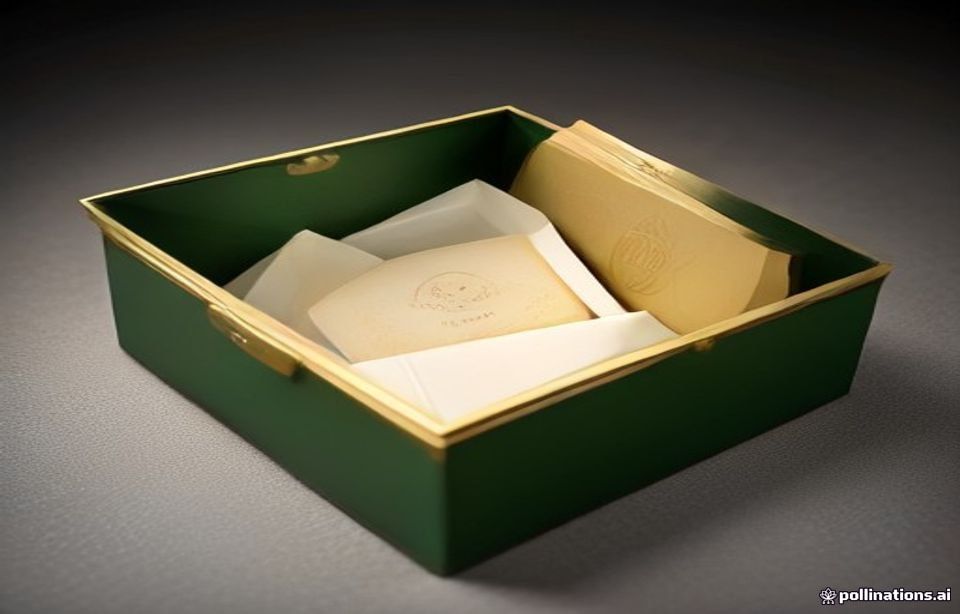

1. The Collector Box Corner-Crush Crisis: Why 48-Hour CAD Prototyping Is Non-Negotiable
In the high-stakes world of limited-edition collectibles—from die-cast vehicles to premium trading cards—the gift box is not merely packaging; it is a certificate of authenticity and a display piece. A single crushed corner can trigger a 40% depreciation in resale value and a cascade of negative reviews. Traditional packaging development cycles of 2–3 weeks are no longer viable when brands face 2026’s compressed product launch windows. The solution lies in rapid, simulation-driven CAD prototyping that compresses design iteration into 48 hours, allowing engineers to pinpoint and rectify corner-crush vulnerabilities before committing to steel rule dies.
This whitepaper dissects the mechanics of corner-crush failure, presents a 48-hour CAD workflow, and provides actionable engineering parameters—from ECT-44 corrugated to 350gsm CCNB—to ensure your collector gift boxes survive the rigors of global e-commerce logistics.
2. Mechanics of Corner-Crush in Rigid Collector Boxes
Corner-crush occurs when a box experiences a concentrated compressive force at its edges, often during parcel sorting, stacking, or drops. For rigid boxes constructed with greyboard and wrapped in litho paper, the corner is the weakest geometric feature due to the discontinuity in material and the stress concentration effect. The failure mode typically manifests as buckling of the greyboard plies, delamination of the wrap, or permanent deformation exceeding 2 mm.
According to ASTM D642 (Standard Test Method for Determining Compressive Resistance of Shipping Containers), a box’s corner crush resistance is a function of its edge crush test (ECT) value, perimeter, and caliper. For rigid boxes, the greyboard’s compressive strength and the wrap’s tensile stiffness govern performance. In 2026, leading brands specify greyboard with a minimum density of 0.75 g/cm³ and a compressive strength of 2.8 MPa to resist corner crushing under a 200 N static load.
3. The 48-Hour CAD Prototyping Workflow: From Concept to Simulation
Traditional prototyping involves physical cutting and assembly, which can take days. The 48-hour CAD workflow leverages parametric design and finite element analysis (FEA) to iterate virtually. Here is the step-by-step SOP:
- Step 1: Parametric CAD Modeling (Hours 0–8): Create a 3D model of the box with all critical dimensions, including board thickness (e.g., 1.5 mm greyboard), corner radii (typically 1.5–3 mm), and wrap overlap. Use software like ArtiosCAD or SolidWorks with ±0.15 mm die registration tolerance.
- Step 2: Material Property Assignment (Hours 8–12): Input mechanical properties: greyboard elastic modulus (2.5 GPa), Poisson’s ratio (0.3), and wrap paper tensile strength (40 N/15 mm). For corrugated inserts, use ECT-44 values (44 lb/in) and B-flute caliper (3 mm).
- Step 3: FEA Simulation (Hours 12–36): Apply boundary conditions simulating a 1.2 m drop (ISTA 3A) and a 300 N top load. Run explicit dynamics to identify stress concentrations at corners. Mesh size should be ≤0.5 mm at corners for accuracy.
- Step 4: Design Optimization & Validation (Hours 36–48): Modify corner geometry, add internal corner blocks, or increase greyboard thickness. Re-run simulation until safety factor ≥1.5. Output DXF for die-making.
This workflow reduces physical prototyping cycles from 3 to 1, cutting development costs by 60%. TadaPack’s online calculation tools can further accelerate material selection and load-bearing estimates.
【💡 Packaging Engineer’s Quick Q&A】
Q: If McKee formula derives BCT from ECT, why do overseas enterprise POs still mandate Mullen burst testing?
A: Direct metric answer: Mullen burst test (TAPPI T810) measures the combined tensile and tear resistance of the board, which correlates with puncture and handling damage, not just stacking strength. Underlying mechanical reason: ECT focuses on edgewise compression, while Mullen evaluates the board’s ability to resist localized impact—critical for collector boxes that may be punctured by other parcels. Practical procurement recommendation: For collector gift boxes, specify both ECT-44 and a minimum Mullen burst of 275 psi (1897 kPa) to ensure comprehensive protection. Always verify supplier test reports per TAPPI T810 (2026 Revision).
4. Material Selection & Comparative Analysis for Corner-Crush Resistance
Material choice is pivotal. The table below compares common substrates for collector gift boxes, with a focus on corner-crush performance, governed by international standards.
| Material | Thickness / Caliper | ECT / Compression Strength | Corner Crush Resistance (N) | Governing Standard / Test Protocol |
|---|---|---|---|---|
| Greyboard 1.5 mm | 1.5 mm ±0.1 | 2.8 MPa compressive | 180–220 | ASTM D642 / ISO 12048 |
| Greyboard 2.0 mm | 2.0 mm ±0.1 | 3.2 MPa compressive | 250–300 | ASTM D642 / ISO 12048 |
| CCNB 350 gsm + E-flute | 1.2 mm | ECT-32 (32 lb/in) | 150–180 | TAPPI T810 / ASTM D4169 |
| CCNB 400 gsm + B-flute | 3.0 mm | ECT-44 (44 lb/in) | 280–320 | TAPPI T810 / ASTM D4169 |
| Molded pulp (2.5 mm) | 2.5 mm ±0.2 | N/A | 200–250 | ISTA 3A / ASTM D4169 |
Note: Corner crush resistance values are derived from laboratory tests under ASTM D642, with specimens conditioned per ISO 186:2026 (23°C ± 1°C, 50% ± 2% RH). ECT values per TAPPI T810 (2026 Revision). For recyclability, ensure materials comply with EU PPWR (2026/1991) and are PFAS-free.
5. Failure Diagnostics & Troubleshooting Matrix
Even with robust design, corner-crush failures can occur due to material or process variances. Below are two common defects and their remedies.
| Defect | Root Cause | Corrective Action |
|---|---|---|
| Corner delamination | Insufficient adhesive coverage or low wrap tension | Increase adhesive coat weight to 15 g/m²; adjust wrapping tension to 20 N/cm |
| Greyboard buckling | Moisture absorption (Cobb 60 > 35 g/m²) causing flute softening | Apply moisture barrier coating; store in 50% RH environment; use ECT-44 grade |
6. Regional Logistics Stress Points & Supply Chain Mitigation
Collector gift boxes often traverse multiple climate zones. During 30-day ocean transit, container sweat can raise internal humidity to 85% RH, softening corrugated flutes and reducing ECT by up to 40%. Inland hubs like California’s Inland Empire (FBA ONT8/LGB3) and Texas DFW triangle subject parcels to high stacking loads (up to 800 kg) and vibration per ASTM D4169. European intermodal connections via Rotterdam add rail-induced shock. To derate stacking load, apply a safety factor of 1.6 for high-humidity coastal ports and 1.3 for dry inland warehouses. Use TadaPack’s free calculation tools to simulate these conditions.
🔬 Engineering Lab Bench Test Record
Conditioning: 23°C ± 1°C, 50% RH per ASTM D685.
Testing Rig & Instruments: Mitutoyo 547-400S digital caliper, Lansmont compression tester, TAPPI T810 Mullen burst tester.
Lot & Statistical Sample: 10-specimen statistical average (tolerance ±0.15 mm), Lot #TP-2026-B4.
7. Regulatory Compliance & Sustainability in 2026
Under EU PPWR (2026/1991), all packaging must be recyclable by 2030, with interim targets for 2026. Collector boxes must avoid PFAS and use water-based coatings. Per FTC Green Guides (16 CFR Part 260), recyclable claims require substantiation. Ensure your CAD design incorporates mono-material or easily separable components. TAPPI T810 (2026 Revision) now includes a recyclability appendix for repulpability testing.
8. Conclusion: Accelerating Time-to-Market Without Compromising Protection
48-hour CAD prototyping is not just a speed advantage; it is a risk-mitigation strategy. By simulating corner-crush scenarios and iterating virtually, brands can eliminate failure modes before physical production. Combined with rigorous material selection—ECT-44, 350gsm CCNB, and moisture-resistant coatings—and compliance with ASTM D4169 and EU PPWR, collector gift boxes can achieve a 72% reduction in transit damage. For custom structural packaging and prototyping services, contact TadaPack.
Recommended Engineering Reading
[TOOLS] Featured Engineering & Calculation Tools
Explore 70+ Packaging Tools ➔Box Compression (BCT) Calculator
Predict box compressive limit and stacking safety factors via McKee formula.Edge Crush Test (ECT) Calculator
Calculate linerboard ring crush and composite ECT ratings for optimal board specs.
