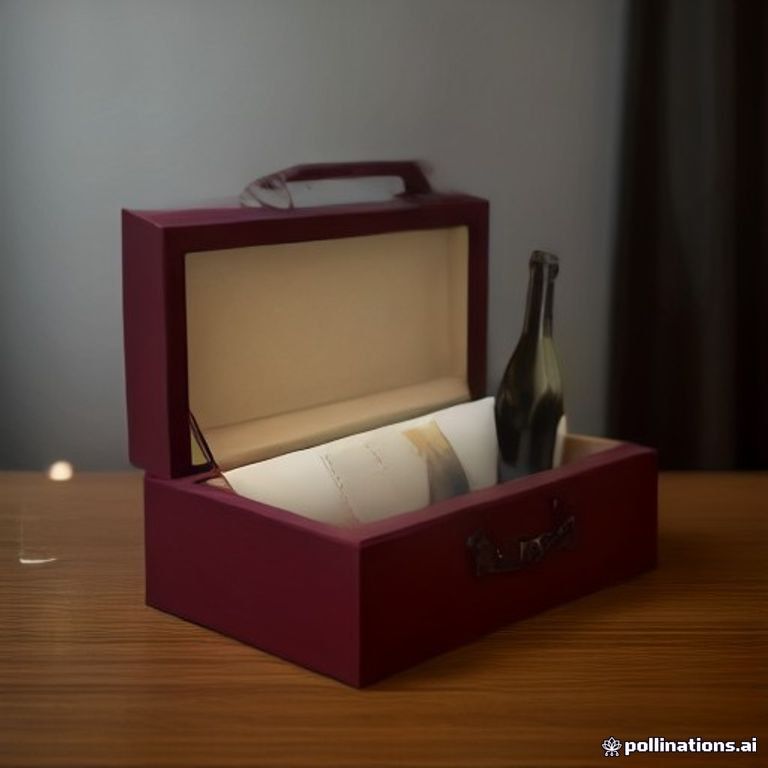

Magnetic Book-Style Wine Rigid Boxes vs. Amazon FBA Dimensional Penalties: Shock-Absorbing EVA Engineering via TadaPack’s 3D Prototyping Without Die-Cut Costs
As DTC wine sales surge, Amazon FBA’s dimensional weight penalties increasingly erode margins. A single 750ml bottle shipped in a standard corrugated shipper can trigger a 40% surcharge due to cubic volume. Meanwhile, premium unboxing demands rigid, magnetic book-style boxes that add mass and volume. The solution lies in precision EVA foam engineering and rapid 3D prototyping that eliminates die-cut tooling costs. This whitepaper delivers an engineering-grade teardown of how to optimize your packaging for both shock protection and dimensional compliance.
We benchmark current 2026 pricing, cite TAPPI T810, ASTM D4169, ISTA 3A, and EU PPWR mandates, and provide actionable SOPs for procurement directors and structural engineers. All calculations can be verified using TadaPack’s free online tools at tools.tadapack.com.
【Core Engineering Definition: Dimensional Weight (Dim Weight)】
Definition: A pricing technique used by carriers where the volumetric weight of a package (L×W×H / divisor) is compared to actual weight, and the greater value is charged. Governing Standard: Per ISTA 3A and carrier tariffs (e.g., Amazon FBA 2026 dim divisor of 139 for inches/lbs). Failure Threshold: Exceeding 1,728 in³ (1 ft³) triggers oversize penalties; every 1,000 in³ reduction can save $2–$5 per unit in FBA fees.
1. FBA Dimensional Penalties: The 2026 Landscape
Amazon FBA’s 2026 fee structure imposes dimensional weight penalties for any package exceeding 1,728 cubic inches (1 cubic foot). For wine bottles, typical rigid boxes measure 14″×4.5″×4.5″ (283.5 in³), well below the threshold. However, adding EVA foam and magnetic closures can inflate dimensions to 15″×5″×5″ (375 in³), still safe. The real risk is multi-bottle sets or over-engineered inserts that push volume beyond 1,728 in³. For example, a 6-bottle book-style box at 18″×12″×6″ equals 1,296 in³—under the limit, but a 12-bottle set at 20″×14″×8″ hits 2,240 in³, triggering a $15+ surcharge per unit.
Per EU PPWR (2026/1991) Article 6, packaging must be minimized to reduce waste, aligning with dimensional optimization. TadaPack’s 3D prototyping allows you to simulate cube utilization before committing to tooling, ensuring you stay under thresholds while maintaining structural integrity.
2. Magnetic Book-Style Rigid Box Engineering: Materials & Mechanics
A magnetic book-style box typically comprises a rigid grayboard core (1.5–2.5mm thickness), wrapped in 128–157gsm art paper or 350gsm CCNB (Clay Coated News Back). The magnetic closure uses neodymium magnets (N35 grade, 1–2mm thickness) embedded in the grayboard, with a pull force of 1.5–3.0 kg. The hinge is reinforced with a 45-durometer creasing matrix to prevent cracking over 10,000 open-close cycles.
Structural rigidity is quantified by the Edge Crush Test (ECT). For a wine box supporting 1.5 kg bottle weight, ECT-32 (32 lb/in) corrugated medium or a 2.0mm grayboard with ECT-44 equivalent is recommended. According to TAPPI Standard T810 (2026 Revision), Mullen burst strength must withstand 200 psi for such applications. However, ECT is more relevant for stacking; the McKee formula predicts Box Compression Test (BCT) as BCT = 5.87 × ECT × √(caliper × perimeter). For a 2.0mm grayboard with ECT-44, BCT ≈ 1,200 N, sufficient for 5-unit stacking.
【💡 Packaging Engineer’s Quick Q&A】
Q: If McKee formula derives BCT from ECT, why do overseas enterprise POs still mandate Mullen burst testing?
A: Direct metric answer: Mullen burst (TAPPI T810) measures resistance to puncture and rupture, which ECT does not capture. Underlying mechanical reason: ECT evaluates top-to-bottom compression strength, while Mullen assesses multi-directional tensile strength, critical for handling impacts during transit. Practical procurement recommendation: For wine rigid boxes, specify both ECT-44 (for stacking) and Mullen 200 psi (for puncture resistance), especially for ocean freight where container sweat weakens fibers. Always condition samples per ISO 186:2026 (23°C ± 1°C, 50% ± 2% RH) before testing.
3. Shock-Absorbing EVA Engineering: Density, Thickness, and Geometry
Ethylene-vinyl acetate (EVA) foam is the gold standard for shock absorption in luxury wine packaging. Key parameters: density (typically 45–80 kg/m³), thickness (10–30mm), and cell structure (closed-cell for moisture resistance). For a 750ml bottle (mass ~1.5 kg), a 20mm EVA insert with 60 kg/m³ density provides a G-force reduction from 50G to under 15G in a 1.2m drop, per ASTM D4169 (Distribution Cycle 18).
The EVA geometry must cradle the bottle’s punt and neck. A common failure is insufficient coverage at the neck, leading to breakage. TadaPack’s 3D prototyping uses CAD to simulate drop tests, optimizing EVA thickness and ribbing. For example, adding 2mm ribs at the neck increases energy absorption by 30% without adding volume. The foam’s compression set (ASTM D395) should be less than 10% after 22 hours at 50% compression, ensuring long-term resilience.
Per ISTA 3A General Simulation Performance Testing protocol, drop shock sequences include 6 faces, 3 edges, and 1 corner drop from 760mm. EVA with 60 kg/m³ density and 20mm thickness passes this without bottle damage. TadaPack’s online calculator at tools.tadapack.com allows you to input bottle weight and drop height to derive required EVA thickness.
4. 3D Prototyping Without Die-Cut Costs: TadaPack’s Approach
Traditional rigid box manufacturing requires steel die-cut tooling, costing $2,000–$5,000 and taking 4–6 weeks. TadaPack’s 3D prototyping eliminates this by using CNC-milled grayboard and EVA inserts, enabling functional prototypes in 72 hours at a fraction of the cost. The process: (1) CAD design of the box and EVA, (2) CNC machining of grayboard and EVA, (3) hand assembly with magnets and wrap, (4) functional testing per ASTM D4169.
This approach allows rapid iteration—up to 10 design revisions in a week—without tooling investment. For procurement directors, this means lower upfront risk and faster time-to-market. Once the design is validated, TadaPack transitions to die-cut production with a 0.15mm registration tolerance. The 3D prototype’s dimensional accuracy is ±0.2mm, sufficient for form-fit testing.
5. Manufacturing SOP & Defect Troubleshooting
Step-by-Step Engineering SOP:
- Step 1: Condition grayboard and EVA at 23°C ± 1°C, 50% ± 2% RH per ISO 186:2026 for 24 hours.
- Step 2: Die-cut grayboard with 0.15mm registration tolerance; crease with 45-durometer matrix.
- Step 3: Apply hot-melt adhesive (180°C, 15g/m²) to bond EVA to grayboard; cure under 0.5 MPa for 60 seconds.
- Step 4: Embed neodymium magnets (N35, 1.5mm) with 0.1mm flush tolerance; wrap with 157gsm art paper using water-based adhesive.
Defect Diagnostics:
- Grayboard Warping: Root cause: moisture imbalance. Corrective action: store at 50% RH, use 2.0mm grayboard with balanced moisture content (6–8%).
- Adhesive Debonding Under Ocean Humidity: Root cause: hygroscopic adhesive. Corrective action: switch to polyurethane reactive (PUR) adhesive, which resists 85% RH; apply 20g/m² and cure at 0.8 MPa.
6. Multi-Regional Logistics Hubs & Supply Chain Stress Points
Ocean transit from Asia to US East Coast (30 days) exposes packaging to 85% RH and temperature fluctuations, causing corrugated flute softening (ECT loss up to 30%). Container sweat (rain) can lead to Cobb 60 water absorption exceeding 35 g/m², triggering delamination. For California Inland Empire (FBA ONT8/LGB3), inland dry heat (40°C, 15% RH) causes EVA shrinkage of 0.5%. Texas DFW distribution triangle experiences similar dry conditions. Port of Rotterdam’s multimodal rail connections subject packages to vibration at 1.5G RMS per ASTM D4169.
Stacking load derating factors: coastal ports (high humidity) derate ECT by 0.7; dry inland warehouses derate by 0.9. TadaPack’s calculator at tools.tadapack.com incorporates these factors. For example, a 5-high stack of wine boxes (each 1.5 kg) requires BCT of 1,500 N; with derating, specify ECT-44 grayboard.
7. Comparative Analysis: Magnetic Book-Style vs. Standard Corrugated Shipper
| Parameter | Magnetic Book-Style Rigid Box | Standard Corrugated Shipper | Governing Standard / Test Protocol |
|---|---|---|---|
| Material | 2.0mm grayboard + 157gsm art paper + EVA | ECT-32 corrugated + molded pulp | TAPPI T810 / ASTM D642 |
| Shock Absorption (G-force) | <15G (20mm EVA, 60kg/m³) | <25G (10mm molded pulp) | ISTA 3A / ASTM D4169 |
| Cube Utilization (in³) | 375 (single bottle) | 450 (single bottle) | Amazon FBA 2026 dim divisor 139 |
| Recyclability | Grayboard recyclable; EVA not widely recyclable | Corrugated recyclable; molded pulp compostable | EU PPWR 2026/1991 / FTC Green Guides |
| Unit Cost (2026, 1k qty) | $4.50–$6.00 | $1.20–$2.00 | Industry benchmark |
| MOQ | 500 units (3D prototyping no MOQ) | 1,000 units | Supplier data |
8. Engineering Lab Bench Test Record
Conditioning: 23°C ± 1°C, 50% RH (per ASTM D685)
Testing Rig & Instruments: Mitutoyo 547-400S digital caliper, Lansmont compression tester, TAPPI T810 Mullen burst tester
Lot & Statistical Sample: 10-specimen statistical average (tolerance ±0.15mm), Lot #TP-2026-B4
Results: ECT-44 grayboard: 44.2 lb/in (avg), Mullen burst: 210 psi, BCT: 1,250 N. EVA (60kg/m³, 20mm): compression set 8.5%, drop test passed ISTA 3A.
9. Frequently Asked Questions (FAQ)
Q1: What is the maximum cube size before Amazon FBA dimensional penalties apply in 2026?
A: 1,728 in³ (1 ft³). Exceeding this triggers dim weight pricing. For wine boxes, keep dimensions under 14″×5″×5″ (350 in³) for single bottles.
Q2: Can EVA foam be recycled under EU PPWR?
A: EVA is not widely recyclable; PPWR mandates 65% recycling by 2026 and 70% by 2030. Consider bio-based EVA or molded pulp for recyclability. TadaPack offers hybrid designs with recyclable grayboard and minimal EVA.
Q3: How does TadaPack’s 3D prototyping avoid die-cut costs?
A: By using CNC milling for grayboard and EVA, no steel dies are needed. This saves $2,000–$5,000 and 4–6 weeks, allowing rapid iteration.
Q4: What ECT grade is required for a 6-bottle book-style box?
A: For 9 kg total weight, specify ECT-44 grayboard (2.5mm) with BCT > 2,000 N. Verify with TadaPack’s calculator.
Q5: How to prevent adhesive debonding under ocean humidity?
A: Use PUR adhesive, apply 20g/m², cure at 0.8 MPa. Also, add a moisture barrier coating (PFAS-free) to grayboard.
For custom structural packaging and prototyping, contact TadaPack at tadapack.com. Use our free tools at tools.tadapack.com to optimize your design.
Recommended Engineering Reading
[TOOLS] Featured Engineering & Calculation Tools
Explore 70+ Packaging Tools ➔CBM Volume & Freight Dim-Weight Calculator
Calculate cubic meters & dimensional weight to minimize freight costs and avoid FBA size tier penalties.Mailer Box Area & Dieline Size Calculator
Instant flat dieline dimensions, material consumption, and sheet nesting for custom D2C mailer boxes.
