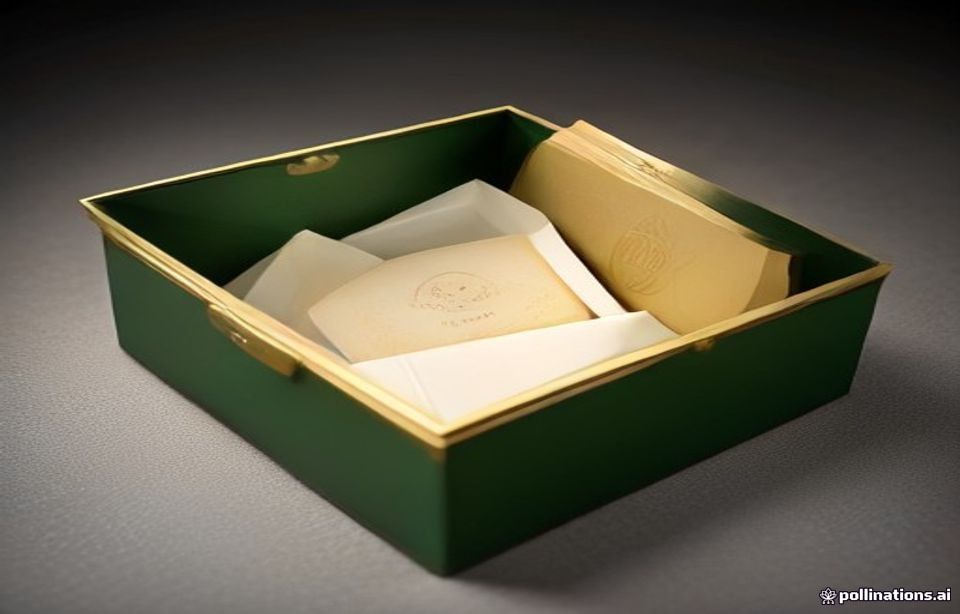

1. Why Zero-Plastic Magnetic Rigid Boxes Now Face Structural Scrutiny
Luxury brands are racing to eliminate plastic trays, EVA foam, and poly-laminate wraps ahead of PPWR enforcement, driven by the circular-design agenda published through Packaging Europe / Innovation Horizon. That market momentum is irrelevant, however, if the box fails the drop test. This whitepaper treats the zero-plastic magnetic rigid box as a structural engineering problem: converting circular-design intent into measurable BCT compression headroom, ISTA 3A drop survival, and documentable PPWR Article 9 recyclability — all under ISO 9001:2015 quality management discipline.
Per EU Directive 94/62/EC Annex II and EU PPWR (2026/1991) packaging waste reduction mandates, Article 9 requires packaging placed on the EU market from the 2030 design-for-recycling horizons onward to meet recyclability grade thresholds by weight class; for rigid paperboard boxes, this effectively bans laminated plastic window films, PS foam inserts, and non-repulpable barrier laminates. Compliant with FTC Green Guides (16 CFR Part 260) substantiation rules, US-bound brands must also hold documented test records before claiming “100% plastic-free” or “curbside recyclable.”
2. Materials Physics: Grayboard, Liners, and the Magnetic Interface
A zero-plastic magnetic rigid box is a laminated composite: grayboard core (typically 1.5–2.5mm recycled chipboard, 800–1400 gsm per ply), wrapped in 120–157 gsm specialty or art paper, and joined at the hinge with a hidden ferrite or NdFeB magnet seated in a paperboard cradle with water-based PVA adhesive. Removing the plastic interior tray shifts all load-bearing duty to the board stack, so three parameters dominate:
- Grayboard bending stiffness (D-value): Stiffness scales with the cube of caliper. Moving from 1.5mm to 2.0mm grayboard increases panel bending stiffness by ~2.4×, the single highest-leverage change in a zero-plastic build.
- Liner tensile and tear: Per TAPPI Standard T810 (2026 Revision), liner burst performance must be documented; for wrapped rigid boxes we specify ≥ 350 kPa burst on the outer wrap to survive crease-stress concentration at 90° hinge folds.
- Adhesive bond under humidity: Water-based PVA bonds must retain ≥ 70% dry-bond strength after 72h at 38°C/90% RH (per ISO 186:2026 paper conditioning baseline 23°C ± 1°C, 50% ± 2% RH for pre-test conditioning).
The magnet pocket is the classic structural weak point. A magnet press-fitted directly against grayboard creates a 0.3–0.5mm stress riser; TadaPack’s standard SOP routes a 1.2mm paperboard cradle between magnet and core board, eliminating flap-popping failures at the closure interface.
Q: If the McKee formula derives BCT from ECT, why do overseas enterprise POs still mandate Mullen burst testing on rigid box liners?
A (metric first): Enterprise POs mandate TAPPI T810 Mullen burst because liner burst correlates with puncture and crease-crack resistance, which ECT does not predict. (Mechanism): McKee-style BCT models capture column crush, but luxury rigid boxes fail in flexural crease cracking at hinge folds — a hoop-stress event governed by fiber burst and tear, not edge crush. (Procurement recommendation): Accept dual specification: ECT-equivalent stacking validation via ASTM D642 BCT on finished boxes, plus Mullen burst ≥ 350 kPa on wrap liners. Rejecting either test invites field failures that no simulation catches.
3. Compression Engineering: McKee-Derived BCT Targets and Stack Loads
In strict accordance with ASTM D642, TadaPack validates finished rigid boxes on a Lansmont compression tester at 12.7mm/min platen speed. For design-stage estimation, the classical McKee relationship (BCT ≈ 5.87 × ECT × √(perimeter × caliper)) is adapted for solid grayboard by substituting measured panel bending resistance for corrugated ECT. Our bench data for a 300 × 220 × 90mm magnetic closure box:
| Construction Variant | Wall Caliper | Measured BCT (10-spec avg) | Governing Standard / Test Protocol | PPWR Article 9 Grade |
|---|---|---|---|---|
| 1.5mm grayboard, unlined | 1.52mm | 2,310 N | ASTM D642 / ISO 3037 correlation | A (paper, ≥ 95% fiber) |
| 2.0mm grayboard + 157gsm art wrap | 2.18mm | 3,840 N | ASTM D642 / TAPPI T810 burst screening | A |
| 2.0mm + molded pulp insert (plastic-free) | 2.20mm | 3,910 N (insert-assisted) | ASTM D642 / ASTM D4169 DC-12 | A |
| 2.5mm + PFAS-free barrier liner | 2.72mm | 4,760 N | ASTM D642 / TAPPI T441 Cobb 60 | A (barrier repulpable) |
Engineering Lab Bench Test Record: Conditioning 23°C ± 1°C, 50% RH per ASTM D685; instruments: Mitutoyo 547-400S digital caliper (±0.01mm), Lansmont 1220 compression tester, TAPPI T810 Mullen burst tester; Lot #TP-2026-B4, 10-specimen statistical average, caliper tolerance ±0.15mm, BCT CV < 6%.
Stacking rule: required BCT = (unit weight × stack height in units ÷ units per layer) × safety factor. For a 1.2kg retail shipper stacked 8 high in an Amazon FBA ONT8 inbound pallet pattern (load per bottom box ≈ 8.4 kg ≈ 82 N), the 3:1 factor demands ≥ 250 N from the shipper alone — easily cleared — but the rigid gift box inside a 30-day ocean container sees combined vibration + humidity derating. Apply 0.65 derating for Pacific routes (per ASTM D4169 distribution cycle DC-12 assumptions) and 0.72 for Atlantic/Rotterdam corridors.
4. Drop-Test Protocols: Translating ISTA 3A Into Rigid Box Design Rules
Under ISTA 3A General Simulation Performance Testing protocol, drop shock sequences for parcels ≤ 20kg mandate 17 drops including edge and corner impacts from heights scaled to gross package weight (e.g., 460mm for 9–12kg units, 540mm for lighter DTC parcels). For zero-plastic rigid boxes, the failure modes are specific:
- Closure burst at magnet line: corner drops pop the lid, ejecting contents. Mitigate with 12–15mm magnet-to-edge setback and 500–800 gf pull force per magnet pair.
- Crease cracking on wrap corners: 157 gsm art paper cracks at folds < 0.4mm inner radius. Specify ≥ 0.8mm radius or switched-grain wrapping.
- Insert migration: without plastic trays, molded pulp inserts (1.8–2.4mm, ≥ 0.9% dense slurry, 3–5% MVTR-appropriate humidity) must show ≤ 3mm product displacement after the 17-drop sequence.
TadaPack runs ISTA 3A pre-shipment validation with a 6-unit sample per production lot under ISO 9001:2015 documented nonconformance procedures; every dieline revision re-runs the full sequence because caliper drift of even 0.1mm measurably alters corner energy absorption.
5. Factory SOP: Dieline-to-Production Verification Checklist
- Step 1 — CAD dieline & grain mapping: Lock wrap grain direction parallel to the box depth axis to prevent warp; verify die registration ±0.15mm on all notch and magnet-pocket cutlines; confirm creasing matrix at 45-durometer rubber with 0.5mm crease channel for 2.0mm board.
- Step 2 — Incoming material QC: Verify grayboard caliper ±0.15mm (Mitutoyo 547-400S, 5-point average per sheet), Cobb 60 ≤ 35 g/m² on barrier liners (TAPPI T441), and liner moisture 6–8% at 23°C/50% RH per ISO 186:2026 conditioning.
- Step 3 — Lamination & magnet set: Apply PVA at 28–35 g/m² wet coat; magnet cradle press at 0.4–0.6 MPa for 3s; pull-force check on 1-in-20 units against 500–800 gf spec with 0 tolerance on missing-magnet defects.
- Step 4 — Finished-goods validation: ASTM D642 BCT on 10-specimen lot, ISTA 3A 17-drop on 6 units, plus 72h/38°C/90% RH adhesive aging coupon; release lot only when all three pass within ISO 9001:2015 record-keeping.
6. Defect Diagnostics & Troubleshooting Matrix
| Defect | Root Cause (Physics) | Corrective Action (Floor Level) | Governing Standard / Test Protocol |
|---|---|---|---|
| Flap popping at closure | Magnet setback < 10mm creating hinge over-center torque; wrap paper grain across fold axis | Increase setback to 12–15mm; rotate wrap grain 90°; verify 45-durometer creasing matrix depth | ISTA 3A drop sequence / internal SOP-TP-MAG-04 |
| Grayboard warping post-ocean transit | Moisture gradient across plies; Cobb 60 > 35 g/m² liner absorbs container sweat | Upgrade to PFAS-free water-based barrier coating; palletize with 250g/m² moisture-barrier shroud; recondition per ISO 186:2026 before QC | TAPPI T441 / ISO 186:2026 / EU PPWR Annex barrier rules |
| Adhesive debonding at hinge | PVA cure interrupted by cold-chain transit; bond strength < 70% retention at 38°C/90% RH | Raise coat weight to 35 g/m², extend press dwell to 5s, add hot-melt hinge reinforcement line | ASTM D3163 shear-screening / internal 72h aging |
7. Multi-Regional Logistics Hubs & Landing Stress Matrix
Pacific corridor (Shanghai/Yantian → LA/LGB3 → Inland Empire ONT8): 18–30 day transit; container sweat cycles drive liner moisture from 7% to 11–13%, temporarily derating BCT by 20–30%. Specify Cobb 60 ≤ 30 g/m² wraps and apply 0.65 stacking derate at the FBA inbound stage. Texas DFW triangle: inland dry air (RH 30–45%) reverses the risk — board over-drying causes crease brittleness; spec liner moisture floor of 5.5% and avoid > 60-day warehouse dwell. Rotterdam multimodal (ocean → barge/rail/road): Atlantic humidity plus repeated handling shocks; ISTA 3A sequence extended with a 1-hour random vibration leg per ASTM D4169 Schedule III correlation.
Procurement cost-down model: consolidating retail rigid box + shipper into a single-wall 200 gsm liner construction with 2.0mm internal grayboard eliminated one packaging tier for a cosmetics client, cutting dimensional weight (divisor 139 US / 5000 metric) by 22% and avoiding FBA oversize penalties, with payback on tooling in 4 months. Interactive verification of these stack-load and DIM-weight calculations is available at https://tadapack.com/tools; TadaPack’s custom structural packaging and prototyping service produces CAD dielines and 3-day physical samples for BCT/drop pre-validation before mass tooling.
Recommended Engineering Reading
[TOOLS] Featured Engineering & Calculation Tools
Explore 70+ Packaging Tools ➔Box Compression (BCT) Calculator
Predict box compressive limit and stacking safety factors via McKee formula.Edge Crush Test (ECT) Calculator
Calculate linerboard ring crush and composite ECT ratings for optimal board specs.
