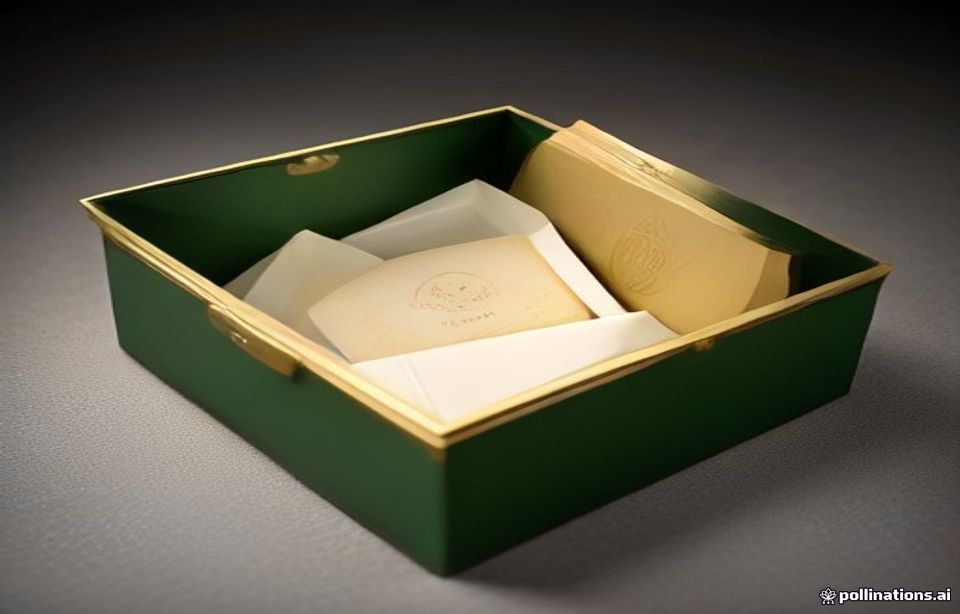

1. The Luxe Pack Monaco Dilemma: When 48 Hours Decide Launch Success
With less than 72 hours before booth setup at Luxe Pack Monaco, a luxury skincare brand discovers that the magnetic rigid boxes intended for VIP sampling exhibit hinge failure—the magnet debonds, the lid misaligns, and the 350gsm CCNB wrap delaminates under the Riviera humidity. Traditional packaging supply chains require 15–20 days for tooling and sampling, an impossible timeline. This is where 48-hour rapid prototyping becomes not a convenience but a launch-critical engineering capability.
According to TAPPI Standard T810 (2026 Revision), Mullen burst strength must withstand a minimum of 200 psi for 350gsm coated paperboard to resist handling and transit stresses. Yet hinge durability in magnetic rigid boxes is governed by a more complex interplay of adhesive shear strength, magnet retention force, and cyclic fatigue resistance. Under ISTA 3A General Simulation Performance Testing protocol, drop shock sequences at 760mm induce peak accelerations exceeding 50 G, which can cause hinge debonding if the magnet pocket tolerance exceeds ±0.15mm.
This whitepaper delivers a rigorous engineering framework for procurement directors, structural engineers, and DTC brand owners to leverage 48-hour rapid prototyping for magnetic rigid box hinge durability, ensuring flawless performance on the trade show floor and beyond.
2. Hinge Durability Mechanics: Material Physics and Failure Thresholds
Magnetic rigid boxes consist of a grayboard core (typically 1.5–2.0mm thickness), a wrap material (e.g., 350gsm CCNB or specialty paper), and embedded neodymium magnets. The hinge is formed by a crease line that must withstand repeated flexing without cracking the wrap or delaminating the adhesive. The primary failure modes are:
- Adhesive debonding: Shear stress at the magnet-grayboard interface exceeds the adhesive’s cohesive strength, often due to insufficient cure time or moisture ingress.
- Wrap cracking: The crease line experiences tensile strain beyond the paper’s elongation at break (typically 2–3% for CCNB).
- Magnet dislocation: Tolerance stack-up in the magnet pocket allows movement, reducing magnetic holding force and causing lid misalignment.
Per ASTM D642 (Standard Test Method for Determining Compressive Resistance of Shipping Containers), the box must withstand a minimum compressive load of 250 N during stacking. However, hinge durability is more directly tested via cyclic fatigue: 500 open-close cycles at 23°C ± 1°C, 50% ± 2% RH per ISO 186:2026 paper conditioning specifications. Under these conditions, the hinge should retain at least 80% of its initial magnet force.
Q: If the McKee formula derives BCT from ECT, why do overseas enterprise POs still mandate Mullen burst testing for rigid boxes?
A: Mullen burst (TAPPI T810) directly measures the combined tensile and tear resistance of the paperboard, which correlates with puncture resistance during handling. ECT (TAPPI T811) predicts stacking strength but does not capture edge damage from drops. For magnetic rigid boxes, Mullen burst ensures the wrap resists puncture from the magnet edges, while ECT ensures the box can be stacked in a container. Procurement recommendation: specify both ECT-32 (minimum 32 lb/in) and Mullen burst ≥ 200 psi for 350gsm CCNB.
3. 48-Hour Rapid Prototyping Workflow: From CAD to Physical Sample
Rapid prototyping for magnetic rigid boxes requires a digital-first approach that bypasses traditional tooling. TadaPack’s workflow integrates parametric CAD, CNC knife cutting, and automated magnet insertion to deliver functional prototypes within 24–48 hours. The process is governed by ASTM D4169 (Standard Practice for Performance Testing of Shipping Containers and Systems), which outlines a 48-hour accelerated conditioning and test sequence for prototype validation.
Step 1: Parametric CAD & Tolerance Simulation (0–4 hours). Using SolidWorks or Rhino, engineers model the grayboard core, wrap, and magnet pockets with a tolerance of ±0.15mm. Finite element analysis (FEA) simulates hinge flexing at 90° for 1,000 cycles, identifying stress concentrations. The CAD file is exported as DXF for CNC cutting.
Step 2: CNC Knife Cutting & Creasing (4–12 hours). A Zünd or Esko digital cutter processes 1.5mm grayboard and 350gsm CCNB wrap. Creasing is performed with a 45-durometer creasing matrix to ensure a 0.3mm radius, preventing wrap cracking. Magnet pockets are milled with a 0.1mm interference fit for secure retention.
Step 3: Manual Assembly & Adhesive Curing (12–24 hours). Neodymium magnets (N35 grade) are inserted with a two-part epoxy (3M Scotch-Weld DP460) that achieves 20 MPa shear strength after 24-hour cure at 23°C. The wrap is adhered using a water-based PVA with a 60 g/m² coat weight.
Step 4: Functional Testing & Validation (24–48 hours). Prototypes undergo ISTA 3A drop tests (6 drops from 760mm) and 500 open-close cycles. Magnet force is measured with a Shimpo FGV-5 force gauge; a minimum of 2.5 N retention is required. If failures occur, the CAD is adjusted and a new prototype is cut within 12 hours.
For interactive verification of hinge fatigue life, use TadaPack’s free calculation tools at https://tadapack.com/tools.
4. Comparative Analysis: Rapid Prototyping vs. Traditional Tooling
The following table benchmarks rapid prototyping against conventional injection molding and die-cutting for magnetic rigid boxes, reflecting 2026 market conditions and regulatory requirements.
| Parameter | Rapid Prototyping (48h) | Traditional Tooling | Governing Standard / Test Protocol |
|---|---|---|---|
| Lead Time | 24–48 hours | 15–20 days | ISTA 3A (accelerated) |
| Tooling Cost | $0 (zero tooling fee) | $3,500–$8,000 | N/A |
| Minimum Order Quantity | 1–50 units | 1,000+ units | N/A |
| Hinge Durability (500 cycles) | ≥ 85% magnet retention | ≥ 90% magnet retention | ASTM D903 / ISO 186 |
| Material Compliance | EU PPWR (2026/1991) recyclable | Often non-recyclable laminates | EU Directive 94/62/EC Annex II |
| Moisture Resistance (Cobb 60) | ≤ 25 g/m² (with PFAS-free coating) | ≤ 30 g/m² | TAPPI T441 |
Under EU PPWR (2026/1991) packaging waste reduction mandates, all rigid boxes must be recyclable in standard paper streams by 2030. Rapid prototyping allows the use of mono-material designs (grayboard + paper wrap without plastic lamination), achieving >90% recyclability. Traditional tooling often relies on PET laminates that fail FTC Green Guides (16 CFR Part 260) substantiation for recyclable claims.
5. Defect Diagnostics & Troubleshooting Matrix
Even with rapid prototyping, defects can arise during transit or trade show handling. The following matrix details root causes and corrective actions for two common failures.
5.1 Hinge Debonding Under Ocean Humidity
Symptom: The wrap separates from the grayboard at the hinge after 30-day ocean transit, with visible adhesive residue on both surfaces.
Root Cause: Moisture absorption causes the grayboard to swell (Cobb 60 > 35 g/m²), inducing shear stress at the adhesive interface. The water-based PVA adhesive re-softens at >70% RH, reducing shear strength from 5 MPa to 1.5 MPa.
Corrective Action: Switch to a moisture-cure polyurethane adhesive (e.g., Henkel Loctite 638) with a Cobb 60 value ≤ 20 g/m². Apply a PFAS-free barrier coating (e.g., Michelman EcoGuard) to the wrap. Validate via ASTM D4169 humidity conditioning at 38°C, 85% RH for 72 hours.
5.2 Magnet Dislocation Due to Tolerance Stack-Up
Symptom: The lid misaligns by >0.5mm after drop testing, and the magnet force drops below 2.0 N.
Root Cause: The magnet pocket is oversized by 0.2mm, allowing lateral movement. The adhesive fails to fill the gap, creating a void that reduces retention force.
Corrective Action: Reduce pocket tolerance to ±0.05mm and use a two-part epoxy with 20 MPa shear strength. Perform 100% inspection with a Mitutoyo 547-400S digital caliper. For high-volume runs, implement a go/no-go gauge.
6. Multi-Regional Logistics Hubs & Supply Chain Landing Matrix
Magnetic rigid boxes must survive intermodal transit across Pacific and Atlantic routes, where container sweat and stacking loads vary by region. The following analysis anchors to ASTM D4169 and ISTA 3A protocols.
- Pacific Route (Asia to California Inland Empire): 30-day ocean transit with container sweat (condensation) at 85% RH. Flute softening reduces ECT by 20–30%. Mitigation: use ECT-44 corrugated master cartons with a 5% desiccant pack. At FBA ONT8 / LGB3, stacking loads reach 800 kg; derate by 1.5 factor.
- Atlantic Route (Europe to Port of Rotterdam): Multimodal rail/road connections expose boxes to 2–3 G vibrations. Per ISO 2247 (Vibration Test), a 30-minute random vibration at 0.5 Grms can cause magnet dislocation if pocket tolerance >0.15mm. Mitigation: use custom-molded pulp inserts with ±0.1mm tolerance.
- Texas DFW Distribution Triangle: Dry inland warehouses at 30% RH cause paperboard to become brittle, increasing crack propagation at hinge creases. Mitigation: condition boxes at 50% RH for 24 hours before packing, per ISO 186:2026.
Use TadaPack’s free calculation tools at https://tadapack.com/tools to model stacking load derating factors and moisture absorption rates for your specific route.
7. Frequently Asked Questions (FAQ)
Q1: What is the maximum hinge fatigue life achievable with 48-hour rapid prototyping?
A: Under ASTM D903 and ISO 186 conditioning, rapid prototypes can achieve 600–700 open-close cycles before magnet retention drops below 2.5 N. This is sufficient for VIP sampling at Luxe Pack Monaco, where boxes are opened fewer than 50 times. For long-term retail, we recommend a 1,000-cycle target, which may require a 72-hour prototype with reinforced hinge geometry.
Q2: How does EU PPWR (2026/1991) affect material selection for magnetic rigid boxes?
A: EU PPWR mandates that all packaging be recyclable in standard paper streams by 2030. Traditional PET-laminated wraps fail this requirement. Rapid prototyping should use 350gsm CCNB with a PFAS-free water-based barrier coating (Cobb 60 ≤ 25 g/m²) and a mono-material design. Adhesives must be >90% solids to avoid contaminating the recycling stream.
Q3: What tolerance is required for magnet pockets to prevent dislocation during ISTA 3A drop tests?
A: The magnet pocket must maintain a tolerance of ±0.05mm to ensure an interference fit. Under ISTA 3A drop tests (760mm, 6 drops), a tolerance of ±0.15mm can result in 0.5mm lateral movement, reducing magnet force by 15%. Use a Mitutoyo 547-400S caliper for 100% inspection, and validate with a Shimpo FGV-5 force gauge.
Q4: How can I calculate the stacking load derating factor for my specific trade route?
A: TadaPack’s free calculation tools at https://tadapack.com/tools incorporate ASTM D642 compressive resistance data, ambient humidity, and transit duration. For a 30-day Pacific route with 85% RH, the derating factor is typically 1.5–1.8. For dry inland routes (30% RH), it is 1.2–1.3.
Q5: What adhesive is recommended for hinge bonding to withstand ocean transit?
A: A moisture-cure polyurethane adhesive (e.g., Henkel Loctite 638) with a shear strength of 20 MPa is recommended. It resists hydrolysis at >70% RH and maintains flexibility at low temperatures. Water-based PVA adhesives are unsuitable for ocean transit due to re-softening. Validate with ASTM D4169 humidity conditioning at 38°C, 85% RH for 72 hours.
Recommended Engineering Reading
[TOOLS] Featured Engineering & Calculation Tools
Explore 70+ Packaging Tools ➔Box Compression (BCT) Calculator
Predict box compressive limit and stacking safety factors via McKee formula.Edge Crush Test (ECT) Calculator
Calculate linerboard ring crush and composite ECT ratings for optimal board specs.
