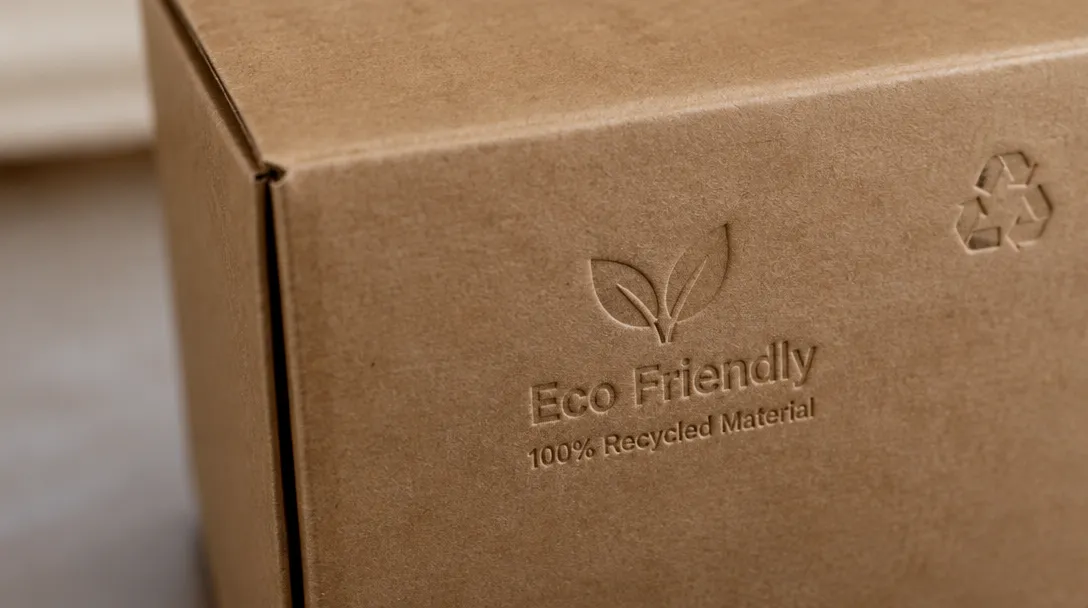
EU Regulation (EU) 2024/1991 — the Packaging and Packaging Waste Regulation (PPWR) — replaces Directive 94/62/EC and imposes binding recyclability grades, recycled content targets for plastic packaging, and empty-space minimization rules with staggered deadlines from 2030 onward. For paper-based corrugated and folding-carton shippers, procurement must specify recovered-fiber ratios consistent with EN 643 paper-grade definitions and EN 13430 recyclability requirements, and eliminate plastic-laminated tapes and synthetic-polymer adhesives in favor of repulpable starch-based or plastic-free hot-melt systems.

What Exactly Changed When PPWR Replaced the Old Packaging Directive?
The PPWR is a Regulation, not a Directive: it applies directly and uniformly across all 27 Member States without national transposition, ending the fragmented enforcement that characterized Directive 94/62/EC. Three structural shifts matter for B2B packaging buyers. First, packaging is assigned to recyclability classes A, B or C based on design-for-recycling criteria, with Class A achieving ≥95% by weight of recyclable material fractions — and only packaging meeting minimum recyclability thresholds may be placed on the EU market after the 2030 deadline. Second, plastic packaging (not paper-based packaging) carries binding minimum recycled content quotas, ranging from 10% to 35% depending on polymer type and contact sensitivity by 2030. Third, the regulation caps empty space at 50% of packed volume in grouped, transport and e-commerce packaging, which directly impacts shipper cube design and dimensional-weight exposure under Amazon FBA and DHL parcel tariff structures.
For US exporters and European DTC brands alike, the engineering consequence is unambiguous: any adhesive, tape, label or barrier coating that deposits synthetic polymer into the repulping stream now carries a quantified compliance cost. A conventional BOPP-taped corrugated box or a hot-melt with polyolefin carrier introduces non-fiber mass that counts against the recyclable fraction.
Who and What Does PPWR Cover — and How Do Recycled Pulp Ratios Factor In?
PPWR covers all packaging placed on the EU market regardless of origin — including US-manufactured e-commerce shippers shipping into Rotterdam or Hamburg — with derogations only for a narrow list of sensitive products. It does not regulate material composition quotas for paper-based packaging the way it does for plastics; there is no PPWR-mandated minimum recycled pulp percentage for corrugated board. However, the effective recycled fiber ratio is governed indirectly through three mechanisms:
- EN 643 grade classification: The European List of Standard Grades of Paper and Board for Recycling defines allowed non-paper components per grade. Grade 1.02 (corrugated/kraft) tolerates ≤1% non-paper components and prohibits non-water-dispersible coatings in practice; exceeding these limits devalues the recovered grade and can jeopardize the pack’s design-for-recycling score.
- Recyclability delegated acts: Composite packaging with substantial plastic content (e.g., plastic-band, laminated barriers) is scored against plastic recyclability criteria, pushing engineers toward mono-material fiber constructions.
- Downstream verification: Per EN ISO 186-1 sampling and conditioning for paper/board testing, fiber composition claims must be substantiated; per FTC Green Guides (16 CFR Part 260), US brands making recycled-content claims on the same pack must retain competent and reliable substantiation.
In practice, a compliant 2026 procurement spec for a C-flute e-commerce shipper reads: kraft liner with ≥85% recovered fiber content, water-based starch adhesive bonding (single-facer and double-facer glue lines), PFAS-free barrier coating if moisture resistance is required, and paper tape or repulpable adhesive for closure. Typical industrial liner basis weights remain 125–200 g/m² per liner with C-flute caliper ≈ 3.5–4.0 mm and E-flute ≈ 1.5 mm, tested per TAPPI T411 for caliper and TAPPI T810 for burst, with ECT values per TAPPI T811 driving BCT estimation for stacking performance.
Q: If PPWR sets no recycled-pulp quota for paper packaging, why do EU retail compliance sheets still demand ≥85% recycled fiber in our shipper spec?
A: First, the metric: retail buyers are passing down their own Extended Producer Responsibility (EPR) fee modulation, where packaging fees are discounted for high-recycled-content, mono-material packs, plus EN 643 grade 1.02 cleanliness expectations. Second, the mechanical reason: recovered-fiber-heavy liners generally run slightly lower burst/ECT than virgin kraft at equal basis weight, so the ≥85% spec forces liner selection and flute architecture (e.g., stepping from ECT-32 to ECT-44 or from single-wall C to BC double-wall) to hold stacking performance. Third, procurement recommendation: lock the recycled ratio in the PO alongside ECT minimums so your supplier reformulates the liner/flute combination rather than quietly downgrading board — verify final packs with ISTA 3A General Simulation performance testing before the first production release.
Which Adhesive Systems Qualify as Plastic-Free Under PPWR Recyclability Criteria?
Adhesive selection is now a recyclability decision, not merely a bonding decision. The governing criterion is water-dispersibility during repulping: an adhesive that disperses into micro-fine particles without forming sticky contaminants (stickies) supports the fiber stream and the pack’s recyclability grade. Three families dominate compliant specifications:
| Adhesive System | Typical Chemistry | Repulpability | Best Application | Governing Standard / Protocol |
|---|---|---|---|---|
| Starch-based / dextrin glue | Modified corn/potato starch | Fully repulpable, fiber-compatible | Folding carton side seams, corrugated double-facer glue lines | EN 13430, EN 643 grade limits |
| Plastic-free hot-melt | Starch/resin carrier, no polyolefin | Repulpable, low-stickies | High-speed case closing, carton sealing | EN 13430; ppwr delegated-act design criteria |
| Water-based PVA dispersion | Vinyl acetate emulsion (small %) | Generally dispersible; verify per grade | Lamination, rigid grayboard wrap | EN 643 non-paper component limits |
| BOPP tape / EVA hot-melt w/ polyolefin carrier | Synthetic polymer film/carrier | Non-repulpable contaminant | Avoid on recyclability-critical packs | Fails EN 13430 intent; reduces recoverable fraction |
Two engineering caveats. First, bonding strength must not be sacrificed for repulpability: a starch-bonded side seam that fails under ASTM D642 compression testing or ISTA 3A drop sequences creates more supply-chain waste than it saves. Validate adhesive joints at 23°C ± 1°C, 50% ± 2% RH conditioning per ISO 187/ISO 186 paper testing atmospheres, and check bond performance after simulated 30-day ocean-transit humidity exposure. Second, watch the Cobb 60 water absorption of liners paired with water-based adhesives; excessive absorption (Cobb 60 above roughly 35 g/m² on a barrier-critical pack) correlates with glue-line softening and transit delamination in humid corridors.
What Are the Key PPWR Dates and Deadlines Procurement Must Build Into 2026 Roadmaps?
The regulation entered into force in early 2025 with most binding obligations phased across the 2026–2030 window and beyond. Procurement directors should anchor supplier contracts, tooling changes and art approvals to the following milestones:
- 2026 — Actively operational transition period: harmonized design-for-recycling criteria being finalized via delegated acts; brands should complete material audits and requalify adhesive and barrier systems now.
- 1 January 2030 — Recyclability grade thresholds become market-access requirements; minimum recycled content quotas for plastic packaging apply; empty-space limit (≤50%) and e-commerce shipper rules bind.
- 1 January 2035 — Recyclability performance targets tighten (packaging achieving Class B or better scale-up requirements); recycled content quotas step up.
- 1 January 2040 — Longest-horizon recycled content targets apply, effectively mandating circular supply contracts today.
Hypothetical worked example for budget planning: a DTC brand shipping 500,000 units/year of ECT-32 C-flute shippers currently tape-closing with BOPP tape. Switching to repulpable paper tape plus plastic-free hot-melt for the manufacturer’s joint typically adds a low single-digit percentage to unit cost but removes the last synthetic-polymer contaminant from the recyclable fraction — the difference between Class A and a downgraded grade at the 2030 checkpoint.
What Should You Do Now? A Compliance Verification Checklist
Run this four-step verification SOP across every active SKU before your next PO cycle:
- Step 1 — Fiber audit: Obtain mill declarations of recovered-fiber ratio per liner and medium; cross-check against EN 643 grade definitions for the designated recovery grade.
- Step 2 — Adhesive and component screening: List every non-fiber element (adhesive, tape, label, barrier coating, staples) and classify as repulpable or contaminant; replace BOPP tapes and polyolefin-carrier hot-melts with plastic-free systems.
- Step 3 — Performance requalification: Re-run ECT per TAPPI T811, BCT per ASTM D642, and ISTA 3A sequence testing on the reformulated pack — especially where a starch-based adhesive replaces a synthetic one — confirming the McKee-derived BCT still clears your stacking load with derating for warehouse humidity.
- Step 4 — Documentation lock: Retain declarations, test reports and conditioning records (ISO 187 atmospheres) to substantiate recyclability and recycled-content claims per FTC Green Guides (16 CFR Part 260) and EU claim-substantiation requirements.
TadaPack’s structural engineering team supports Steps 1–3 with short-run prototyping of reformulated shipper designs and free calculation tools at https://tadapack.com/tools for BCT, stacking load and dimensional-weight verification before committing to production tooling.
Recommended Engineering Reading
[TOOLS] Featured Engineering & Calculation Tools
Explore 70+ Packaging Tools ➔Box Compression (BCT) Calculator
Predict box compressive limit and stacking safety factors via McKee formula.Edge Crush Test (ECT) Calculator
Calculate linerboard ring crush and composite ECT ratings for optimal board specs.
