
⚡ Key Takeaways & Direct Technical Answer
- Canadian e-commerce shippers need ECT-32+ single-wall B-flute or BC double-wall for national parcel lanes.
- Federal EPR frameworks and provincial recycling rules demand curbside-recyclable mono-material corrugated.
- Duty and freight economics favor suppliers with bonded warehousing and CN/US dual sourcing.
- Validate boxes with ASTM D4169 or ISTA 3A before committing to national rollouts.
Custom Shipping Boxes Canada: An Engineer’s Sourcing Guide
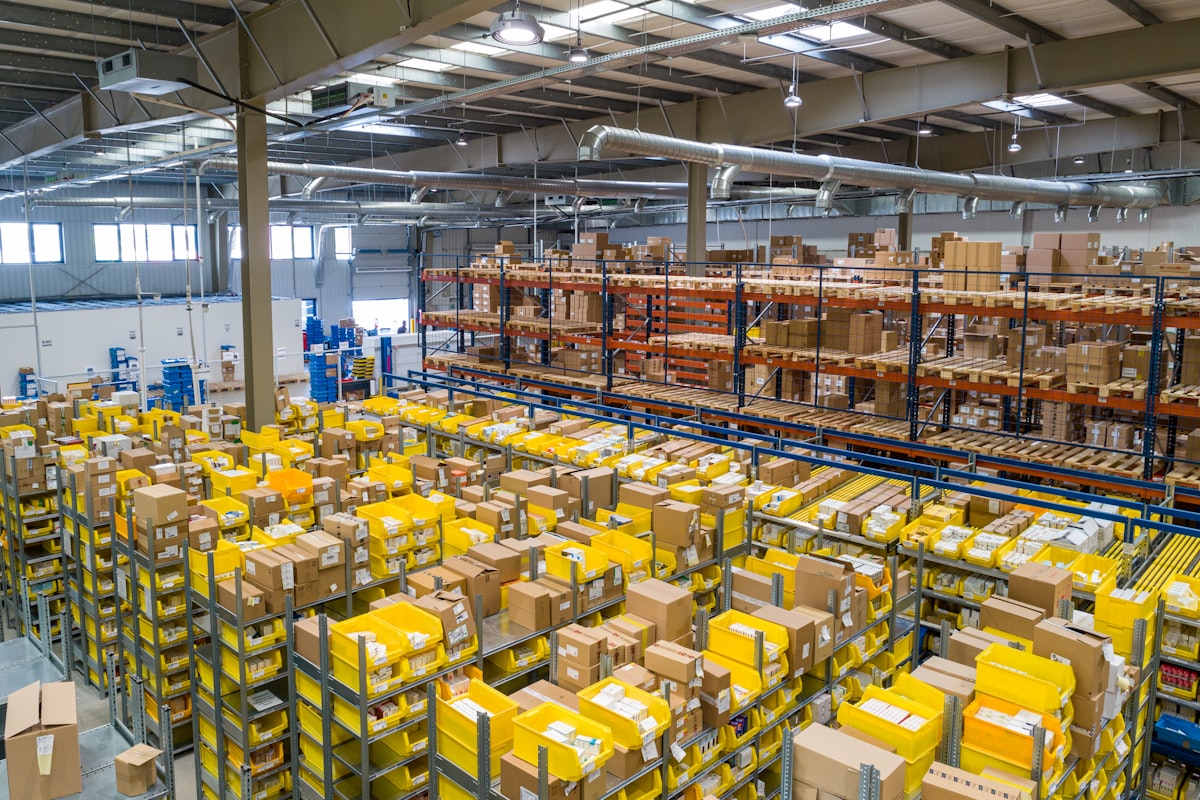
custom shipping boxes canada – High-Speed Automated Packaging and Warehouse Fulfillment (TadaPack Engineering Guide)
Sourcing Custom E-Commerce & Retail Packaging for the Canadian market involves three engineering constraints that generic suppliers routinely miss: long-haul transit severity, provincial extended producer responsibility (EPR) obligations, and freight economics shaped by a population concentrated along a 5,000 km corridor. This guide specifies board grades, flute selection, and compliance requirements for Canadian parcel operations in 2026.
Why Canadian Lanes Demand Higher Board Specs
Canada’s parcel network is transit-severe. A typical Toronto-to-Vancouver shipment passes through 3–5 sortation hubs with conveyor drops up to 900 mm and cross-country rail vibration profiles lasting 72+ hours. Domestic US grades optimized for 2-day zone shipping routinely fail on these lanes.
Our engineering baseline for Canadian ground parcel:
- Boxes under 4.5 kg: Single-wall B-flute (3.0 mm), C-flute (4.0 mm) minimum, 32 ECT / 200# Mullen.
- Boxes 4.5–13.5 kg: 44–48 ECT single-wall or 32 ECT BC double-wall (6.0–7.0 mm combined).
- Over 13.5 kg or LTL: 48–61 ECT double-wall with reinforced edge crush.
Board weight matters as much as strength. Standard 125–175 GSM linerboards dominate; kraft liner at 175–205 GSM improves burst resistance for heavy apparel cartons — a consideration we detail in our Custom Packaging Boxes for Clothes: An Engineer’s Sourcing Guide.
Transit Validation: Test Before You Roll Out
Never commit a Canadian national rollout without laboratory validation. ASTM D4169 Transit Testing Standards define Distribution Cycle (DC) schedules replicating truck, rail, and air vibration plus sequential drop shock — DC-13 is the standard reference for parcel shipments. Suppliers claiming “parcel-ready” without DC-13 or ISTA Testing data are transferring risk to your damage claims.
| Attribute | Canada Baseline | Rationale |
|---|---|---|
| Board grade | 44 ECT B-flute | Multi-hub sortation survival |
| Flute | B / BC double-wall | Vibration + drop balance |
| Validation | ASTM D4169 DC-13 | Rail + truck lanes |
| Liner | 175 GSM kraft | Burst + print surface |
EPR and Recyclability: The 2026 Compliance Picture
Canadian provinces are aggressively expanding extended producer responsibility. British Columbia’s EPR framework (among the world’s most comprehensive), Ontario’s Blue Box transition to full producer funding, and Quebec’s modernized regulation all place obligated brand owners on the hook for end-of-life costs. Corrugated remains the lowest-fee substrate in every provincial fee schedule because it achieves 90%+ recovery rates.
Engineering implications:
- Avoid plastic windows, wax coatings, and laminated liners — they downgrade recyclability and raise fee classifications.
- Specify water-based flexographic inks and soy-based adhesives; maintain mono-material construction.
- Source FSC-certified fibre — several provincial programs and major Canadian retailers now audit chain-of-custody documentation.
- Right-size aggressively — oversized boxes trigger both dimensional-weight charges and higher EPR fees, which in 2026 are increasingly weight-based.
Sourcing Economics: Duty, Freight, and Lead Times
Canadian buyers have three realistic sourcing routes, each with distinct landed-cost math:
- Domestic Canadian converters: 7–14 day lead times, no customs exposure, but plate setup and die-cut tooling costs run 15–25% higher than offshore.
- US suppliers under USMCA: Corrugated qualifies for duty-free treatment, adding 3–7 days brokerage time.
- Offshore (Asia) with bonded warehousing: Unit costs drop 30–40%, but sea freight adds 30–45 days. Our analysis of Custom Packaging Boxes Pakistan: B2B Sourcing Guide shows Pakistani kraft converters achieving competitive landed costs for high-volume Canadian brands using Montreal and Vancouver consolidation ports.
For volumes under 25,000 units annually, domestic or USMCA sourcing wins on total cost once freight, duties, and inventory carrying costs are amortized. Above 100,000 units, offshore tooling amortization justifies the lead-time exposure.
Print and Structural Specifications That Matter
For e-commerce unboxing brands shipping into Canada:
- Flexo post-print (1–4 colors, 40–55 LPI) for cost-effective branding on RSC and mailer styles.
- Litho-lamination (85–150 LPI) for premium retail-ready shippers; add 8–12% to unit cost.
- Digital corrugated printing for sub-5,000 unit runs and SKU variable data.
- Die-cut mailers (one-piece_folders with locking tabs) eliminate tape and reduce pack-out labor by 20–30% in fulfillment labor studies.
Specify dimensional tolerances of ±1.5 mm on internal dimensions; Canadian automated case-erectors and 3PL sortation systems reject boards outside this window.
Procurement Checklist
- Confirm ECT rating at 50% relative humidity — Canadian winter heated-to-cold transitions cause 15–20% strength loss.
- Request ASTM D4169 DC-13 or ISTA 3A test reports, not marketing claims.
- Verify provincial EPR fee classification and FSC chain-of-custody documentation.
- Model landed cost including dimensional-weight billing at 2026 carrier divisors.
- Order 2–3% overs for transit-damage sampling before national deployment.
Canadian e-commerce packaging succeeds when board grade, lane severity, and compliance are engineered together — not negotiated as separate line items.
Frequently Asked Questions (FAQ)
What ECT rating do I need for shipping boxes across Canada?
Use 32 ECT minimum for parcels under 4.5 kg, 44–48 ECT or BC double-wall for 4.5–13.5 kg, and 48–61 ECT double-wall for heavier loads or LTL. Long Canadian lanes with multiple sortation hubs require higher ratings than comparable US domestic shipments.
Do Canadian EPR rules affect my shipping box design?
Yes. Provincial programs in BC, Ontario, and Quebec charge brand owners recycling fees by material. Mono-material corrugated with water-based inks, no plastic windows, and FSC-certified fibre carries the lowest fees and is fully curbside recyclable.
Should I source custom boxes domestically in Canada or offshore?
Under 25,000 units annually, domestic or USMCA sourcing wins on total landed cost. Above 100,000 units, offshore converters (including Pakistan and Asia) offer 30–40% lower unit costs, provided you budget 30–45 days freight and use bonded warehousing.
Engineering Your Next High-Performance Packaging Batch
From precision CAD dielines to ISTA drop-testing and certified sustainable substrates, TadaPack helps global brands optimize freight cubic volume, minimize shipping breakage, and satisfy European PPWR / EPR packaging standards.
✓ Drop-Test & ECT Optimization
✓ PPWR & FSC Compliant
