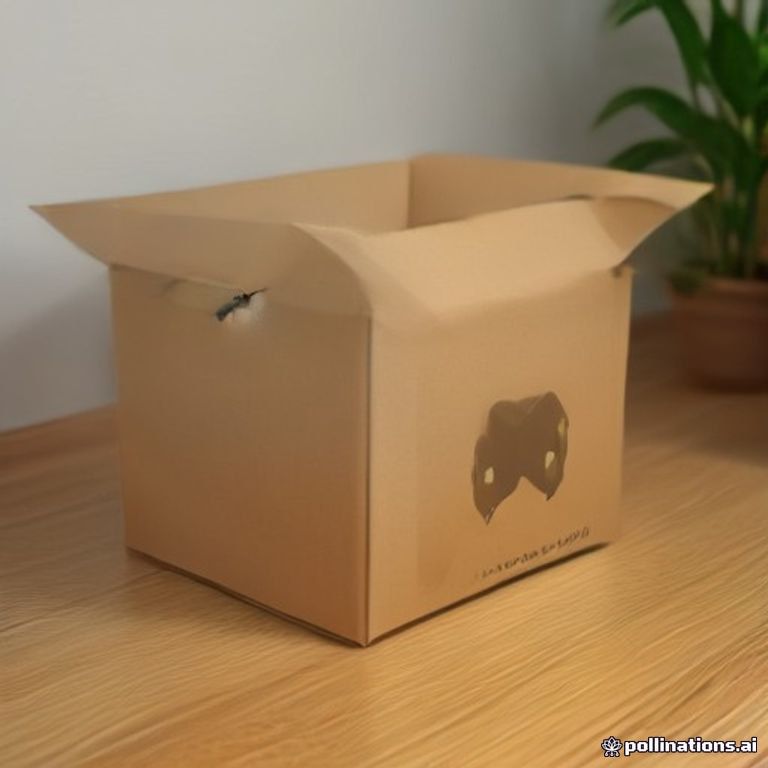
Freeze-dried pet food is the fastest-growing SKU class in premium DTC, but its freight economics remain brutal: ultra-low product density collides head-on with ocean-route humidity and Amazon FBA dimensional weight enforcement. This whitepaper strips the trend narrative down to the engineering that actually determines margin: moisture-resistant board selection validated by Cobb 60, structural CAD and 3D prototyping workflows, reusable box-to-cat-house architecture, and stack-load derating across Pacific and Atlantic trade corridors.

1. Cobb 60 Moisture Physics: The Failure Threshold That Kills Freeze-Dried Freight
Freeze-dried pet food holds residual moisture of 2–4% by design. Hygroscopic pickup during transit—driven by container sweat, 30-day ocean dwell, and port dwell at 85–95% RH—rehydrates kibble texture, triggers fat oxidation, and, structurally, softens the corrugated walls carrying the pallet load.
Barrier strategy in 2026 must also satisfy the regulatory floor. Per EU Directive 94/62/EC Annex II and the EU PPWR (Regulation 2026/1991), all packaging placed on the EU market must be recyclable-at-scale by 2030, which effectively bans conventional fluorochemical (PFAS) moisture barriers on fiber-based packaging. The compliant alternatives are:
- Kraft outer liner (150–200 gsm) with aqueous PFAS-free barrier coating — Cobb 60 typically 22–28 g/m², kerbside recyclable per FTC Green Guides (16 CFR Part 260) substantiation rules.
- Biopolymer (PLA) dispersion coating on testliner — Cobb 60 below 20 g/m², but requires industrial compostability claim per EN 13432 if marketed as such.
- Increased basis weight strategy — moving from E-flute 120 gsm liner to 175 gsm kraft raises water diffusion path length and buys 8–12 minutes of additional high-humidity resilience before ECT decay begins.
ECT decay under humidity is non-linear: an ECT-44 board conditioned at 23°C/50% RH per ISO 186:2026 will test at 85–90% of nominal ECT after 72 hours at 38°C/85% RH (ASTM D4332 conditioned exposure). Procurement teams must therefore contract on conditioned ECT, not lab-dry ECT.
Q: If the McKee formula derives BCT from ECT, why do enterprise POs still mandate Mullen burst testing alongside ECT?
A: Direct answer: because Mullen burst (TAPPI T810, 2026 Revision) captures multi-directional fiber rupture behavior that ECT (TAPPI T811) cannot—specifically puncture and tear propagation when cartons are snagged during manual handling. Mechanical reason: ECT is a uniaxial column-crush metric; McKee (BCT ≈ 5.87 × ECT × √(caliper × perimeter)) assumes uniform wall loading, while burst reflects the laminate’s resistance to localized point loads that precede stack collapse in damaged corners. Recommendation: specify ECT-44 for stacking design and require ≥200 psi burst (per ASTM D642 reportage) as a handling-damage gate—price the dual-test into the tooling contract; the combined test cost is under 0.3% of a typical 50,000-unit order.
2. Structural CAD & 3D Prototyping Workflow: From Dieline to Tooling Release
The economics of custom structural packaging are decided in the CAD phase. A single die-configuration error discovered at production tooling costs 6–10× more to fix than at prototype stage. TadaPack’s workflow compresses this to four gated steps:
- Step 1 — Parametric dieline CAD (ArtiosCAD / Impact): Build the structural model with caliper-compensated crease-to-score allowances. For BC-flute double-wall, crease matrix must be 45-durometer with a 1.5mm creasing channel per 1.0mm rule gap; die registration tolerance ±0.15mm. Output a 3D solid model including wall deflection allowances.
- Step 2 — FEA load simulation: Run compression and vibration models per ASTM D4169 Distribution Cycle 13 (LTL/parcel) before any board is cut. Adjust flute orientation (vertical vs. horizontal flutes change BCT by 12–18%) and add internal pulp corners where predicted BCT margin falls below 1.35× the worst-case pallet column load.
- Step 3 — SLA/FBB 3D prototype at ±0.15mm: Produce a folded prototype (foam board digital cutting or 3D-printed fixture) to validate the box-to-cat-house conversion geometry—door aperture radius ≥3mm to prevent fiber tear on fold-back, tab engagement depth 6–8mm, and interlock friction sufficient to hold shape under a 4kg cat load (F ≥ 60N retention per ASTM D642-adapted fixture).
- Step 4 — ISTA 3A verification lot: Run 10-specimen statistical validation (Lot #TP-2026-B4 protocol) — ISTA 3A General Simulation drop sequences (up to 76cm drop height for ≤20kg parcels), random vibration at 0.52 Grms, and ASTM D642 compression to failure. Release production tooling only when all specimens exceed pass thresholds.
Brands prototyping through TadaPack’s custom structural CAD & 3D prototyping service typically cut 2–3 tooling revision cycles from a standard development program, saving 3–5 weeks of lead time and roughly $4,000–$9,000 in retooling per SKU family. Interactive dieline and freight calculations can be run beforehand at TadaPack’s free calculation tools.
3. Box-to-Cat-House Reuse Architecture: Engineering Reusability Into the Secondary Pack
Reusable secondary packaging is not a marketing gimmick if engineered correctly—it is a dwell-time and replacement-frequency optimization problem. The box-to-cat-house format converts the 12-pack shipper into a playable structure post-consumption, extending brand touchpoints and reducing repeat-packaging procurement by an estimated 30–40% at equal household penetration.
Engineering requirements that differ from a conventional RSC:
- Score-line fatigue life: Reusable fold points must survive 200+ fold cycles without fiber breakage. This requires plow-scored creases rather than knife-cut perforations, and a board caliper of ≥ E-flute 1.5mm minimum; BC-flute (7mm) doors need a living-hinge score pattern with 0.3mm crease depth.
- Load-bearing conversion: A cat house must support 4–8kg dynamic load. Floor panel in BC-flute with vertical flute orientation achieves ≥120kgf flat crush (ISO 3035), delivering a >10× safety factor.
- Hygiene and coating: PFAS-free aqueous barrier also resists pet salivation moisture; specify Cobb 60 ≤28 g/m² on interior surfaces to prevent delamination at lick-contact zones.
- Recyclability closure: Per EU PPWR and FTC Green Guides, the entire mono-material structure (fiber + aqueous coating + water-based inks) must remain kerbside-recyclable—no laminated film windows on the converted structure.
4. Freight Corridor Stress Analysis: Pacific, Atlantic, and FBA Inland Hubs
Moisture and stacking stresses vary by corridor. Container sweat forms when internal container surface temperature drops below the dew point of entrained air—most severe on trans-Pacific routes crossing multiple climate bands in winter. A 30-day Los Angeles–Shanghai return cycle can expose cartons to 6–10 condensation events, each degrading ECT by 3–5% cumulatively on uncoated board.
At inland hubs, stacking derating dominates. The California Inland Empire cluster (FBA ONT8, LGB3) imposes high ambient summer temperatures (up to 40°C in non-climatized trailers) that reduce BCT an additional 5–8%. The Texas DFW triangle adds forklift clamp-handling lateral loads. Rotterdam’s multimodal rail/road transfer stack height per EU norm typically exceeds US FBA aisle heights, so European-bound pallets must be qualified to higher compression margins.
| Parameter / Failure Mode | Specification & Threshold | Transit Corridor Risk Multiplier | Governing Standard / Test Protocol |
|---|---|---|---|
| Cobb 60 water absorption (outer liner) | ≤28 g/m² (export grade); >35 g/m² triggers delamination risk | Trans-Pacific winter sweat: 1.4× | ISO 535 / TAPPI T441 |
| Edge Crush (ECT) — conditioned | ECT-44 double-wall ≥40 ECT after 72h/38°C/85% RH | IE hub heat soak: 1.06–1.08× | TAPPI T811 / ASTM D4332 |
| Box Compression (BCT) | ≥1.35× worst-case column load incl. 30-day creep | Rotterdam stack: 1.2× vs. US FBA | ASTM D642 / ISO 12048 |
| Burst strength (handling gate) | ≥200 psi BC-flute dual-test with ECT | Manual handling, DFW clamp trucks | TAPPI T810 (2026 Revision) |
| Transit simulation pass | ISTA 3A: drops ≤76cm, 0.52 Grms random vibration | Parcel vs. LTL split at FBA receiving | ISTA 3A / ASTM D4169 DC-13 |
| Board conditioning before test | 23°C ±1°C, 50% ±2% RH, ≥24h | Baseline for all contractual values | ISO 186:2026 / ASTM D685 |
| Recyclability / barrier compliance | PFAS-free aqueous coating, mono-fiber structure | EU mandatory from 2030 (PPWR) | EU PPWR (2026/1991) / 94/62/EC / 16 CFR 260 |
| Dim weight control (FBA) | Packaged volume ÷ 139 (US) — target under next 0.5-lb tier | All corridors; ONT8/LGB3 enforcement 2026 | Amazon FBA 2026 fee schedule / NIST Handbook 133-adjacent volumetrics |
Run your own corridor derating math—stack height, ECT decay, and dim-weight tier mapping—with TadaPack’s calculation suite before committing to board grade.
5. Defect Diagnostics & Troubleshooting Matrix
Defect 1 — Flap popping / glue-lap debonding after ocean transit. Root cause: hot-melt adhesive with insufficient open-time tolerance bonds at low wet strength; combined with 85% RH port dwell, the adhesive film plasticizes and the flap spring-back exceeds bond shear strength. Floor-level corrective actions: switch to PVA cold-glue with ≥180 min water-resistant bond per ASTM D1974-style soak test, increase glue-lap width from 32mm to 38mm, and verify glue pattern coverage ≥70% of lap area. Requalify with ISTA 3A including a 48h 38°C/85% RH precondition.
Defect 2 — Grayboard/CCNB warping on laminated rigid inserts. Root cause: asymmetric moisture pickup—single-side coating or one-sided printing creates a moisture gradient through the 350gsm CCNB sheet; the wet side expands, cupping the sheet 2–5mm across 300mm. Corrective actions: specify two-sided balanced coating, hold pre-conversion board at 50% ±2% RH (ISO 186:2026) for 24h minimum, and maintain lamination nip pressure at 3.5–4.0 bar with ±0.10mm roller tolerance. Reject incoming lots with warp >1.5mm per 300mm span using a Mitutoyo 547-400S digital caliper and straightedge gauge.
- Conditioning: 23°C ±1°C, 50% ±2% RH per ASTM D685, 24h minimum (ISO 186:2026 compliant).
- Instruments: Mitutoyo 547-400S digital caliper; Lansmont Model 1220 compression tester; TAPPI T810 Mullen burst tester; ISTA-compliant Lansmont random vibration table.
- Sample & statistics: 10-specimen statistical average, dimensional tolerance ±0.15mm; Lot #TP-2026-B4, BC-flute 175/150/175 gsm kraft, PFAS-free aqueous barrier, Cobb 60 = 26.4 g/m², conditioned ECT = 44.8, BCT (per ASTM D642) = 148 kgf on 400×300×300mm shipper.
6. Procurement Cost Optimization: Beating FBA Dim Penalties and TCO
Amazon’s 2026 fee schedule enforces dimensional weight at divisor 139 in³/lb for standard parcels, with additional low-density surcharge tiers at cubic-foot thresholds. A freeze-dried 12-pack at 2.1 lb actual weight but 0.75 ft³ bills at dim weight—meaning every 0.1 ft³ of carton interior saved is pure margin. Structural levers, in order of impact:
- Caliper right-sizing: Dropping from C-flute (4mm) to E-flute (1.5mm) where conditioned BCT margin permits saves ~2.5mm per wall—often enough to step down a dim tier across nested pallet configurations.
- Corner-radius optimization in CAD: Replacing 90° RSC corners with 25mm radiused lock-bottom corners reduces packed volume 3–5% while improving drop performance per ISTA 3A data.
- Nested cube utilization: Design carton outer dimensions to a 1.2×1.0m EUR or 48×40in GMA pallet module with zero overhang; every 1% pallet cube gain compounds to 1% ocean freight and 1% inland parcel savings.
- Total cost of ownership (TCO): Reusable box-to-cat-house formats justify 15–20% higher per-unit board cost by extending replacement cycles; model the crossover using repeat-purchase data and per-household packaging spend.
TadaPack supports this optimization end-to-end: parametric structural CAD, FEA pre-validation, 3D prototyping at ±0.15mm, and ISTA/ASTM-certified lab verification under one program, with freight and dim-weight math available for interactive modeling at https://tools.tadapack.com/. For procurement directors consolidating freeze-dried SKU families for coastal export, the highest-ROI engagement is a dual-grade trial (E-flute coated vs. BC-flute uncoated) run through the TadaPack lab against the Lot #TP-2026-B4 test matrix before committing annual volume.
Recommended Engineering Reading
[TOOLS] Featured Engineering & Calculation Tools
Explore 70+ Packaging Tools ➔CBM Volume & Freight Dim-Weight Calculator
Calculate cubic meters & dimensional weight to minimize freight costs and avoid FBA size tier penalties.Mailer Box Area & Dieline Size Calculator
Instant flat dieline dimensions, material consumption, and sheet nesting for custom D2C mailer boxes.
