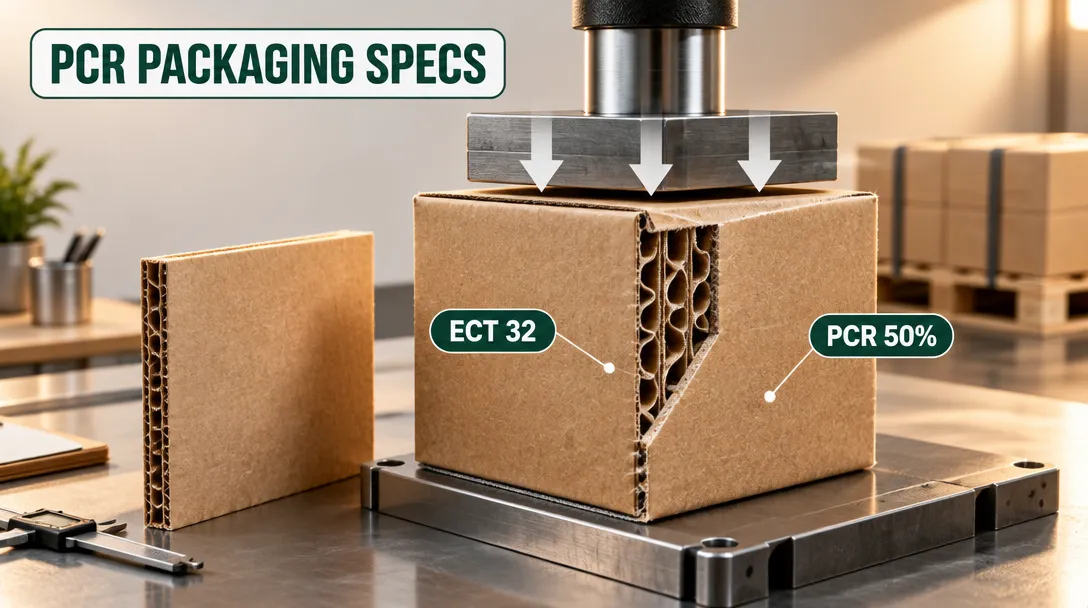
PCR and lightweighting should be specified as a validated system change, with material, structure, converting and line-performance criteria defined together. For corrugated shippers, compare ECT grades such as ECT-32 and ECT-44, then validate compression, moisture and distribution performance using appropriate methods such as ASTM D642, TAPPI T 441 Cobb testing and ISTA 3A where the shipment profile fits.
Packaging sustainability has moved into the equipment specification conversation. PMMI’s public summary of The Ripple Effect: CPG Sustainability and the New OEM Spec Sheet reports that 82% of end users are actively engaged in sustainability initiatives, 64% of OEMs say sustainability directly influences equipment design decisions, and more than half of end users report machinery limitations are preventing sustainability goals. The report identifies demand for equipment that handles lightweighted packaging and PCR materials, among other changes. These findings are a reason to align packaging and machinery requirements early—not evidence that one material or package design is suitable for every line.
What is changing in PCR and lightweighting packaging specifications?
The shift is from a material-only request—such as “add recycled content” or “reduce board weight”—to a performance specification that links material composition to converting, filling, sealing, handling and distribution. A board substitution can change caliper, stiffness, surface behavior and moisture response. Those differences can affect feeder pick-up, vacuum handling, compression performance, print registration, glue joints and package presentation. The engineering question is therefore not simply how much material can be removed, but whether the redesigned pack continues to protect the product and run reliably at the required operating conditions.
For corrugated, ECT is one input to box design, not a complete guarantee of shipping performance. ECT-32 and ECT-44 identify common edge-crush grade designations; actual acceptance criteria should name the applicable board construction, measurement method, sampling plan and finished-box performance requirement. E, B, C and BC flute constructions differ in caliper and structural behavior, so a flute change is not interchangeable with a board-weight reduction. For folding cartons, a 350 gsm CCNB specification likewise needs caliper, stiffness, print and converting requirements, not grammage alone. These are engineering reference examples, not universal minimums.
Use a documented comparison: baseline board and package mass; proposed PCR fraction or lightweight construction; internal dimensions; assembled package mass; closure and adhesive requirements; and the line settings that may need adjustment. For products needing a barrier, specify the barrier function and end-of-life compatibility rather than relying on an unqualified “recyclable” or “sustainable” claim. PFAS-free barrier coatings may be a procurement requirement, but confirm performance and applicable market rules with suppliers and counsel; this guide does not establish regulatory compliance.
Who and what does the sustainability-driven spec change cover?
It covers procurement, packaging engineering, converting suppliers, OEMs, co-packers and distribution stakeholders. Procurement owns commercial targets and supplier documentation; engineers define measurable package performance; equipment teams confirm acceptable material and dimensional windows; and operations verifies that proposed settings can be maintained at production speed. PMMI’s reported findings support earlier collaboration between end users and equipment suppliers, while the practical specification work remains specific to each package and line.
For a shipper redesign, connect edge crush and box compression rather than treating them as substitutes. The McKee equation is often used as a preliminary corrugated-box estimate: BCT (lb) ≈ 5.876 × ECT (lb/in) × √[perimeter (in) × caliper (in)]. As a hypothetical worked example, ECT 32, perimeter 40 in and caliper 0.157 in produce an estimated BCT of about 472 lb. This is an approximate model, not a test result or design approval: box style, dimensions, board quality, joints, humidity, handling and load duration can change actual performance. Confirm finished-box compression using ASTM D642 where appropriate and use the distribution protocol selected for the shipment profile.
Moisture deserves its own acceptance criterion where fiber packaging may encounter humid storage or transit. Cobb 60, commonly associated with TAPPI T 441, measures water absorptiveness under specified test conditions; it does not by itself predict all forms of delamination or wet-strength loss. Set a buyer-supplier limit tied to the intended coating, board and exposure scenario, then test the converted package and adhesive system. Avoid inventing a universal Cobb threshold: the right limit depends on construction and risk.
For parcel shipments, ISTA 3A is a general simulation test procedure for packaged-products shipped through parcel delivery systems; select the protocol and configuration applicable to the actual distribution system. ASTM D4169 is another distribution testing practice used to evaluate shipping units under selected hazards. Neither protocol makes a package universally “safe”; document the test level, package configuration, product condition and pass/fail criteria. DTC teams should also check external dimensions and billable dimensional weight against current carrier and marketplace terms. Smaller packs and removal of secondary packaging can reduce material, but only where protection, labeling and fulfillment requirements remain satisfied.
Which dates should buyers use when planning specification changes?
The source provides one dated milestone. It does not establish a universal effective date for PCR targets, machinery upgrades or packaging redesigns, so buyers should not infer one from the report. Track applicable market rules separately and verify active obligations for the destination market with qualified regulatory counsel.
- 2026-07-06 — PMMI reports the release of The Ripple Effect: CPG Sustainability and the New OEM Spec Sheet, summarizing sustainability’s influence on equipment design, material selection, operations and supplier expectations.
Use this date as a source-publication milestone, not as a compliance deadline. In the US and Europe, regulatory applicability can depend on product, market, packaging format and implementation details. Where a specific rule applies, record the exact legal instrument and the responsible compliance owner in the project file; do not translate a general sustainability objective into an unsupported pass/fail claim.
What should procurement and engineering do now?
Convert broad sustainability goals into a controlled engineering change with baseline data, acceptance limits and accountable sign-off. Ask suppliers for material identification and PCR documentation appropriate to the purchase, but also require evidence that the delivered construction matches the approved specification. Make line trials part of qualification when changes affect feeding, forming, sealing or case packing. A board or film that meets a material declaration but cannot run consistently is not a production-ready substitution.
- [ ] Record baseline package mass, dimensions, material construction, damage modes and line settings before changing the specification.
- [ ] Define the proposed PCR content or lightweighting change, including tolerances and supplier documentation required at receipt.
- [ ] Specify finished-package performance: ECT or other material criteria where relevant, compression, closure integrity, moisture response and distribution test protocol.
- [ ] Confirm compatibility with actual equipment, including feeding, forming, sealing, coding and downstream case packing; document trial conditions and accepted operating window.
- [ ] Review the shipper’s dimensions and mass against current freight and fulfillment rules; recalculate after any pack-size or secondary-packaging change.
- [ ] Approve claims and market-specific regulatory statements through the appropriate compliance review before artwork or purchase-order release.
Cost-down decisions should compare total landed cost rather than unit board price alone. A hypothetical model can calculate annual material savings as (baseline package mass − proposed mass) × annual units × material cost per unit mass. Then subtract incremental costs for testing, tooling, line adjustments, scrap risk and freight changes. Enter actual supplier quotations and operating data; do not treat an illustrative result as a market price benchmark. A lightweight package that raises reject rates or requires an additional protective component may not reduce total cost.
For structural changes, TadaPack’s custom packaging design and prototyping services can help translate a procurement brief into dielines, samples and a testable specification. Use TadaPack’s online calculation tools at https://tadapack.com/tools for preliminary checks, then confirm final decisions with supplier data and appropriate physical testing. A useful approval file includes the released dieline, board or material specification, dimensions and tolerances, test method and acceptance criteria, approved line settings, supplier change-control requirements and the signed commercial comparison.
Recommended Engineering Reading
[TOOLS] Featured Engineering & Calculation Tools
Explore 70+ Packaging Tools ➔Box Compression (BCT) Calculator
Predict box compressive limit and stacking safety factors via McKee formula.Edge Crush Test (ECT) Calculator
Calculate linerboard ring crush and composite ECT ratings for optimal board specs.
