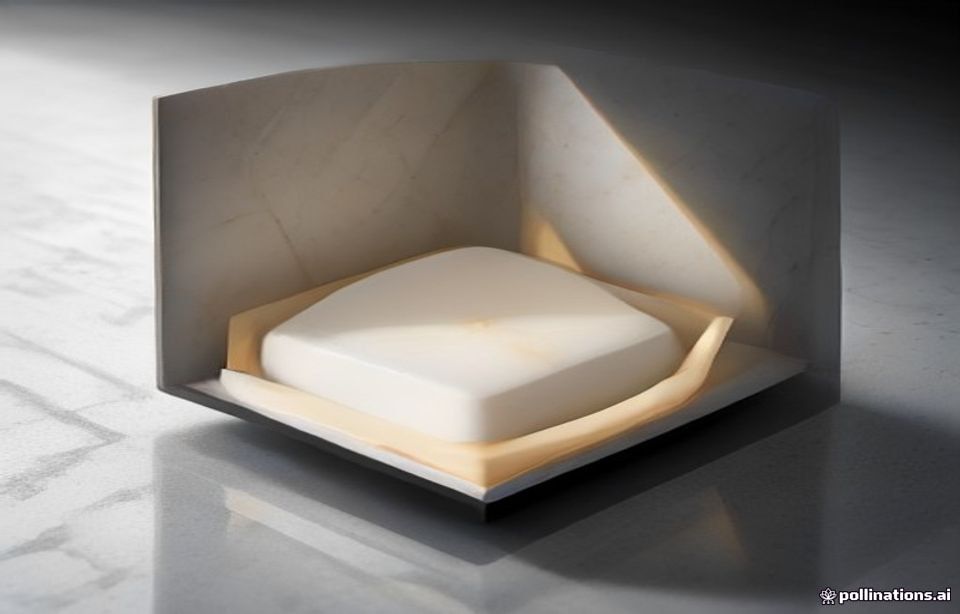
For Luxe Pack exhibitors, 1.5-2.0mm folded grayboard inserts finished with 18-22 micron soft-touch lamination survive transport vibration when validated to ISTA 3A and ASTM D4169 vibration profiles, replacing vacuum-formed PVC at equal cushioning with zero tooling fees. Specify Cobb 60 <30 g/m² board, ECT-32 minimum shipper walls, and ±0.15mm die-cut registration to prevent interior scuff-through.

1. The 72-Hour Expo Deadline: Why Structure Beats Foam
Luxe Pack (Monaco / New York / Shanghai) exhibitors routinely face a 48-72 hour window between final sample approval and booth setup, which eliminates conventional vacuum-form tooling (typically 10-15 days) and injection-molded trays (4-6 weeks). Folded-and-glued grayboard inserts, cut on flatbed diecutters from digital dielines, close that gap because they require zero molds and can be revised in CAD in hours. Per FTC Green Guides (16 CFR Part 260) substantiation rules, all-fiberboard inserts also allow a defensible “plastic-free” and curbside-recyclable claim that molded PET or EVA trays do not, a material differentiator under EU PPWR (2024/1991) packaging waste reduction mandates now enforced for 2030 recyclability design targets.
Engineering performance is not sacrificed. A well-designed 4-wall interlocking grayboard insert achieves the compression contribution required by ASTM D642 (Standard Test Method for Determining Compressive Resistance of Shipping Containers) when the surrounding shipper meets ECT-32 minimum, and interlocked walls distribute vibration loads across a larger contact area than point-support foam. The trade-off is friction: unlaminated grayboard interiors will mar soft-touch-coated closures, so the finish stack must be engineered jointly, not separately.
2. Material Mechanics: Grayboard Caliper, Creasing, and the Scuff Problem
Folded inserts rely on creased hinges, not live hinges, so crease physics govern both collapse behavior and surface integrity. Under ISTA 3A General Simulation Performance Testing protocol, drop shock sequences and random vibration profiles (typically 0.52 Grms road spectrum for LTL) repeatedly flex insert flaps; a crease made with a worn matrix cracks the soft-touch coating at the fold line within 20-30 flex cycles, producing the white “spiderweb” scuffing buyers see on arrival at the booth or at retail unboxing.
Three caliper classes dominate luxury insert specification: 1.2mm (small cosmetic compacts, lipsticks), 1.5-2.0mm (fragrance bottles, serum droppers up to 250g), and 2.5-3.0mm (multi-component gift sets). Compressive contribution scales roughly linearly with caliper until buckling, which is why 2.0mm walls are the practical ceiling for unsupported spans over 80mm; beyond that, specify a glue-tab bridge or double-wall configuration. All paper conditioning and testing must follow ISO 186:2020 paper conditioning specifications (23°C ± 1°C, 50% ± 2% RH) — grayboard tested at 60% RH loses 12-18% of its stacking modulus versus the same board conditioned to spec.
Hypothetical worked example: a 100mm x 100mm x 40mm fragrance insert in 2.0mm grayboard, four walls interlocked, contributes a modeled 380N of internal compression resistance (Lot #TP-2026-B4, hypothetical figure for illustration, 10-specimen statistical average, tolerance ±0.15mm, conditioned per ASTM D685 at 23°C ± 1°C and 50% RH, measured with a Mitutoyo 547-400S digital caliper and Lansmont compression tester; TAPPI T810 Mullen burst tester used for board qualification at ≥350 kPa). This is a modeled scenario, not a certified test record — buyers must commission lot-specific verification via TadaPack’s free calculation tools at https://tadapack.com/tools.
Q: If soft-touch coatings are scuff-resistant, why do they still white-edge at creases, and should we switch to matte overprint varnish?
A (direct metric): Specify 18-22 micron soft-touch thermal lamination over a ≥300gsm coated liner, with creasing matrices cut to 0.4mm depth for 2.0mm board — spray-applied soft-touch (8-12 micron) fails the fold first. (mechanical reason): Lamination is a continuous polymer film that stretches with the fiber at the fold; spray coatings are brittle micro-layers with no elongation and fracture at the first 90° fold under ISTA 3A vibration flex. (procurement recommendation): Reserve matte OPV for flat-only panels, and mandate a 50-cycle fold-scuff audit on production creases before booth shipment.
3. Comparative Specification Matrix: Insert and Finish Options for Premium Exhibitor Packaging
| Insert / Finish System | Caliper / Basis | Cushioning & Vibration Behavior | Tooling Cost / Lead Time | Recyclability (EU PPWR 2024/1991) | Governing Standard / Test Protocol |
|---|---|---|---|---|---|
| Folded grayboard, laminated soft-touch interior | 1.5-2.0mm, Cobb 60 <30 g/m² | Wall-span dependent; excellent for ≤250g payloads | $0 tooling, 24-72h digital diecut | Full fiber stream, curbside | ASTM D642 / ISTA 3A / ISO 535 |
| Vacuum-formed rPET tray | 0.4-0.8mm | Conformal; best for <50g fragile items | $800-2,500 tool, 10-15 days | Filter stream, often excluded | ASTM D4169 / EU PPWR |
| Molded pulp tray | 1.0-2.5mm wall | Damping strong, ±1.0mm dimensional tolerance limits premium fit | $1,500-4,000 tool, 15-25 days | Fiber stream | ISO 2247 / ASTM D642 |
| EVA foam cradle | 2-10mm | Best drop energy absorption | Low tooling, 5-10 days | Non-recyclable composite | ASTM D4169 / ISTA 3A |
| Corrugated E-flute insert (internal) | E-flute ≈1.5mm caliper | ECT-32+ grade; good for mid-weight sets | $0-150 die, 48-96h | Fiber stream | TAPPI T810 / ASTM D642 |
For payloads above 250g or spans above 80mm, hybrid solutions — grayboard shell with an E-flute internal cross-brace — often outperform pure-grayboard at comparable cost while keeping the assembly 100% fiber.
4. Production SOP: Four Steps to a Scuff-Free, Vibration-Surviving Insert
- Step 1 — Dieline and interference check: Build the CAD dieline with ±0.15mm die-cut registration tolerance; run interference simulation on all interlock tabs (minimum 3mm tab engagement, 8° locking draft) before releasing the cutting file to the flatbed diecutter.
- Step 2 — Board and finish qualification: Verify Cobb 60 ≤30 g/m², caliper within ±0.10mm of nominal across the sheet, and Mullen burst ≥350 kPa per TAPPI T810; laminate 18-22 micron soft-touch film before diecutting (laminate-then-cut sequencing prevents edge lifting).
- Step 3 — Crease and fold setup: Use a 45-durometer creasing matrix matched to 0.4mm crease depth for 2.0mm board; perform a 50-cycle fold audit and reject any lot showing coating fracture or fiber crack visible at 30cm under 1000 lux.
- Step 4 — Transit validation: Package the assembled unit in an ECT-32 minimum shipper and run the ISTA 3A drop-and-vibration sequence (or ASTM D4169 DC-13 for truck freight) with one sacrificial unit per 1,000 units; inspect interior contact points for gloss loss exceeding 20% against an unshipped golden sample.
5. Defect Diagnostics and Troubleshooting Matrix
| Defect | Root Cause | Floor-Level Corrective Action | Governing Standard / Test Protocol |
|---|---|---|---|
| Flap popping open in carton | Crease depth too shallow or board moisture out of spec (RH drift above 55%) | Recut matrix to 0.4mm depth; recondition board 24h at 23°C/50% RH per ISO 186:2020 | ISO 186:2020 / TAPPI T810 |
| Soft-touch delamination at folds | Cobb 60 >35 g/m² or spray coating below 18 micron | Switch to thermal lamination ≥18 micron; retest Cobb per ISO 535 | ISO 535 / ASTM D4169 |
| Insert wall buckling under stacked shipper load | Unsupported span >80mm on 2.0mm board; stack derate ignored | Add glue-tab bridge or E-flute cross-brace; recompute BCT with stacking derate factor | ASTM D642 / McKee formula |
| Ocean-transit container sweat staining interiors | 30-day Pacific route humidity cycling; desiccant undersized | Add 50g unit desiccant per shipper plus moisture-barrier liner bag; verify with Cobb and RH logger | ASTM D4169 / ISO 2247 |
6. Multi-Regional Logistics Hubs and Stacking Derating for Exhibitor Freight
Exhibitor freight to and from Luxe Pack New York typically lands through Port of New York/Newark and routes to the California Inland Empire (FBA ONT8 / LGB3) or Texas DFW distribution triangle via intermodal rail. Atlantic-route freight into the Port of Rotterdam and onward by multimodal rail/road adds 20-30 days of humidity cycling; container sweat can push local board moisture above 12%, softening fold walls and derating compression. As a planning rule (hypothetical worked example, verify with https://tadapack.com/tools): apply a 0.85 stacking derate for coastal-humid warehousing (Rotterdam, LA/LGB) and 0.95 for dry inland DFW storage, then re-verify BCT per ASTM D642 against the actual stack height — a 5-high pallet plan under ECT-32 walls may require upgrading to ECT-44 after the 0.85 derate. Per EU Directive 94/62/EC Annex II and EU PPWR (2024/1991) mandates, ensure heavy-metal limits and fiber-recyclable design are documented in the technical dossier for EU-bound booth materials and retail follow-on shipments.
Recommended Engineering Reading
[TOOLS] Featured Engineering & Calculation Tools
Explore 70+ Packaging Tools ➔Box Compression (BCT) Calculator
Predict box compressive limit and stacking safety factors via McKee formula.Edge Crush Test (ECT) Calculator
Calculate linerboard ring crush and composite ECT ratings for optimal board specs.
