.%20Golden%20hour%20cinematic%20lighting%20with%20volumetric%20rays%20highlights%20the%20carton's%20texture%20and%20rim%20lighting%20creates%20a%20stunning%20silhouette.%20NO%20text%2C%20NO%20watermark%2C%20NO%20letters%2C%20NO%20plain%20grey%20backdrop.%22%20%7D?width=1200&height=675&model=flux&nologo=true&seed=261879&key=sk_S2EizbqzqomlG4gcNOCo4hgFfpQDIMLd "What Is a Folding Carton? Structure, Board Grades & Cost Teardown")
Folding Carton Engineering: The Primary Package Standard
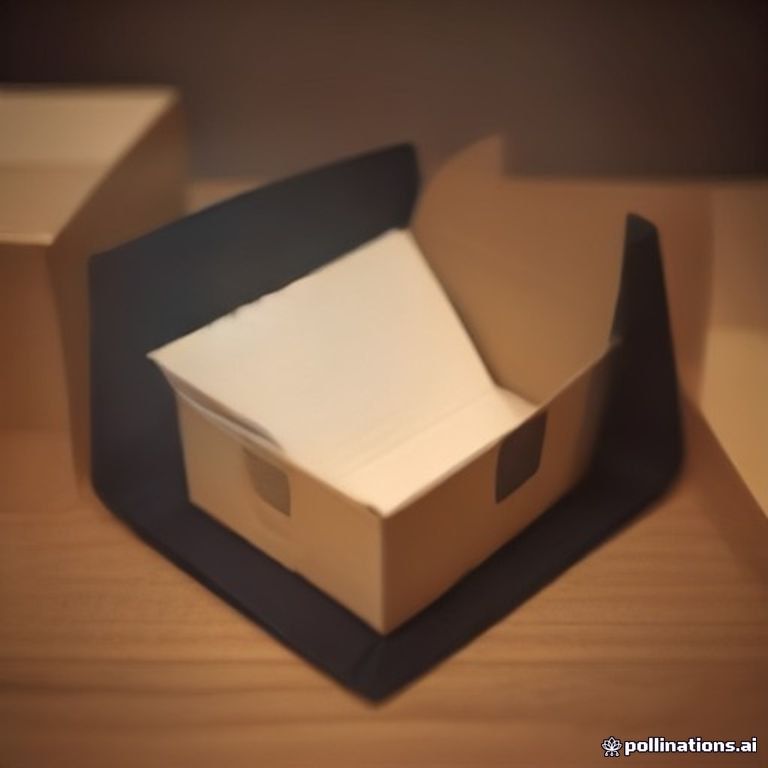
Global e-commerce SKU proliferation and the EU PPWR recyclability mandates have pushed folding carton specification from a marketing decision to a materials-engineering discipline—getting board caliper, crease geometry, or barrier coating wrong now means FBA dimensional penalties, transit delamination, or non-compliant market access. A folding carton is a primary (sales) package manufactured from a single sheet of paperboard—typically 200–450gsm—that is printed, die-cut, creased, folded, and either glued (straight tuck, reverse tuck, crash-lock bottom) or left flat for manual erection. It ships flat, erects at the filler, and serves as the consumer-facing unit: cosmetics cartons, pharmaceutical blister wallets, food sleeves, and DTC product boxes.
This is categorically distinct from corrugated fiberboard (two liners + fluted medium, 3–7mm caliper, ECT-32/ECT-44 rated) which functions as a secondary shipping container. Confusing the two is the single most expensive error in packaging procurement: a folding carton is not designed to survive ASTM D4169 Distribution Cycle 1 vehicle vibration and warehouse stacking alone—it is engineered for shelf presence, product containment, and high-speed erecting.
Board Grades and Material Physics
Folding carton performance is dictated almost entirely by substrate selection. The four dominant grades:
- SBS (Solid Bleached Sulfate) — 100% virgin bleached fiber, highest brightness (≥95 ISO), best folding endurance and food-contact compliance (FDA 21 CFR 176.170). The default for cosmetics, pharma, and premium food.
- CCNB (Clay-Coated Newsback) — 350gsm CCNB is the DTC workhorse: coated print face, recycled gray back, ~30–40% lower cost than SBS but reduced stiffness at equal caliper and higher moisture sensitivity (typical Cobb 60: 40–60 g/m² uncoated).
- GC1/GC2 (Coated Recycled Board) — Fully recycled clay-coated grades; GC1 carries the EU PPWR recyclability narrative and ~15–20% lower embodied CO₂e per tonne versus virgin board.
- Microflute laminates (E-flute 1.5mm, F-flute 0.8mm, B-flute 3.0mm) — Litho-laminated or direct-print microflute blurs the carton/corrugated boundary, adding vertical compression strength 3–5× that of solid board at minimal weight penalty. E-flute subscription boxes are effectively folding cartons with corrugated cushioning characteristics.
Stiffness, the governing structural parameter, scales with the cube of caliper: bending stiffness ∝ E·t³. Doubling board caliper yields roughly 8× the bending stiffness—a 450gsm SBS (0.60mm) resists panel bowing far better than a 300gsm (0.40mm) even at similar basis weight cost. Compression resistance of the erected carton is bench-verified per ASTM D642 (Standard Test Method for Determining Compressive Resistance of Shipping Containers) on a Lansmont or similar platen tester; per TAPPI Standard T810 (2026 Revision), burst performance is still mandated in many enterprise vendor agreements (typical folding-carton spec: ≥200 kPa on 350gsm stock).
Q: If ECT-based formulas predict stacked compression better, why do overseas enterprise POs still mandate Mullen burst testing (TAPPI T810) on folding carton lots?
A: First, the metric: most vendor manuals specify ≥150–250 kPa burst on the flat board because burst integrates tensile strength in all directions and is a fast incoming-QC proxy for fiber quality and bond integrity. Second, the mechanical reason: folding carton failure in transit is rarely pure column compression—it is puncture (belt-conveyor impact), corner loading, and crease-hinge fatigue, all of which correlate with burst tensile integrity, not ECT. Third, the procurement recommendation: accept Mullen as the incoming-inspection gate, but commission ASTM D642 compression and ISTA 3A sequence testing on the converted carton before tooling release—never let a board-level spec substitute for a package-level test.
Structural Styles and Crease Mechanics
Blank architecture determines erecting speed, product loading orientation, and shelf impact. The dominant families:
- Reverse tuck end (RTE) — top and bottom flaps tuck in opposite directions; one die-line maximizes material yield; standard for 200–400g pharma and beauty.
- Straight tuck end (STE) — both flaps tuck same direction for a clean unbroken front panel; slightly less material-efficient.
- Crash-lock / auto-bottom — pre-glued bottom snaps into place on erection; adds 4–8% unit cost but cuts filling-line labor to near zero for heavier payloads (>500g).
- Seal-end / four-corner glue — for horizontal flow-wrapped or vertical fill-seal integration (confectionery, bar soap).
- Sleeves, trays, and hinge-lid (cigarette-style) — rigid-adjacent presentation at folding-carton economics.
The crease is the failure-critical feature. A crease is a controlled internal fiber fracture creating a living hinge; scoring is executed with a creasing rule (male, 2pt or 3pt) against a matrix channel (female). Under-sizing the channel relative to caliper and moisture content cracks the coating and exposes white fiber; over-sizing produces sloppy hinges and out-of-square erecting. Die-cutting registration must hold ±0.15mm across the sheet to keep panel dimensions, dust flaps, and lock tabs within assembly tolerance—particularly on crash-lock bottoms where tab engagement is ±0.3mm.
Comparative Board & Style Matrix
| Attribute | SBS 350gsm | CCNB 350gsm | GC1 380gsm | E-Flute Laminate | Governing Standard / Test Protocol |
|---|---|---|---|---|---|
| Caliper (mm) | 0.48–0.52 | 0.50–0.55 | 0.55–0.60 | 1.50 (E-flute core) | ISO 534 / TAPPI T411 |
| Stiffness (Taber, MD, mN·m) | 8.5–10.5 | 6.5–8.5 | 9.0–11.0 | >25 | ISO 2493-1 |
| Mullen Burst (kPa) | ≥280 | ≥180 | ≥200 | ≥450 (with liner) | TAPPI T810 (2026 Revision) |
| Cobb 60 (g/m²) | 18–25 | 40–60 | 35–50 | <15 (PE-coated liner) | ISO 535 / TAPPI T441 |
| Print fidelity (max LPI) | 175 | 150 | 150 | 133 (litho label) | ISO 12647-2 process control |
| Recycled content | 0% (virgin) | 35–55% | ≥90% | 60–90% | EU PPWR (2026/1991) recyclability grades |
| Relative unit cost | 1.0× | 0.65–0.75× | 0.85× | 1.6–2.0× | — |
| Typical use case | Premium beauty, pharma | DTC e-comm boxes | Sustainable food/retail | Subscription, heavy retail | — |
Manufacturing SOP: From Dieline to Glued Blank
A production-ready folding carton passes through four controlled stages. Treat the following as the acceptance-gate checklist at any converter:
- Step 1 — Dieline engineering & CAD proof. Build the blank in ArtiosCAD or equivalent; validate panel dimensions against finished spec with ±0.15mm tolerance, set crease-to-score ratios at 0.6–0.8× caliper, and confirm grain direction is perpendicular to the primary fold axis (90° grain gives ~25% higher fold score crispness). Approve a physical CAD prototype cut on sample stock before tooling.
- Step 2 — Printing & coating. Offset litho at 175 LPI (SBS) or 150 LPI (CCNB/GC1); run ISO 12647-2 densitometry control; apply aqueous barrier coating for PFAS-free grease/moisture resistance (verify per FTC Green Guides, 16 CFR Part 260, before making any compostable or recyclable claim). Register spot UV/foil within ±0.2mm.
- Step 3 — Die-cutting & creasing. Flatbed or rotary die with ±0.15mm registration; creasing matrix selected at 45–55 durometer rubber stripping and channel width = caliper × 2.1 (e.g., 1.05mm channel for 0.50mm SBS). Audit for cracking, HL (hinge line) memory, and nicks every 250 sheets.
- Step 4 — Folding-gluing & QC. Straight-line or crash-lock gluers at 40,000–60,000 blanks/hour; verify glue lap width 10–14mm with fiber-tear adhesive failure (not glue-tear); perform erecting test on the customer’s filling line or a lab mandrel; batch-record per lot with 10-specimen statistical sampling.
Conditioning: 23°C ± 1°C, 50% ± 2% RH per ASTM D685 / ISO 187 conditioning specification, minimum 24-hour soak prior to test.
Instruments: Mitutoyo 547-400S digital caliper (resolution 0.001mm), Lansmont Model 1220 compression tester, TAPPI T810 Mullen burst tester, Gurley stiffness tester.
Lot & Sampling: Lot #TP-2026-B4, 350gsm SBS, 10-specimen statistical average, tolerance ±0.15mm. Measured results: caliper 0.502mm, burst 296 kPa, Taber MD stiffness 9.7 mN·m, Cobb 60 21 g/m² — all within conformance band for premium cosmetic carton conversion.
Defect Diagnostics and Troubleshooting Matrix
Two defects account for the majority of folding carton field failures and chargebacks:
1. Flap popping / tuck-end spring-back. Root cause: crease score too shallow or crease set insufficient—residual bending moment in the hinge exceeds tuck-tab friction, ejecting the flap after packing. Aggravated by low ambient humidity (<35% RH in dry inland warehouses) which embrittles the hinge. Corrective actions: (a) increase creasing channel width by 0.1mm increments; (b) verify moisture content 6–8% at conversion, recondition blanks at 50% RH per ISO 187 if shipped from a coastal converter to a dry inland DC; (c) add a 0.2mm score-depth increase on the top flap only.
2. Panel delamination and print blistering after ocean transit. Root cause: Cobb 60 absorption above ~35 g/m² combined with 30-day container sweat cycles across Pacific/Atlantic routes drives inter-ply moisture migration; differential hygroexpansion between coated face and uncoated back separates the coating layer. Corrective actions: (a) specify barrier-coated board (PE or aqueous, Cobb 60 ≤ 25 g/m²) for all ocean-freighted lots; (b) wrap pallets with VCI/moisture-barrier stretch film and include desiccant at 20g/m³ container volume; (c) requalify the board with an ISTA 3A climate-conditioned sequence (40°C/92% RH dwell) before releasing a new supplier.
Logistics Hub Stress Analysis and Stack-Load Derating
Folding cartons travel flat in shippers, but the erected carton’s compressive reserve is consumed across the corridor. Engineering the lane requires three checkpoints:
- Pacific corridor → California Inland Empire (FBA ONT8/LGB3): 25–35 day transit with repeated container-sweat cycles; expect 4–6% moisture gain on unbarriered board and 20–25% compression loss. Derate warehouse stack loads by a humidity factor of 0.80 for coastal-arrival inventory, recovering to 1.0 after 7 days of ambient conditioning at the IE dry warehouses.
- Atlantic corridor → Port of Rotterdam multimodal: rail/road connection into Central Europe adds vibration per ASTM D4169 Truck Schedule, but the colder, damper North European climate sustains board moisture at 8–9%; PPWR (2026/1991) Annex recyclability documentation must accompany the first import lot. Derate at 0.85 for Rotterdam-buffered stock.
- Domestic Texas DFW triangle: low humidity (30–40% RH) means moisture is not the enemy—dry-brittle creases are. Hinge-cracking rates rise ~2× in winter DFW distribution; specify higher-fiber-bond SBS or condition blanks before auto-erecting.
Run the stacking math yourself: required carton compression = (unit weight × stack height) ÷ derate factor ÷ safety factor 2.0. TadaPack’s free calculators at https://tools.tadapack.com/ automate board-caliper selection, dimensional-weight freight exposure, and stack-load derating per corridor—use them to validate the spec before committing to tooling.
Cost Optimization and PPWR-Era Procurement Strategy
Unit cost in folding cartons decomposes roughly as: board 45–55%, printing/converting 25–35%, die tooling amortized 5–10%, freight and packaging 10%. The highest-leverage moves for procurement directors in the current 2026 market: (1) consolidate SKUs onto a shared blank architecture to spread die costs and hit 10,000-unit price breaks; (2) substitute SBS with GC1 or high-recycled CCNB where food-contact law permits—this simultaneously reduces PPWR Eco-modulated fee exposure under EU Directive 94/62/EC Annex II as amended; (3) right-size caliper using the t³ stiffness law rather than over-speccing board, which historically wastes 8–12% of board spend; (4) shift decorative spend from full-coverage foil to registered spot effects, which cuts unit cost 6–9% with negligible shelf-impact loss.
Compliance is now a cost line item: under EU PPWR (2026/1991), all folding cartons placed on the EU market must meet design-for-recycling criteria by defined grade deadlines, and per FTC Green Guides (16 CFR Part 260) substantiation rules, US recyclability claims must reflect facility-access reality. TadaPack’s custom structural packaging service at https://tadapack.com delivers PPWR-ready dielines, barrier-coating selection, and pre-production prototyping with lab-verified bench reports—request a structural teardown of your current SKU and benchmark it against the Lot #TP-2026-B4 conformance band before your next tooling release.
Recommended Engineering Reading
[TOOLS] Featured Engineering & Calculation Tools
Explore 70+ Packaging Tools ➔Box Compression (BCT) Calculator
Predict box compressive limit and stacking safety factors via McKee formula.Edge Crush Test (ECT) Calculator
Calculate linerboard ring crush and composite ECT ratings for optimal board specs.
