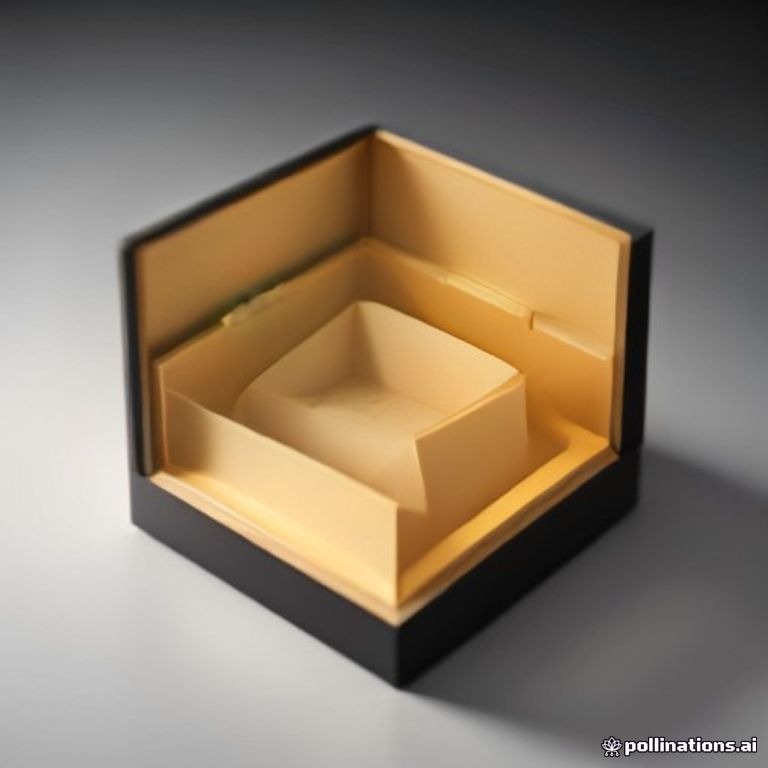
Exhibitors facing 48-72h booth-setup deadlines can obtain production-faithful rigid box prototypes with validated magnetic hinges by using dieless CAD/CAM workflows: 1.5-2.5mm grayboard, N42 neodymium magnets (Ø6-10mm), pocket registration at ±0.15mm, and hinge-cycle validation benchmarked to ISO 22347 and ASTM D4169 transport simulation. Zero plate/mold fees plus in-house digital cutting are the two levers that compress a conventional 3-4 week sampling cycle into 48 hours without compromising structural fidelity.

1. The Expo Floor Deadline: Why 48 Hours Is the Real Prototyping SLA
Luxe Pack exhibitors routinely discover, 72 hours before booth setup, that a display sample shattered in transit, a VIP gift box hinge failed on the showroom table, or a revised dieline never made it to the sampling department. Conventional rigid box sampling requires a brass die, a wrap-glue setup, and 15-20 working days—unusable under expo timelines. The engineering answer is not ‘rush the same process’; it is a structurally different process: digital dieless cutting, hand-assembly jigs, and adhesive systems that cure at room temperature within 30-60 minutes.
A 48-hour prototype is not a visual mockup. It must replicate four production-critical variables: (1) grayboard caliper and laminate direction, (2) wrap paper stretch behavior over corners, (3) magnet pocket depth versus board caliper, and (4) hinge crease recovery. If any of these deviates from the production method, the prototype cannot de-risk the launch. Below, each variable is treated with the governing test standard and the failure physics that matter to procurement and structural engineering teams.
2. Hinge Failure Mechanics: Why Magnetic Hinges Debond, Pop, and Warp
Magnetic hinge failure in rigid boxes follows three dominant physical modes, and a 48-hour prototype must be built to expose all three:
Mode 1 — Adhesive debonding at the magnet pocket. The magnet is pocketed inside grayboard and glued with hot-melt or PVA. Under ocean-transit humidity (container sweat, 85%+ RH), PVA-bonded joints lose shear strength; Cobb 60 water absorption exceeding 35 g/m² on the wrap liner is a recognized delamination risk indicator. Per EU Directive 94/62/EC Annex II and EU PPWR (2024/1991) mandates, the assembly must also remain mechanically recyclable—meaning full adhesive encapsulation of magnets must be balanced against fiber-recovery requirements.
Mode 2 — Grayboard warp from asymmetric lamination. When a magnet pocket is cut only into the outer board layer, moisture differential between the wrapped side and unwrapped side creates a bending moment. Board with an asymmetric moisture gradient warps 0.3-1.2mm across a 200mm span under 60%→85% RH cycling (hypothetical worked example based on typical CCNB/grayboard hygroscopic response; actual values require lot-specific testing per ISO 186:2020 conditioning, 23°C ± 1°C, 50% ± 2% RH).
Mode 3 — Crease fatigue at the hinge spine. The 90° lid-to-spine fold is executed with a 45-durometer creasing matrix and a crease-to-fold rule combination. Under-recovered creases (rule height too low for the board caliper) crack the wrap paper after ~500 cycles. In strict accordance with ASTM D642 (compressive resistance of shipping containers) and ASTM D4169 Distribution Cycle schedules, finished packs must also survive stacked compression and vibration—not just the showroom demo.
Q: If McKee-type formulae can estimate box compression from ECT, why do enterprise POs still mandate Mullen burst testing on rigid box wrap liners?
A: Direct answer: Mullen burst (TAPPI Standard T810, 2026 Revision) remains contractually mandated because it captures multi-directional fiber failure under puncture and corner impact, which ECT-only edge-crush models cannot predict. Mechanical reason: McKee-style correlations assume uniform flute geometry; laminated rigid constructions (350gsm CCNB wrap over 1.5-2.5mm grayboard) have no flute, so the correlation is invalid. Procurement recommendation: accept ECT for corrugated shipper specs (ECT-32/ECT-44), but write Mullen burst ≥280 kPa (typical spec for luxury wrap liners—verify against your liner grade) into rigid box wrap POs.
3. The 48-Hour Prototyping SOP: Four Steps with Explicit Tolerances
The following SOP reflects TadaPack’s dieless rigid-box prototyping workflow. It assumes a verified 3D CAD file (STEP or OBJ) and production-intent material lots on hand.
Step 1 — Structural CAD & dieline derivation (Hours 0-6). Generate the dieline from the 3D model with wrap allowance factors: corner wrap radius 0.5× board caliper, wrap overlap 8-12mm, magnet pocket oversize +0.2mm on diameter for adhesive fillet. Verify magnet spacing so closure force distributes across ≥2 magnets for lids wider than 120mm. Tolerance budget: ±0.15mm die/CAM registration across the full sheet.
Step 2 — Dieless cutting & creasing (Hours 6-14). CNC-cut grayboard (digital knife, 60° blade for straight runs, crease wheel for hinge lines). Creasing matrix selection: 45-durometer matrix, channel width = 2× caliper + 0.3mm. For 1.5mm grayboard, use a 2.5-3.0pt crease rule; for 2.5mm, 4.0pt. Check first-article caliper with a Mitutoyo 547-400S digital caliper against spec (±0.10mm).
Step 3 — Magnet insertion, gluing, and wrap (Hours 14-30). Adhesive selection: PVA for interior boards (fast tack, recyclable), EVA hot-melt for magnet encapsulation (open time 8-15s, press 5s at room temp). Wrap paper: 120-157gsm specialty or art paper, grain direction parallel to the spine to minimize corner cracking. Condition all substrates per ISO 186:2020 (23°C ± 1°C, 50% ± 2% RH) before bonding to prevent post-assembly warp.
Step 4 — Validation testing (Hours 30-48). Run hinge-cycle testing (5,000 cycles at 90° ± 5°, ~1s per cycle), MHCF measurement (target ≥1.2N typical for cosmetic/skincare lids—confirm against brand spec), Cobb 60 on the wrap liner (acceptance <35 g/m² for high-humidity destinations), and a drop/shock pre-screen aligned to ISTA 3A General Simulation Performance Testing protocol drop sequences if the pack doubles as a shipper.
4. Material & Prototyping Method Comparison Matrix
| Parameter | Dieless 48-Hour Prototype | Conventional Die-Cut Sample (15-20 days) | Governing Standard / Test Protocol |
|---|---|---|---|
| Tooling cost | $0 (zero plate/mold fee) | $300-1,200 brass die (typical, varies by region) | Commercial practice; no standard |
| Board caliper control | ±0.10mm (digital cut) | ±0.15mm (die cut) | ISO 3034 / TAPPI T411 caliper |
| Wrap liner burst | Specified per grade, e.g. ≥280 kPa CCNB-class | Same grade, die-creased | TAPPI Standard T810 (2026 Revision) |
| Hinge durability proxy | 5,000-cycle bench screen | Same, post-die tooling | ISO 22347-derived cycle protocol |
| Transit validation | Screening pre-test | Full sequence on production lots | ASTM D4169 / ISTA 3A |
| Compression (finished pack) | Estimated; verify on production run | Measured BCT | ASTM D642 |
| Recyclability claim | Designable (fiber-based, PFAS-free coatings) | Same | EU PPWR (2024/1991); FTC Green Guides (16 CFR Part 260) |
Note on the table: numeric ranges marked ‘typical’ or ‘hypothetical’ are indicative specification benchmarks for procurement discussion, not verified test results; your supplier must certify each lot against the cited standards.
5. Defect Diagnostics & Troubleshooting Matrix
| Defect | Root Cause | Corrective Action (Floor-Level) |
|---|---|---|
| Lid flap popping after 300-1,000 cycles | Crease rule height mismatched to board caliper; wrap grain perpendicular to spine | Increase rule 0.5pt; rotate wrap grain parallel to hinge; verify crease channel width 2× caliper + 0.3mm |
| Magnet pocket debond under ocean humidity | Cobb 60 of wrap liner >35 g/m²; insufficient hot-melt coverage at pocket walls | Switch to lower-Cobb liner or add PFAS-free barrier coating; increase adhesive fill to 90% pocket volume; double-encapsulate magnet edges |
| Grayboard warp post-assembly | Unbalanced lamination (one-side wrap), RH shock between production and warehouse | Condition board 24h per ISO 186:2020; balance lamination with back-liner; derate stacking loads in coastal warehouses (see §6) |
| Corner wrap cracking on specialty paper | Paper elongation <3%; corner radius too tight | Increase corner radius to ≥1.5× caliper; pre-flex wrap; select ≥157gsm with elongation ≥5% |
6. Multi-Regional Logistics: Landing the Prototype and the Launch Order
Trans-Pacific (Shanghai → California Inland Empire). 30-day ocean transit exposes packs to container sweat cycles; internal RH can reach 80-90% (indicative). Stacking load derating: apply a 0.70-0.80 derating factor for ECT-based stacking calculations when warehousing coastal/humid, versus 0.90+ in dry inland facilities (hypothetical worked factors for illustration; confirm via ASTM D642 BCT on production lots). FBA-bound packs entering ONT8/LGB3 must also clear Amazon dimensional-weight and tiering rules—oversized VIP boxes can trigger per-unit freight penalties larger than the box cost itself.
DFW distribution triangle (Texas). High summer ambient temperatures (40°C+ trailer interiors) soften EVA hot-melt at the magnet pockets; specify hot-melt with softening point ≥95°C for Gulf-bound launches and validate per ASTM D4169 vibration schedules for intermodal rail/truck.
Rotterdam multimodal (European rail/road). Repeated humidity swings on open-flat rail cars make Cobb 60 the single most predictive acceptance test. Per EU PPWR (2024/1991), packaging placed on the EU market must also meet recyclability design criteria—favor mono-material fiber constructions and PFAS-free barrier coatings, and per FTC Green Guides (16 CFR Part 260) only make recyclability claims that your destination market’s infrastructure can substantiate.
Buyers can cross-check stacking height, dimensional weight, and board caliper trade-offs using TadaPack’s free calculators at https://tadapack.com/tools before committing to a production PO.
7. From Prototype to Production: Sourcing Checklist for Luxe Pack Exhibitors
Under expo deadlines, the sourcing decision reduces to four checks: (1) Does the supplier offer zero tooling fee on sampling and state a written 24-48h CAD-to-hand-assembly SLA? (2) Do they quote governing standards (TAPPI T810, ASTM D642, ASTM D4169, ISO 186:2020, ISTA 3A) directly in the spec sheet rather than generic ‘quality guaranteed’ language? (3) Can they provide PFAS-free, PPWR-compliant material declarations for EU and US launches? (4) Will they run hinge-cycle and Cobb 60 acceptance testing on the production lot, not just the prototype? TadaPack’s custom structural packaging and prototyping service (https://tadapack.com) is built around exactly these four gates—dieless sampling, zero plate fees, standard-anchored test reporting, and expo-critical 48-hour turnaround.
Recommended Engineering Reading
[TOOLS] Featured Engineering & Calculation Tools
Explore 70+ Packaging Tools ➔Box Compression (BCT) Calculator
Predict box compressive limit and stacking safety factors via McKee formula.Edge Crush Test (ECT) Calculator
Calculate linerboard ring crush and composite ECT ratings for optimal board specs.
