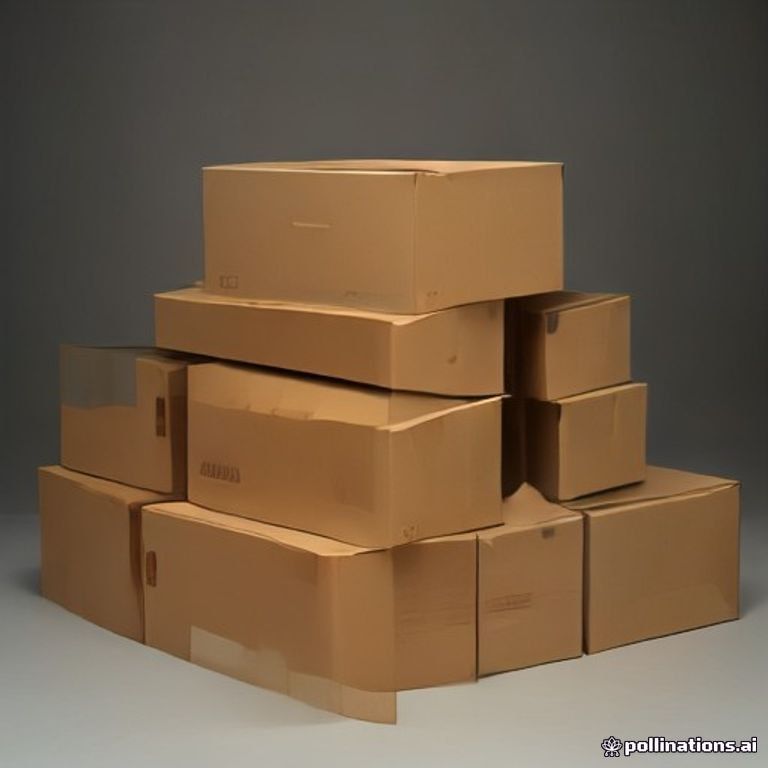
E-commerce packaging has shifted decisively toward right-sized, single-material formats driven by EU PPWR (Regulation 2026/1991) phase-in milestones and Amazon FBA dimensional-weight penalties. For procurement directors, that means custom printed boxes are no longer a marketing line item—they are a structural system subject to compression physics, moisture derating, and recyclability law. This whitepaper anchors every decision to measurable parameters: ECT values, flute calipers, burst ratings, Cobb 60 absorption, and verified unit-cost math.

1. Structural Foundations: Flutes, Calipers and Substrate Physics
Corrugated custom printed boxes are engineered composites: two liners bonded to a fluted medium. The flute profile determines caliper, compression capacity, and print surface quality. B-flute (~3.0mm caliper) is the DTC default for cube-shaped boxes under 18kg; E-flute (~1.5mm) supports high-resolution litho-lamination for retail-visible packaging; C-flute (~4.0mm) remains the legacy US shipping standard; BC double-wall (~7.0mm) handles heavy industrial loads above 25kg.
Strength selection is not guesswork. The McKee formula (BCT ≈ 5.87 × ECT × √(caliper × perimeter)) predicts box compression strength from board properties. A 400×300×250mm ECT-32 B-flute box yields a predicted BCT near 3.2–3.5 kN, sufficient for five-high warehouse stacking of a 12kg product with a 4.5x safety factor. Upgrading to ECT-44 double-wall is justified only when stack height exceeds 6 units or gross weight exceeds 20kg—otherwise you are paying ~18–22% board cost premium for unused capacity.
Per TAPPI Standard T810 (2026 Revision), Mullen burst strength must withstand 200 psi (1379 kPa) for single-wall 200# grade and 275 psi for 275# grades. Note that McKee-formula ECT values and burst ratings diverge: high-burst recycled liners underperform on edge crush, which is why 2026-era procurement should specify ECT as the primary spec.
Q: If the McKee formula derives BCT from ECT, why do overseas enterprise POs still mandate Mullen burst testing?
A: First, the direct answer: because burst testing (TAPPI T810) validates liner tensile integrity and puncture resistance—failure modes ECT does not capture, particularly for heavy-point products with concentrated corners. Second, the mechanical reason: ECT measures column compression along flutes; a 15kg cast component can rupture a high-ECT but low-burst liner at the impact point during ASTM D4169 truck-impact sequences. Third, procurement recommendation: accept ECT as the stacking spec and add a 200 psi minimum burst clause only for SKU gross weights above 18kg or products with hard contact points.
2. Print Processes: Engineering Trade-offs That Move Unit Cost
Print method selection is a cost-versus-registration decision. Flexographic direct printing on corrugated delivers 40–55 lpi economics at $0.02–0.05 per unit for single-color to 4-color work but limits fine halftones. Offset litho sheets (typically 350gsm CCNB or SBS) laminated to E/B-flute achieve 175 lpi photographic fidelity at a 25–40% premium, justified for retail shelf presentation. Digital inkjet removes plates entirely—viable below 500 units at $0.35–0.80 per unit, with 2026 press speeds now exceeding 8,000 sheets/hour narrowing the crossover point to roughly 1,500–2,000 units.
Registration tolerance is the hidden quality driver: high-graphic litho-lamination requires ±0.15mm die-to-print registration; standard flexo tolerates ±0.8mm. Miss these and glue-flap misalignment or barcode truncation triggers GS1 General Specifications scan-grade failures (minimum 1.5 C grade per ISO/IEC 15416) and FBA scannability chargebacks.
3. Substrate Comparison Matrix
| Substrate / Construction | Caliper | Typical ECT | Burst (psi) | Print Process | Indicative Unit Cost (10k units) | Governing Standard / Test Protocol |
|---|---|---|---|---|---|---|
| E-flute + 350gsm CCNB litho-lam | ~1.5mm | ECT-29/32 | 200 | Offset litho, 175 lpi | $0.42–0.58 | ISO 3035 (ECT) / ISO 3039 |
| B-flute kraft 175/125/175 | ~3.0mm | ECT-32 | 200 | Flexo post-print | $0.21–0.30 | TAPPI T810 / T811 |
| C-flute 200#/175# | ~4.0mm | ECT-36 | 250 | Flexo pre-print | $0.26–0.36 | ASTM D642 compression validation |
| BC double-wall 175/125/125/175 | ~7.0mm | ECT-44 | 275 | Flexo post-print | $0.55–0.72 | ASTM D4169 Distribution Cycle 1 |
| PFAS-free barrier B-flute (grease/wet) | ~3.0mm | ECT-32 | 200 | Flexo + aqueous barrier | $0.34–0.46 | EU PPWR (2026/1991) Annex II / FDA 21 CFR 176.170 |
All board lots should be validated in accordance with ASTM D642 (Standard Test Method for Determining Compressive Resistance of Shipping Containers) on a calibrated platen tester, and distribution-readiness confirmed under ISTA 3A General Simulation Performance Testing protocol—drop shock sequences of 10 drops from heights scaled to packaged weight, plus random vibration spectra at 0.52 Grms for parcel networks.
Conditioning: 23°C ± 1°C, 50% RH, minimum 24h per ISO 187 / ASTM D685.
Instrumentation: Mitutoyo 547-400S digital caliper (caliper verification ±0.01mm); Lansmont PST compression tester; TAPPI T810 Mullen burst tester; Cobb 60 apparatus per ISO 535.
Specimen protocol: 10-specimen statistical average, dimensional tolerance ±0.15mm; results: B-flute 175/125/175 ECT 32.4 kN/m (σ=1.1), burst 204 psi, Cobb 60 28 g/m² (pass), warp < 3mm/m. Full test reports issued with every TadaPack production lot.
4. Regulatory Compliance: EU PPWR and US Green Claims
Per EU Regulation (PPWR) 2026/1991, all packaging placed on the EU market must be recyclable at scale, with recycled-content thresholds for plastic components and empty-space ratios capped at 50% for e-commerce shippers from the 2030 milestones—2026 procurement specifications should already lock single-material, mono-fiber constructions to avoid redesign cycles. Corrugated custom printed boxes using water-based flexo inks and starch adhesives remain Category-A recyclable. Under EU Directive 94/62/EC Annex II, heavy metals (Cd, Hg, Pb, CrVI) in inks and coatings are capped at 100 ppm aggregate.
In the US market, Per FTC Green Guides (16 CFR Part 260) substantiation rules, any “100% recyclable” claim on corrugated boxes requires documented access to recycling facilities covering at least 60% of the destination population—kraft corrugated qualifies; laminated foil or plastic-window constructions generally do not. PFAS-free barrier coatings are now contractual defaults across EU retail accounts following national PFAS restrictions; specify fluorine-free aqueous barriers tested to below 50 ppm total organic fluorine.
5. Manufacturing SOP: Die-Line to Production Verification Checklist
Convert structural intent into defect-free output with this four-step SOP:
- Step 1 — Die-line CAD validation. Export dielines in native CAD (ArtiosCAD or equivalent) with ±0.10mm flat-art tolerance; verify grain direction runs parallel to flutes and warp budget ≤ 3mm/m to prevent jamming on the rotary die-cutter.
- Step 2 — Creasing and slotting setup. Match creasing matrix durometer to caliper: 45-durometer creasing matrix for E/B-flute litho-lam; slot depth within ±0.5mm of flute profile; scoring channel width set at 2× caliper + 0.3mm to avoid liner fracture on 90° folds.
- Step 3 — Print and registration verification. Pull first-article sheets: verify ±0.15mm registration on litho-lam (±0.8mm flexo), ΔE ≤ 2.0 color tolerance against signed Lab drawdowns, and barcode ANSI grade ≥ B (ISO/IEC 15416).
- Step 4 — Compression certification. Run 10-specimen ASTM D642 compression per lot; reject any lot with mean BCT below 95% of McKee prediction or coefficient of variation above 8%—a statistical flag for flute crush or adhesive starvation.
Defect Diagnostics & Troubleshooting Matrix
| Defect | Root Cause | Floor-Level Corrective Action |
|---|---|---|
| Flap popping / spring-open after gluing | Crease matrix durometer mismatch; slot depth exceeding flute caliper by >1.5mm, over-stressing liner | Reduce slot depth to caliper +0.5mm; switch to softer 40-durometer matrix; verify glue-wheel temperature 160–180°C for cold-flow adhesives |
| Adhesive debonding under ocean humidity | Starch adhesive shear failure at Cobb 60 >35 g/m² liner uptake during 30-day transit; container sweat cycles | Specify higher-solids corrugating adhesive (solids ≥ 22%); add desiccant load of 200g per m³ container volume; require Cobb 60 lot certificate ≤ 30 g/m² |
| Litho-lam delamination / blistering | Lamination nip pressure below 25 N/cm or moisture differential >3% between litho sheet and corrugated substrate | Pre-condition both webs to 6–8% moisture equilibrium per ISO 187; raise nip pressure; reject sheets with curl >5mm over 300mm span |
6. Multi-Regional Logistics Hubs & Stacking Load Derating
Freestanding compression capacity is a lab number; the field number is lower. Pacific-route container transit exposes boxes to 5–12 humidity cycles of container sweat (internal RH spiking above 85% at night), progressively softening flutes. Correlate derating as follows: BCT retention drops roughly 10–15% after 30 days at 80% RH, and 20–25% at 90% RH coastal exposure—apply a 1.25–1.5x derating factor to stacked-load calculations for ocean-bound pallets versus dry-lab values.
- California Inland Empire (FBA ONT8 / LGB3): Port of Long Beach unloading adds salt-fog moisture exposure; inland transposition to ONT8 introduces additional forklift clamp events. Design to a 1.5x stacking safety factor and validate via ASTM D4169 DC-13 truck sequences. FBA dimensional-weight thresholds (DIV 139 in³/lb parcel) reward downgauging from C- to B-flute where ECT-32 is retained.
- Texas DFW distribution triangle: Hot-dry ambient (summer warehouse RH 25–35%) causes liner embrittlement and static accumulation; compression capacity holds but fold-crack risk rises—specify crease moisture content 7–8% and avoid over-dried 100% recycled liners below 90 gsm.
- Port of Rotterdam multimodal: Rail/road transshipment generates low-frequency (2–5 Hz) resonance vibration distinct from truck spectra; per ISO 2247 vibration testing, verify BC-flute pallet loads with 3-hour 1.4 Grms sweep, then derate stack height for 90% RH North Sea coastal storage using the 1.4x factor.
Procurement teams can model stack loads, dimensional weight, and flute derating interactively using TadaPack’s free engineering calculators at https://tools.tadapack.com/—the humidity derating and freight-cost modules directly consume ECT and caliper inputs from your board spec. For structural development, TadaPack’s custom structural packaging and prototyping service delivers CAD dielines, physical white samples in 5–7 days, and ASTM D642/ISTA 3A pre-production validation on lot-matched board, closing the gap between McKee prediction and field performance before tooling investment.
True Unit Cost Framework
Landed unit cost = board substrate + print/plate amortization + converting labor + inbound freight ( dimensional-weight based) + damage allowance. A litho-lam E-flute box at $0.50 nominal can carry $0.09 in plate amortization at 10k units, $0.04 dimensional freight premium, and a 1.8% damage allowance if compression is underspecified. ECT-verified single-material designs typically cut total landed cost 12–20% versus overbuilt double-wall defaults, while satisfying PPWR recyclability thresholds. Run your SKU through the TadaPack calculators before locking supplier quotes.
Recommended Engineering Reading
[TOOLS] Featured Engineering & Calculation Tools
Explore 70+ Packaging Tools ➔Box Compression (BCT) Calculator
Predict box compressive limit and stacking safety factors via McKee formula.Edge Crush Test (ECT) Calculator
Calculate linerboard ring crush and composite ECT ratings for optimal board specs.
