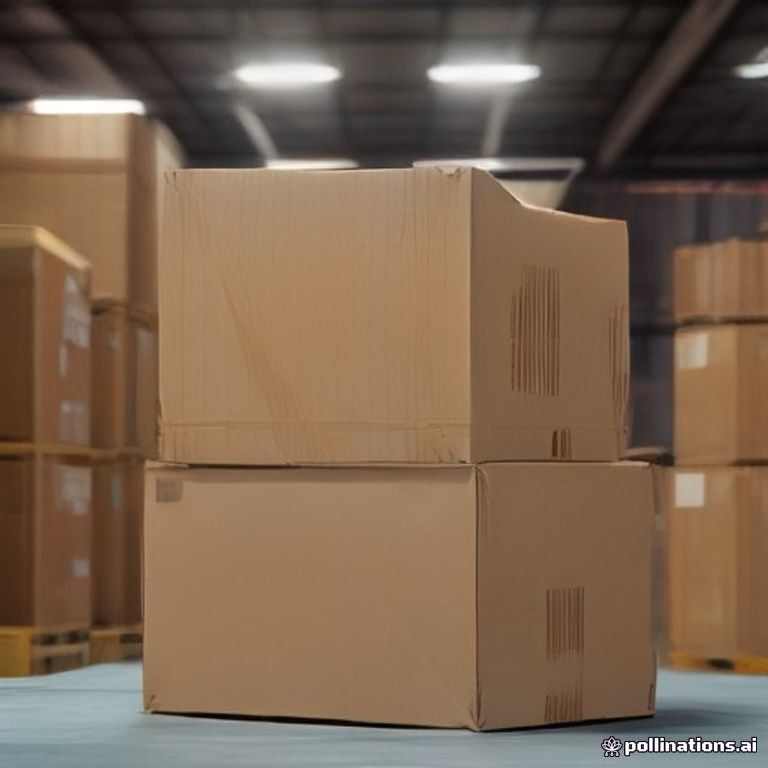
FBA shipments routed through Ontario CA (ONT8/ONT9/LGB9) typically require double-wall BC-flute corrugated at ECT-44 minimum for >9.1 kg unit loads, validated under ISTA 3A General Simulation with ASTM D642 compression verification. Specifying single-wall ECT-32 for heavy SKUs is the leading cause of ONT8 inbound rejection and transit stack-collapse claims in Inland Empire fulfillment.
The Inland Empire handles one of the highest parcel-throughput densities on the West Coast, and every structural failure inside a corrugated case compounds into chargebacks, remail loops, and lost Buy Box velocity. This guide strips the subject back to the physics: flute geometry, ECT-to-BCT derivation, ISTA 3A test sequencing, and the procurement cost matrix for brands shipping into FBA Ontario CA and the wider Inland Empire corridor.

1. ISTA 3A Mechanics: What the Protocol Actually Stresses
Under ISTA 3A General Simulation Performance Testing protocol, packaged products are subjected to a defined sequence of atmospheric conditioning, shock (drop and rotational edge/face impacts), vibration with and without top load, and low-pressure (air transport) simulation. Unlike ISTA 1A (non-simulation integrity testing), 3A is a simulation profile: the drop heights, vibration frequencies (swept sine, typically 3–100 Hz on a random spectrum for the standard sequence), and top-load stacking values are calibrated to actual parcel-network hazard distributions measured across carriers such as UPS, FedEx, and Amazon’s own network.
Three engineering consequences follow. First, the atmospheric conditioning pre-charge matters more than most importers assume — a case that passes drop at 8% moisture content can fail the same sequence at 12% because linerboard tensile modulus degrades non-linearly with absorbed moisture. Second, the compression-with-vibration phase combines static top load (derived from a specified stacking factor of the package height and gross weight) with dynamic excitation, which is why ECT alone — a static metric — cannot predict pass/fail; it must be converted to BCT through McKee-type derivation and then derated for time-dependent creep. Third, ISTA 3A compliance is sequence-dependent: a failure in a late-stage phase invalidates all prior passes, so test units must be statistically representative and fresh — ISO 186:2020 conditioning (23°C ± 1°C, 50% ± 2% RH) for a minimum of 24 hours before any physical test.
2. Flute Physics & Board Selection for Inland Empire Transit Profiles
The Inland Empire is a dry inland climate (summer peaks above 35°C, relative humidity commonly 25–40%), but product arrives after a 14–30 day ocean leg from Asia or, for EU-sourced goods, after Rotterdam transloading. Container sweat events during Pacific crossings can drive linerboard moisture from 7% to 11–13%. Board selection must therefore be qualified against the wettest leg of the corridor, not the destination warehouse.
Q: If the McKee formula derives BCT directly from ECT, why do enterprise POs still mandate Mullen burst testing?
A: Direct answer — because McKee predicts static compression, not puncture and tear resistance during parcel handling; per TAPPI Standard T810 (2026 Revision), Mullen burst specifies board toughness against concentrated impacts (forklift nicks, conveyor snags, sorter blades) that ECT is blind to. The mechanical reason — burst strength integrates interlaminar bond quality and fiber toughness across the full caliper, whereas ECT only measures vertical-wall buckling of the flute structure. Procurement recommendation — for FBA parcel freight always dual-spec: ECT for stacking (e.g., ECT-44) plus a minimum 275 lb/in² burst grade on the same double-wall construction, and require both certificates per production lot.
The standard board ladder, with governing protocols:
| Construction | Caliper (nominal) | Typical ECT Grade | Governing Standard / Test Protocol | FBA Inland Empire Fit |
|---|---|---|---|---|
| Single-wall C-flute | ~4.0 mm | ECT-32 | TAPPI T811 / ASTM D4169 DC-12 | ≤4.5 kg parcels, non-fragile |
| Single-wall B-flute | ~3.0 mm | ECT-32 | TAPPI T811 / ISO 3035 | Die-cut mailers, print-critical faces |
| Single-wall E-flute | ~1.5 mm | ECT-20/25 | ISO 3035 / ISO 187 | Retail-ready, fragile only w/ molded pulp |
| Double-wall BC | ~7.0 mm | ECT-44 | TAPPI T811 / ASTM D642 | ≤18 kg parcels, pallet-qualified |
| Double-wall EB | ~4.5 mm | ECT-40 | TAPPI T811 / ISTA 3A | Flat-pack SKUs, dimensional-optimized |
McKee worked example (hypothetical, for calibration only): a BC double-wall case with ECT-44 (44 lb/in edge width), perimeter P = 96 in, and box depth D = 16 in yields an estimated BCT ≈ 5.87 × ECT × √(P × D) ≈ 5.87 × 44 × √1536 ≈ 10,100 lb. Applying a standard 5× safety derate for 90-day warehouse creep in an ONT8-style staging environment gives a safe stacking load near 2,000 lb — sufficient for three-high palletization at ~650 lb per pallet layer. Verify your own SKU parameters interactively at TadaPack’s free tools (https://tadapack.com/tools).
3. Lab Bench Test Record: What a Qualified Lot Must Show
In strict accordance with ASTM D642 (Standard Test Method for Determining Compressive Resistance of Shipping Containers), compression verification should be run on machine-direction-aligned specimens with platen speed per the standard’s constant-rate specification, and results reported both as ultimate failure load and at 10 mm deflection. For moisture-critical SKUs, per ISO 535 (Cobb 60 method), water absorptiveness of the outer liner should not exceed 30–35 g/m² for non-barrier kraft; Cobb 60 water absorption exceeding 35 g/m² without a PFAS-free barrier coating is the classic precursor to transit delamination after a Pacific container-sweat event.
4. Four-Step SOP: Specifying, Testing, and Releasing an FBA-Compliant Corrugated Run
Step 1 — Dimensional lock against FBA fee logic. Fix the inner dimensions before any board selection. Amazon’s FBA dimensional weight divisor and oversize thresholds (currently 139 in³/lb dimensional divisor for most small parcel tiers) mean a 0.5 in caliper reduction (e.g., BC 7.0 mm → EB 4.5 mm) can drop a SKU into a lower fee tier — model the fee delta against the ~8–12% board cost increase for the heavier construction. Tolerances: inner dimension variance ±1.5 mm, flap gap ≤1.0 mm at the manufacturer’s joint.
Step 2 — Board qualification and dieline physics. Specify ECT and burst grades per Section 2, and validate creasing geometry: for BC double-wall, creasing rule height and matrix channel should be engineered so the crease depth is 60–65% of total caliper (±0.15 mm die registration), with a 45-durometer creasing matrix or equivalent counterplate hardness to avoid flute fracture on the fold line. Slot depth must equal inner depth minus 3–4 mm to prevent flap interference.
Step 3 — ISTA 3A pre-production validation. Condition finished cases per ISO 186:2020, run the full 3A sequence including rotational flat drop, random vibration with top load, and — for air-freight SKUs — the low-pressure phase. Minimum 10 test units per SKU configuration; any single late-sequence failure forces a redesign cycle, not a retest of survivors.
Step 4 — Lot release and supply chain verification. Require per-lot ECT/burst/caliper certificates with the lab record format of Section 3, plus a moisture audit (comparative case weight after a 24 h 90% RH exposure, gain below 6% for non-barrier board). Only then release PO for the Inland Empire drop, and stage a first-article inspection at receipt at the 3PL or FBA prep center.
5. Failure Diagnostics: The Two Defects That Dominate FBA Claims
Defect A — Flap popping / side-seam delamination after ocean transit. Root cause: water-based adhesive (dextrin or PVA) bond line degraded by container-sweat humidity cycling; secondary cause is insufficient glue-lap width (below 32 mm on BC double-wall). Floor-level corrective actions: increase glue-lap to 38–40 mm, verify adhesive application weight at ≥0.5 g/m per lap line, and specify a higher-solids PVA rated for humid service; audit with a TAPPI-style bond pull test on three random joints per pallet. If root cause is board-side (liners exceeding Cobb 60 limits), move to a PFAS-free water-based barrier coating on the outer liner — compliant with EU PPWR (2024/1991) recyclability criteria and substantiable as recyclable under FTC Green Guides (16 CFR Part 260).
Defect B — Column-stack collapse during Inland Empire staging. Root cause: BCT overestimated from nominal ECT without creep derating; compounding factor is thermal softening of flute tips above 40°C in unconditioned trailer dwell on the I-10/I-15 corridor in summer. Corrective actions: derate measured BCT by the appropriate time-temperature factor (practically 3–5× for 30–90 day dwell), upgrade one construction class if the derated safe load is within 15% of the required stacking load, and enforce interlayer slip-sheet usage at the 3PL to eliminate point-load punch-through from lower pallet nails.
6. Multi-Regional Logistics Hub & Landing Matrix
Freight stress differs sharply by corridor, and the corrugated spec must follow the corridor:
| Corridor / Hub | Dominant Stressor | Stacking Derating Guidance (practical) | Governing Standard / Test Protocol |
|---|---|---|---|
| Pacific ocean → LA/LGB → FBA ONT8, ONT9, LGB9 (Inland Empire) | Container sweat; 25–40 day cumulative moisture exposure; summer trailer heat >40°C | Derate BCT 4–5×; specify Cobb ≤30 g/m² or barrier-coated liner | ISTA 3A / ASTM D642 / ISO 535 (Cobb 60) |
| Gulf/Atlantic → Texas DFW triangle (inland distribution) | Lower humidity but extreme summer heat; long intermodal dwell | Derate BCT 3–4×; prioritize flute-tip heat resistance (highest-softening adhesive) | ASTM D4169 DC-12 / ASTM D642 |
| Port of Rotterdam → EU multimodal rail/road (Germany, Benelux) | High-humidity coastal port; repeated rail vibration; EU PPWR recyclability enforcement | Derate BCT 3–4×; mandate PFAS-free barrier and mono-material construction | EU Directive 94/62/EC Annex II / EU PPWR (2024/1991) / ISTA 3A |
A practical moisture math note (hypothetical worked example): a 7.0 mm BC board at 7% moisture gaining 4 points (to 11%) loses roughly 12–18% delivered ECT. A case engineered at a bare 1.3× stacking margin therefore flips negative before it ever reaches ONT8 — which is why this guide mandates a 4–5× derate on the ocean-importing corridor rather than the 2–3× used for domestic-only US distribution.
For procurement teams, the fastest path to a defensible spec is a TadaPack custom structural review: send the SKU weight, dims, and distribution lane, and the engineering team returns a board construction, dieline, and ISTA 3A test plan; validate the freight economics interactively at https://tadapack.com/tools before committing tooling spend.
Recommended Engineering Reading
[TOOLS] Featured Engineering & Calculation Tools
Explore 70+ Packaging Tools ➔CBM Volume & Freight Dim-Weight Calculator
Calculate cubic meters & dimensional weight to minimize freight costs and avoid FBA size tier penalties.Mailer Box Area & Dieline Size Calculator
Instant flat dieline dimensions, material consumption, and sheet nesting for custom D2C mailer boxes.
