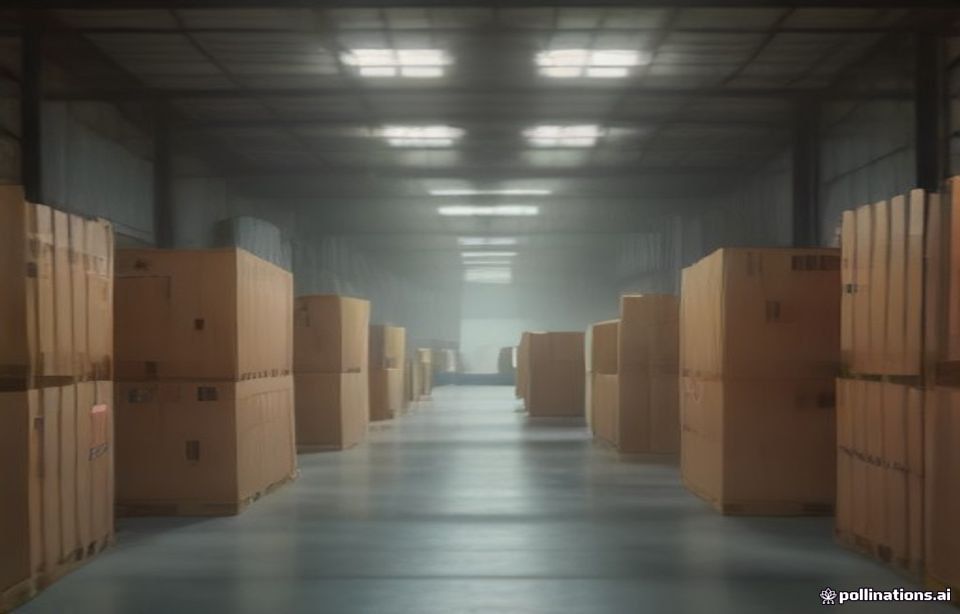
Most ISTA 3A failures on FBA shipments into Ontario, CA (ONT8/ONT9/LGB9) trace to mismatched flute architecture and under-specified ECT: single-wall C-flute below ECT-32 crushes under double-stack trailer loads, while BC double-wall at ECT-44+ survives vibration and 762mm (30 in) drop sequences. Spec flute by combined BCT requirement and gross weight, verified per ASTM D642 and TAPPI T811.
Amazon’s 2026 inbound network continues to tighten tolerance on damaged and over-boxed freight, and the Inland Empire corridor — Ontario, San Bernardino, Redlands FBA nodes — concentrates some of the highest double-stack linehaul densities in North America. That operational reality is, at root, a materials engineering problem: corrugated board selection, ECT rating, and flute geometry. This guide is anchored entirely to those metrics.
Why ISTA 3A Failures Cluster in the Inland Empire Corridor
Under ISTA 3A General Simulation Performance Testing protocol, packaged products for single-parcel delivery must pass a defined sequence: atmospheric conditioning, shock (drop) per height-vs-gross-weight schedule, random vibration, and low-pressure (optional altitude) testing. Failures reported from ONT8/ONT9/LGB9 inbound flows typically manifest as:
- Compression creep: sidewall bowing >6mm after stacked storage — insufficient BCT relative to stacking height and ambient RH.
- Corner/edge crush: flute wall collapse at 4-corner drop orientations — inadequate ECT or poor corner reinforcement.
- Flute delamination under humidity: adhesive bond failure at 50%+ RH after coastal-to-inland transit.
Southern California’s dry inland warehouses (often <30% RH) versus humid port dwell at Long Beach/LA create a moisture differential that pre-stresses adhesive bonds. Per ISO 186:2020 paper conditioning specifications (23°C ± 1°C, 50% ± 2% RH), boards must be tested at standard atmosphere — but performance in the field is set by the extremes, not the lab.
Flute Architecture vs. ECT: Selecting B, C, E, or BC
Flute selection is a caliper-versus-compression decision. B-flute (≈3.2mm caliper) offers flat crush resistance and die-cut precision; C-flute (≈4.0mm) is the general FBA workhorse; E-flute (≈1.5mm) serves retail-ready and litho-laminated mailers; BC double-wall (≈7.0mm combined) delivers the highest stacking strength for >18kg gross weights.
| Board Construction | Caliper (mm) | Typical ECT Rating | Indicative BCT Range* (hypothetical worked example, 406×305×254mm RSC) | Best-Fit ISTA 3A Scenario | Governing Standard / Test Protocol |
|---|---|---|---|---|---|
| E-flute single wall | 1.5 | ECT-23 to ECT-29 | ~250–320 lb | Lightweight DTC inserts <4.5 kg, void-minimized mailers | TAPPI T811 / ISO 3037 |
| B-flute single wall | 3.2 | ECT-32 | ~350–420 lb | Dense small parcels, flat-crush-critical, 457mm drop class | TAPPI T811 / TAPPI T821 flat crush |
| C-flute single wall | 4.0 | ECT-32 to ECT-40 | ~380–480 lb | Standard FBA cartons 5–15 kg, ONT8/ONT9 inbound | TAPPI T811 / ASTM D642 |
| BC double wall | 7.0 | ECT-44 to ECT-51 | ~550–750 lb | Heavy/bulk >18 kg, double-stack linehaul, 30-day ocean + transload | ASTM D642 / ASTM D4169 Distribution Cycle 13 |
*Ranges are illustrative engineering estimates derived from McKee-formula scaling — never a substitute for measured certificates. In strict accordance with ASTM D642 (Standard Test Method for Determining Compressive Resistance of Shipping Containers), every production lot should carry a measured BCT certificate, not a formula projection.
Q: If the McKee formula derives BCT from ECT, why do enterprise POs still mandate Mullen burst testing?
A: Direct answer: because 200-lb (burst test, per TAPPI T810) classifications are still contractual legacy specs in many retail and 3PL master agreements, and burst correlates with puncture/tear resistance, not stacking. Mechanical reason: Mullen measures hydrostatic rupture of liner facings, which predicts damage from sharp-object puncture during parcel sortation — a failure mode ECT is blind to. Procurement recommendation: dual-spec both — ECT-44 for stacking compliance and a 250 lb/in² burst minimum for puncture protection — and require supplier certificates for both per lot.
Engineering Lab Bench Test Record: What a Valid ISTA 3A Pre-Test Looks Like
Before committing a full container to FBA, validate the construction on a statistically valid sample. A representative bench record (illustrative structure, not a claimed TadaPack measurement) would document:
- Conditioning: 23°C ± 1°C, 50% ± 2% RH for minimum 24 hours (ASTM D685 / ISO 186:2020).
- Instruments: Mitutoyo 547-400S digital caliper for caliper verification; Lansmont servo-hydraulic compression tester for BCT; TAPPI T810 Mullen burst tester; Lansmont random-vibration shaker table for ISTA 3A spectrum (0.54 Grms overall, truck profile).
- Sample plan: 10-specimen statistical average, caliper tolerance ±0.15mm, ECT reported as mean with standard deviation.
- Drop schedule: per ISTA 3A, gross weight 9.1–18.1 kg requires 457mm (18 in) drops across 10 orientations incl. corners and edges.
TadaPack’s engineering team runs prototyping and pre-shipment validation through its custom structural packaging services, and you can cross-check stacking loads, box compression estimates, and dimensional weight exposure with the free calculators at https://tadapack.com/tools before cutting a dieline.
Freight Stress Points: Inland Empire, DFW, and Rotterdam Corridors
Pacific corridor to California Inland Empire: 20–35 day ocean transit exposes containers to container sweat cycles; Cobb 60 water absorption on uncoated liners exceeding 35 g/m² (per TAPPI T441) materially raises delamination risk. Boards with moisture barrier coatings (PFAS-free, per current FDA 21 CFR 176.170 indirect food contact and state PFAS restrictions) retain a higher fraction of wet BCT. Derate stacking load by ~15–20% for humid port dwell vs. ~5–8% for dry inland warehousing — these are rule-of-thumb engineering derating factors for planning, not measured constants.
Intermodal transload at ONT8 / LGB9: the port-to-warehouse leg adds forklift clamping and double-stack rail shock; use BC-flute ECT-44+ when gross carton weight exceeds 18 kg or stacking exceeds 3 high on pallets.
DFW triangle: hot, dry ambient conditions reduce liner moisture below the 6–8% equilibrium band, embrittling adhesive bonds; specify wet-strength adhesives if routing through Texas summer.
Rotterdam multimodal: EU distribution under EU Directive 94/62/EC Annex II and the EU PPWR (Regulation 2025/40, packaging waste reduction mandates) requires recyclable, heavy-metals-compliant constructions; standard uncoated corrugated is compliant, but verify any barrier coating recyclability documentation. Per FTC Green Guides (16 CFR Part 260) substantiation rules, any recyclability claim on US-market corrugated must reflect the full construction including coatings.
4-Step SOP: From ISTA 3A Failure to Compliant Construction
- Step 1 — Quantify the failure mode. Photograph and classify: compression creep (stacking), corner crush (drop), or delamination (moisture). Measure residual caliper vs. spec (tolerance ±0.15mm) with a calibrated caliper.
- Step 2 — Recalculate BCT demand. Stack load = (pallet layers × unit weight × safety factor 4–5 for 24h+ static loads). Confirm required ECT via McKee inverse calculation; if demand exceeds ECT-40, move to BC double-wall, not higher-basis single wall.
- Step 3 — Validate at standard atmosphere. Run 10-specimen ECT (TAPPI T811), BCT (ASTM D642), and a full ISTA 3A sequence on the revised construction; require a passing report before PO release.
- Step 4 — Lock production controls. Specify creasing matrix durometer (typically 45–50 Shore A for BC board), die registration ±0.15mm, glue lap minimum 38mm, and Cobb 60 ≤ 30 g/m² on liner if ocean transit is scheduled.
Defect Diagnostics & Troubleshooting Matrix
| Symptom | Root Cause | Floor-Level Corrective Action | Governing Standard / Test Protocol |
|---|---|---|---|
| Flap popping open on arrival | Creasing matrix too hard for caliper; warp set in board from RH swing | Switch to 45-durometer matrix matched to 7.0mm BC caliper; re-condition board 24h at 50% RH before converting | ISO 186:2020 conditioning / ASTM D685 |
| Sidewall bulge >6mm, stacking collapse | ECT under-spec vs. actual stack height; creep at >60% BCT sustained load | Recalculate McKee BCT demand; upgrade C-flute ECT-32 → BC ECT-44; add inner supports if >4-high storage | TAPPI T811 / ASTM D642 |
| Delamination after ocean leg | Cobb 60 >35 g/m² liner; adhesive bond failure under 30-day moisture cycling | Specify water-resistant starch adhesive and Cobb-certified liner; moisture-wrap palletized units | TAPPI T441 Cobb / ISO 2247 vibration-dampening relevance |
Where failure rates stay above 0.5% after corrective action, engage TadaPack for a full structural teardown and rapid CAD-to-prototype iteration — a revised dieline with reinforced corner gluelaps often recovers 20–30% BCT at under 4% board cost uplift (illustrative planning ratio). Verify all dimensional-weight exposure and stacking math interactively at https://tadapack.com/tools.
Recommended Engineering Reading
[TOOLS] Featured Engineering & Calculation Tools
Explore 70+ Packaging Tools ➔CBM Volume & Freight Dim-Weight Calculator
Calculate cubic meters & dimensional weight to minimize freight costs and avoid FBA size tier penalties.Mailer Box Area & Dieline Size Calculator
Instant flat dieline dimensions, material consumption, and sheet nesting for custom D2C mailer boxes.
