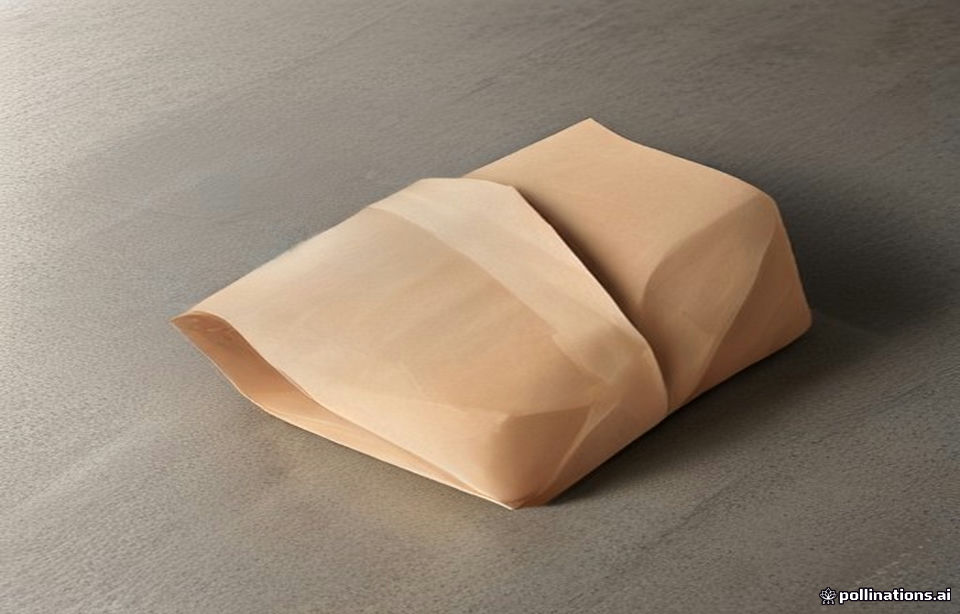
For most DTC e-commerce fulfillment, 100% recycled PCR poly mailers deliver the best strength-per-gram and cost profile, while FSC-certified kraft paper mailers win on curbside recyclability and PPWR alignment, and PLA/PBAT compostable mailers suit only closed-loop or organics-accessible markets. Specify by testable metrics — tensile/burst per TAPPI T810, seam seal integrity per ASTM F88, and verifiable PCR content — not by eco labels.
- PCR recycled poly mailers typically cost 10–25% more than virgin LDPE but retain superior tear resistance per gram versus 70–90 gsm kraft paper mailers.
- Compostable PLA/PBAT mailers must show EN 13432 or ASTM D6400 certification; unverified ‘biodegradable’ claims violate FTC Green Guides (16 CFR Part 260).
- Under EU PPWR (Regulation 2025/40, applying its recyclability provisions progressively through 2030), all mailer formats must be designed-for-recycling by grade — paper/poly separation matters more than the raw substrate.
- Seam and closure integrity, tested per ASTM F88/F88M seal peel strength, is the #1 field failure point across all three eco mailer types.
- Right-sizing reduces material use before material substitution does: a 25mm width reduction typically saves 3–5% film weight per unit.
The Verdict Up Front: Which Eco Mailer Wins by Use Case
There is no single ‘greenest’ mailer — there is only the mailer with the lowest verified environmental burden for your specific lane, product weight and end-of-life infrastructure. As a hypothetical worked example benchmark: a 150g apparel shipment in a 60-micron 100% PCR poly mailer will nearly always outperform a 90 gsm kraft paper mailer on total material mass and drop survivability, while the paper mailer scores higher on consumer-facing recyclability and plastic-reduction narratives. Compostable mailers earn their premium only where industrial composting collection is guaranteed at the destination — largely a UK, parts of the EU, and select US municipal question.
Our procurement recommendation for 2026 sourcing cycles: default to high-PCR poly for soft goods under 500g, specify FSC kraft paper mailers for brand-forward rigid-light items and EU markets where PPWR recyclability grading is scrutinized, and reserve certified compostable mailers for closed-loop programs with documented organic-waste access. Verify every claim with substrate testing, not supplier marketing sheets.
Dimension-by-Dimension: PCR Poly vs Kraft Paper vs Compostable Mailers
The table below compares the three dominant eco mailer architectures across the criteria that actually drive procurement decisions. Where a governing standard applies, it is named explicitly — request these test reports from any prospective supplier before issuing a PO.
| Criterion | 100% PCR Poly Mailer (50–75 μm) | FSC Kraft Paper Mailer (70–120 gsm) | Compostable PLA/PBAT Mailer (~45–60 μm) |
|---|---|---|---|
| Strength basis | Tensile & tear per ASTM D882 / ASTM D1004; seal per ASTM F88 | Mullen burst per TAPPI T810; tensile per TAPPI T494 | Tensile per ASTM D882; lower elongation than LDPE |
| Transit robustness | High — elastomeric film absorbs drop shock in ISTA 3A sequences | Moderate — corner tear risk above ~800g loads; add gusset/burst margin | Moderate — stiffer film, notch-sensitive at seal edges |
| Moisture behavior | Excellent barrier; contents unaffected by container sweat | Vulnerable — specify Cobb 60 < 30 g/m² sized paper or PFAS-free barrier coating | Good; but PBAT hydrolysis risk in prolonged humid storage |
| End-of-life claim | Store-drop-off recyclable (US How2Recycle LDPE-4 stream) | Kerbside recyclable; aligns with PPWR paper recyclability grading | Industrial composting only, per ASTM D6400 or EN 13432 |
| Regulatory exposure | Watch state EPR fees on plastic formats (CA SB 54 phase-in) | Low; ensure PFAS-free barrier chemistry declarations | Claims risk if no organics access — FTC Green Guides substantiation |
| Indicative cost index | 1.10–1.25× virgin poly | 1.0–1.4× (gsm-dependent) | 1.5–2.0× virgin poly |
| Typical MOQ & lead time | 10k–50k units; 3–5 weeks custom print | 5k–25k units; 3–6 weeks (flexo) | 10k+ units; 4–7 weeks (narrow converter base) |
Q: If PCR poly is ‘recycled,’ why does its burst and tear performance still need full ASTM D882 qualification instead of inheriting virgin-LDPE datasheets?
A: Direct answer: PCR resin varies batch-to-batch in melt index and contamination, so mechanical properties must be qualified per lot family, not assumed. Mechanically, recycled streams carry shortened polymer chain lengths and gel inclusions that reduce elongation at break by measurable margins, shifting the film’s failure mode from ductile stretch to tear propagation during ISTA 3A drop events. Procurement recommendation: contract a minimum elongation-at-break spec (commonly ≥ 300% for 60 μm film, per your supplier’s qualified range) and require ASTM D882 tensile reports with every quarterly lot, rather than a one-time datasheet.
Where Each Mailer Architecture Fits Operationally
High-PCR poly mailers dominate high-velocity soft-goods fulfillment: apparel, textiles, and compressed soft accessories under ~500g. Their elastomeric energy absorption survives ISTA 3A drop-and-vibration sequences at gauges as low as 50 μm, and their store-drop-off recyclability route is well-understood by US consumers. The trade-off is rising EPR fee exposure under California SB 54 and analogous EU plastic levies, which steadily erode the cost gap versus paper.
Kraft paper mailers (including padded paper variants using recycled paper cushioning rather than bubble laminate) fit brand-forward shipments, EU-heavy distribution, and mixed rigid-light loads where kerbside recyclability is a stated commitment. Engineering watch-items: paper loses significant burst strength in humid ocean transit — the same Cobb 60 limits and ISO 187/ISO 186 conditioning (23°C ± 1°C, 50% ± 2% RH) used for corrugated apply here — so inbound moisture conditioning and desiccant control in container loads are non-negotiable for Pacific and Atlantic lanes.
Compostable PLA/PBAT mailers are correct only when the disposal pathway exists: industrial composting per ASTM D6400 (US) or EN 13432 (EU). Deploying them in markets without organics collection means the material likely landfill-disposes like conventional film while costing 1.5–2.0× — an indefensible position under FTC Green Guides substantiation logic. Home-compostable claims require even stricter evidence (e.g., TÜV Austria OK compost HOME-type certification) and should be treated skeptically in US procurement.
Q: Our current paper mailer fails corner tear on 700g shipments — do we add gsm or restructure?
A: Direct answer: restructuring usually beats adding gsm. Mechanically, tear failures concentrate at fold and seam radii, not in the flat sheet, so increasing paper weight raises cost linearly while only marginally improving local tear resistance; a gusseted construction, rounded die-cut corners, and reinforced tape-line redesign distribute stress more effectively. Recommendation: request a short-run structural prototype at both +10 gsm and gusseted-equivalent constructions, and screen both on TAPPI T494 tensile and a manual drop ladder before committing to a full production run.
How to Decide: A Four-Step Sourcing SOP for Eco Mailers
Use this verification sequence before signing any 2026 mailer supply agreement:
- Step 1 — Define the load envelope. Record product weight, dimensions and fragility class, then size the mailer with ≤ 10mm internal slack; overhang beyond the seam line is the leading cause of seal stress. Use TadaPack’s free sizing tools (https://tadapack.com/tools) to compute optimal internal dimensions and film/paper area from your SKU matrix.
- Step 2 — Demand certified test reports, not datasheets. Require current-lot ASTM D882 (tensile) or TAPPI T810 (burst), ASTM F88 seal peel, and Cobb 60 absorption for paper formats; for compostables, valid ASTM D6400 / EN 13432 certificates naming the certifying body.
- Step 3 — Run a transit screen. Execute an ISTA 3A or, for heavier consolidated shipments, an ASTM D4169 DC-13-style distribution cycle on 12+ samples per construction, including the humidity conditioning your worst lane imposes.
- Step 4 — Lock claim language and regulatory mapping. Pre-clear every on-package environmental claim against FTC Green Guides (16 CFR Part 260) for US sales and EU Directive 94/62/EC Annex II / PPWR requirements for EU sales, including recycled-content percentages stated unambiguously.
Failure Diagnostics: The Two Defects That Kill Eco Mailer Programs
Seam splitting in the field (all formats): Root causes are insufficient seal dwell/temperature on PCR films (PCR regrind shifts the optimum sealing window downward versus virgin LDPE), adhesive starvation or cold-setting on paper gussets, and notch sensitivity in compostable films at die-cut edges. Corrective actions: verify seal peel strength per ASTM F88 against a contractual minimum, increase seal width from a typical 10mm to 12–15mm on PCR constructions, and specify radiused die-cut corners on compostable film to blunt crack initiation.
Moisture-induced paper mailer failure after ocean transit: Root cause is hygroscopic strength loss when 70–90 gsm kraft absorbs container-sweat humidity across 30-day Pacific or Atlantic legs. Corrective actions: specify sized or PFAS-free barrier-coated paper with a contractual Cobb 60 ceiling (≤ 30 g/m² as a common industrial design target), palletize with edge protection and vapor barriers, and derate declared stacking strength for high-humidity coastal warehouses versus dry inland distribution nodes.
When you need construction variants validated quickly, TadaPack’s custom structural packaging and short-run prototyping services can turn around sample mailers in alternative substrates and gauges so you can run the Step 3 transit screen on real specimens rather than supplier promises. Pair this with the interactive calculators at https://tadapack.com/tools to model dimensional-weight freight impact across candidate sizes before you commit tooling.
Pros and Cons at a Glance
| Format | Pros | Cons |
|---|---|---|
| 100% PCR Poly | Best strength-per-gram; drop-tolerant; store-drop-off recyclable; moisture-proof | Plastic EPR fee exposure; seal window narrower than virgin LDPE |
| FSC Kraft Paper | Kerbside recyclable; PPWR-aligned; strong consumer narrative; print-ready surface | Humidity sensitivity; higher gsm cost per strength unit; corner tear risk on heavy loads |
| Compostable PLA/PBAT | Certified organics end-of-life where collection exists; differentiated sustainability claim | 1.5–2.0× cost; narrow converter base; claim risk without composting access; notch-sensitive seals |
Bottom line for procurement teams: score candidates on material mass per shipment, verified mechanical performance, and defensible end-of-life pathways — in that order of testability — and let a documented ISTA 3A or ASTM D4169 screen, not marketing language, make the final call.
Recommended Engineering Reading
[TOOLS] Featured Engineering & Calculation Tools
Explore 70+ Packaging Tools ➔CBM Volume & Freight Dim-Weight Calculator
Calculate cubic meters & dimensional weight to minimize freight costs and avoid FBA size tier penalties.Mailer Box Area & Dieline Size Calculator
Instant flat dieline dimensions, material consumption, and sheet nesting for custom D2C mailer boxes.
