Nike’s shipping system is a two-layer architecture: a 200B-grade E-flute corrugated shoebox (approx. 1.5mm caliper, ECT-32 minimum) nested inside a recycled-content LDPE poly mailer of roughly 90-120 micron gauge. The mailer, not a rigid outer carton, is the key cost lever — replicating it with 80-100% PCR film and single-wall RSC cartons delivers comparable protection per ISTA 3A at 40-60% lower pack-out cost.
Executive Teardown Summary: Nike’s signature packaging is a one-piece die-cut corrugated shoebox (E-flute, lid-and-base integrally hinged, finger notches) shipped inside a recycled LDPE poly mailer with tamper-evident permanent adhesive closure. Core substrates: ~1.5mm E-flute corrugated board (CCNB liner, ECT-32 class), 90-120 micron PCR poly film, soy/water-based inks. Sustainability: 100% recycled-content corrugated targets, plastic-reduction mandates under EU PPWR (2024/1991). Cost-down path for SMEs: PCR mailer + E-flute inner box, zero-tooling CAD sampling.
- Nike’s system = die-cut E-flute shoebox + PCR LDPE mailer; no rigid master carton needed for single-pair DTC orders.
- Mailers run an estimated 90-120 micron (3.5-4.7 mil) gauge with permanent adhesive tape strips for tamper evidence.
- Transit validation typically follows ISTA 3A General Simulation for parcel-network single-parcel drops and vibration.
- SMEs can achieve 80%+ of this unboxing experience at 40-60% lower unit cost using 80-100% PCR film and standard RSC cartons.
- EU PPWR recyclability and FTC Green Guides (16 CFR Part 260) substantiation now govern any ‘recycled’ or ‘recyclable’ claim on the pack.
Athletic-footwear DTC brands face a squeeze in 2026: EU PPWR recyclability mandates, FBA dimensional-weight penalties, and consumer unboxing expectations shaped by Nike-level design. This teardown strips the ‘nike packaging bag’ system down to measurable engineering parameters — then shows procurement teams how to rebuild it economically. All numeric values below are typical engineering design ranges for hypothetical worked examples, not proprietary Nike test data.
1. The Two-Layer Architecture: Corrugated Shoebox Inside a Recycled Poly Mailer
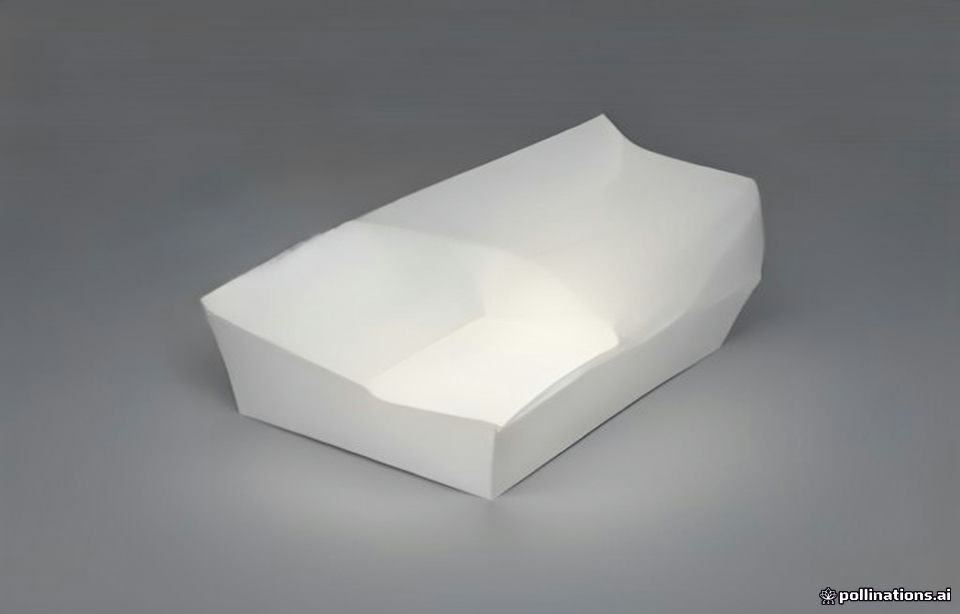
Nike’s e-commerce pack-out is a classic two-layer system. The inner component is a die-cut corrugated shoebox — one-piece E-flute construction with an integrally hinged lid and die-cut thumb notches, eliminating a separate lid and reducing part count. The outer component is a printed poly mailer (the ‘nike packaging bag’ most consumers photograph), typically 90-120 micron LDPE with 30-100% post-consumer recycled content depending on market and production year.
The engineering logic: the corrugated inner box carries compressive and drop loads, while the film mailer provides moisture scavenging, tamper evidence, and address-holding surfaces. Per ASTM D642 (compressive resistance of shipping containers), the E-flute inner box must absorb stacking loads; the mailer itself carries essentially zero structural load — which is why substituting thinner film is the fastest cost lever.
2. Material & Gauge Spec Sheet: Hypothetical Engineering Ranges
| Component / Layer | Substrate Material | Caliper / Basis Weight | Finishing & Surface Treatment | Eco / Compliance Standard |
|---|---|---|---|---|
| Outer shipping mailer | LDPE or LDPE/LLDPE blend film | 90-120 micron (3.5-4.7 mil); ~55-70 g/m² | Flexo print, 1-2 colors; permanent adhesive lip tape | 30-100% PCR; EU PPWR (2024/1991) recyclability; FTC Green Guides 16 CFR Part 260 claims |
| Inner shoebox body | E-flute corrugated, CCNB or kraft liner | ~1.5mm caliper; ECT-32 class; ~450-550 g/m² board | Flexo or offset-litho laminated print; aqueous coating | 100% recycled content target; FSC-certified fiber |
| Shoebox lid hinge | Integral die-cut E-flute | Same board; hinge crease radius ~0.5-1.0mm | None — structural fold | Zero-glue hinge reduces mixed-material risk |
| Tissue wrap | 17-20 g/m² acid-free tissue | 17-20 GSM | Water-based ink print | Compostable; plastic-free |
| Inks & adhesives | Soy/water-based inks; hot-melt or cold glue | N/A | N/A | Low-VOC; per-ISO 186 conditioning compliance |
Governing test protocols for validating equivalents: ISTA 3A for parcel network simulation, ASTM D642 for compression, TAPPI T411 for caliper measurement, and ISO 187 for conditioning at 23°C ± 1°C, 50% ± 2% RH before any ECT verification.
【💡 Packaging Engineer’s Quick Q&A】
Q: If the McKee formula derives BCT from ECT, why do enterprise footwear POs still mandate direct box compression testing?
A: Direct answer: because McKee assumes uniform board and standard geometry — die-cut shoeboxes with thumb notches, integral hinges, and litho lamination deviate enough that predicted BCT can drift 10-20% from measured values. Mechanically, the finger notches act as stress concentrators that reduce effective compression area in ways ECT does not capture. Procurement recommendation: accept McKee for quoting, but require ASTM D642 measured BCT at the pilot stage, testing at 23°C/50% RH per ISO 187.
3. Unboxing Kinematics: Hinge Resistance, Friction & Drop Sequences
The premium feel of Nike’s pack is mechanical, not decorative. Three physics parameters dominate:
- Hinge resistance: The integral E-flute lid hinge requires a crease matrix tuned so opening torque stays low (typical target: single-hand open with a light tug) while remaining stiff enough that the lid does not sag shut — a balance of crease depth and board moisture content at forming.
- Interstitial friction: Tissue wrap at 17-20 g/m² provides a controlled low-friction slip layer so the shoe slides out without snagging on box corners; the coefficiency of friction between tissue and liner is intentionally lower than liner-on-liner.
- Drop survivability: Under ISTA 3A General Simulation, single-parcel footwear packs face repeated corner, edge, and face drops (up to ~0.8-1.0m depending on parcel weight) plus random vibration. The mailer must not rupture at seal corners, and the inner box must retain structure — hence ECT-32 minimum and 90-micron floor on film gauge.
Vacuum release is not relevant here (the pack is not hermetic), but film stiffness matters: below ~75 micron, a PCR-blended mailer wrinkles badly on high-speed auto-bagging lines, causing seal jams and reject rates that erase any film cost saving.
4. Why a Mailer Beats a Master Carton: The Dimensional-Weight Equation
Nike’s choice to ship in a poly bag rather than a corrugated master carton is a freight-cost decision first. A poly mailer conforming to the shoebox footprint eliminates the ~20-40mm void a rigid RSC would add around the inner box — directly reducing billable dimensional weight under carrier dim-weight formulas and Amazon FBA dimensional tier penalties. For a hypothetical single-pair shipment dropping from a 6kg volumetric tier to a 5kg tier, annual savings across 100,000 units can exceed the entire mailer line-item cost. Verify your specific parcel dimensions and dim-weight exposure with TadaPack’s free calculation tools at https://tadapack.com/tools before committing to a pack format.
5. The 40-60% Cost-Down Replication Path for Scaling Brands
You do not need Nike’s print volume to reach 80%+ of this unboxing experience. The cost-down stack:
- Film: 80-100 micron 80% PCR LDPE mailer instead of premium 120-micron virgin film — saves 30-45% on the film component while keeping auto-bagging stiffness.
- Inner box: Standard die-cut E-flute (ECT-32) with water-based flexo print, one or two colors, instead of litho-laminated four-color — saves 35-50% on the box.
- Finishing: Substitute printed tissue with a single-color unprinted tissue plus a branded sticker seal — saves 60%+ on the wrap layer.
- Tooling: Use zero-tooling CAD sampling and short-run digital prototyping to validate structure before committing to die spend; TadaPack’s custom structural packaging and prototyping service (https://tadapack.com) delivers CAD-based samples for drop and fit testing without full tooling outlay.
Combined, these moves typically land a hypothetical blended pack-out at 40-60% below a premium-matched benchmark while preserving hinge feel, print presence, and ISTA 3A survivability.
4-Step SOP: Validating Your Nike-Style Pack Before Volume Commitment
Step 1: CAD the inner shoebox to your last’s footprint plus 5-8mm clearance per side; specify E-flute, ECT-32 minimum, thumb notch radius 8-10mm, hinge crease depth 0.4-0.6mm of board thickness.
Step 2: Condition all test samples 24 hours minimum at 23°C ± 1°C, 50% ± 2% RH per ISO 187, then measure caliper per TAPPI T411 (accept ±0.15mm variance) and ECT per TAPPI T811.
Step 3: Run ASTM D642 compression on the assembled inner box and a full ISTA 3A drop-and-vibration sequence on the mailer-plus-box pack-out; inspect seal corners and hinge integrity after each drop axis.
Step 4: Audit claims — any ‘recycled’ or ‘recyclable’ statement must be substantiated per FTC Green Guides (16 CFR Part 260) for US SKUs and EU PPWR (2024/1991) design-for-recycling criteria for EU SKUs before print release.
- ☐ Film gauge confirmed ≥80 micron with ≥80% PCR content documented
- ☐ ECT-32 minimum verified on conditioned samples (TAPPI T811)
- ☐ ASTM D642 BCT measured on die-cut box with notches included
- ☐ ISTA 3A full sequence passed with zero seal ruptures
- ☐ Seal lip tape permanent-adhesive tamper evidence confirmed
- ☐ Green Guides / EU PPWR claim substantiation file archived
6. Defect Diagnostics: Common Failures in Mailer-plus-Shoebox Systems
Defect 1 — Mailer seal failure in transit. Root cause: PCR content above 70% lowers hot-tack and seal strength; combined with dusty corrugated edges inside the bag, corner welds split at drop. Corrective action: widen the seal lip from 10mm to 15-20mm, reduce PCR to 60-80% on the seal layer, and verify hot-wire temperature against the blend’s melt window.
Defect 2 — Shoebox hinge crack after ocean transit. Root cause: container sweat across Pacific/Atlantic routes pushes board moisture above ~13%, embrittling the crease when re-dried; Cobb 60 absorption above ~35 g/m² on uncoated liner accelerates this. Corrective action: specify aqueous-coated liners, add a 0.02mm poly-bagged desiccant in cartonized ocean shipments, and derate stacking loads 15-20% for high-humidity coastal port storage (typical for Rotterdam and Inland Empire DCs).
7. Compliance & Sourcing Checklist Wrap-Up
The ‘nike packaging bag’ is fundamentally a materials-discipline play, not a luxury finishing play: E-flute structure carrying load, thin PCR film carrying freight efficiency, and claims discipline carrying brand trust. Scaling brands should lock substrate specs first (ECT-32 board, 80-100 micron PCR film), validate with ISTA 3A and ASTM D642, and use zero-tooling CAD sampling through TadaPack’s prototyping service to compress development cycles. For dim-weight and stacking-load verification across US and EU corridors, run your numbers at https://tadapack.com/tools before issuing POs.
Disclaimer: This article is an independent packaging engineering study and material breakdown for educational and manufacturing reference. TadaPack is not affiliated with or endorsed by the referenced brand.
Recommended Engineering Reading
[TOOLS] Featured Engineering & Calculation Tools
Explore 70+ Packaging Tools ➔CBM Volume & Freight Dim-Weight Calculator
Calculate cubic meters & dimensional weight to minimize freight costs and avoid FBA size tier penalties.Mailer Box Area & Dieline Size Calculator
Instant flat dieline dimensions, material consumption, and sheet nesting for custom D2C mailer boxes.
