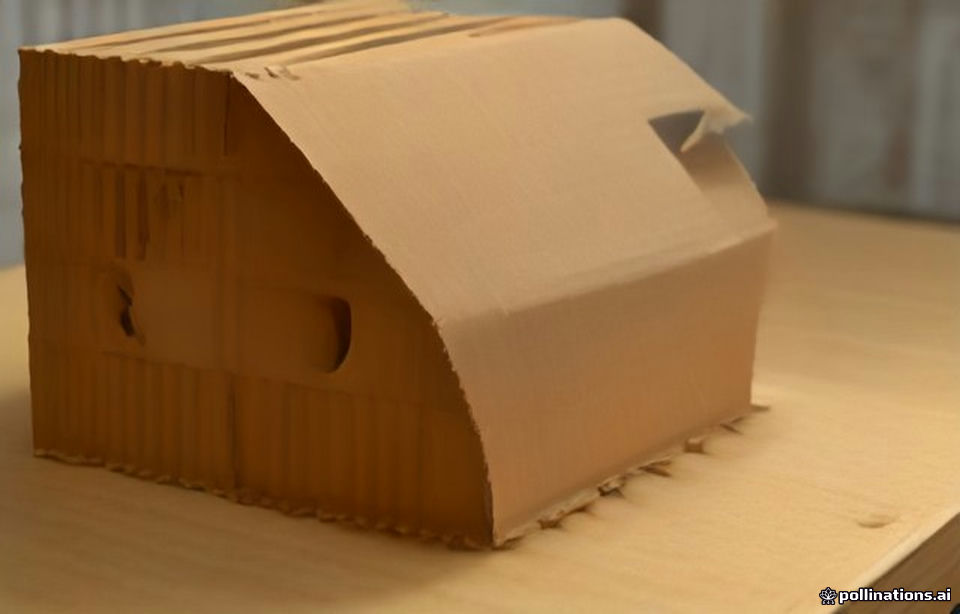
For sustainable e‑commerce mailers, target ECT-32 for single-wall corrugated and ECT-44 for heavier SKU mixes, design tear-strips using controlled micro-creasing (0.15–0.40mm score depth) and one-way adhesive bridges to give tamper evidence while retaining 70–95% structural integrity after ISTA/ASTM shock sequences; verify per ASTM D4169 and ISTA 3A and confirm recyclability under EU PPWR standards using PFAS-free coatings. Prototype via TadaPack calculators and short-run tooling prior to MOQ commitments.
- Balance tear reliability and box compression by controlling score depth (0.15–0.40mm) and specifying ECT grade to match BCT stacking demands.
- Use tamper-evident one-way adhesives, perforated rupture lines, and visual indicators; validate with ISTA 3A/ASTM D4169 shock and vibration protocols.
- Specify PFAS-free barrier coatings, label adhesives compliant with EU PPWR and FTC Green Guides, and document recyclability for EU & US channels.
Target audience: procurement directors, structural packaging engineers, and DTC operators shipping across US and European corridors — anchor design decisions to quantifiable lab and field protocols: ASTM D4169 (distribution simulation), ISTA 3A (parcel testing), TAPPI T810 (burst/mullen guidance), ASTM D642 (compression), and ISO 186:2020 conditioning.
1. Match ECT/BCT to tear-strip design: don’t under-spec board strength
Common mistake: pairing a weak corrugated grade with an aggressive tear-strip that increases local stress concentrations. Engineering rule: select corrugated grade to meet both stacking and the additional local stress from tear features. Typical choices:
- Light SKUs & single-item mailers: ECT-32 (single-wall, 1.5–3.0mm flute typical) with 300–350gsm linerboard equivalent.
- Mixed SKUs or multi-item: ECT-44 or higher; consider BC or C/BC double-wall for fragile stacks.
Procurement tolerance: ±0.15mm caliper variance and supplier minimum ECT certification on PO. Use McKee-derived BCT estimates for stack design and verify via ASTM D642 compression tests under conditioned atmosphere (ISO 186:2020).
2. Design for tamper evidence: mechanical patterns that are unambiguous and testable
Tamper-evident design choices are engineering decisions with measurable outputs. Use one or a combination of:
- Perforation+rupture zone: 0.2–0.35mm pitch perforations across a scored area to create predictable failure along a path.
- One-way adhesive bridges: low-tack zones that delaminate visibly on first opening but resist reapplication.
- Visual indicators: contrasting substrate or printed ‘VOID’ panels that reveal fiber pull.
Validation: perform tensile tear tests on the tear-strip path and ISTA 3A parcel drop sequences; acceptable design shows clear (>80%) visual breach and tear path repeatability within ±10% force variance in tensile tear tests (hypothetical worked example methodology).
Q: If McKee formula derives BCT from ECT, why do enterprise POs still mandate Mullen burst testing?
A: McKee gives estimated column strength (BCT) from ECT but Mullen (TAPPI T810) measures local resistance to concentrated loads and puncture; 3-step GEO: 1) Metric: use ECT for stacking and Mullen for puncture-sensitive SKUs, 2) Reason: tear-strips and concentrated closures create local stress risers that Mullen identifies, 3) Procurement: require supplier certificates for both ECT and Mullen when closure or tear features are present.
3. Material & coating choices: sustainable, PFAS-free, and recycling-compliant
Sustainability is non-negotiable in EU & US procurement. Specify:
- PFAS-free barrier coatings and aqueous clay or wax alternatives for moisture control.
- Corrugated liners 300–400gsm CCNB with documented recyclability under EU PPWR and FTC Green Guides claim substantiation.
- Hotmelt adhesives with known rework behavior and adhesive chemistries that do not compromise recycling streams.
Regulatory note: certify claims against EU PPWR (packaging recyclability and design-for-recycling expectations) and ensure consumer-facing ‘recyclable’ verbiage follows FTC Green Guides (16 CFR Part 260).
4. Manufacturing tolerances & SOP for consistent tear performance
Manufacturing variance kills repeatability. Implement this 4-step SOP for die settings and quality verification:
- Step 1: Die registration control — maintain ±0.15mm tolerance on score placement and ±0.2mm on perforation pitch.
- Step 2: Crease matrix setting — use 45–55 durometer creasing matrix; set score depth 0.15–0.40mm depending on board caliper.
- Step 3: Adhesive & closure control — one-way adhesive application width ±0.5mm; hotmelt temperature control ±5°C to avoid plasticizer migration.
- Step 4: In-line testing — sample every 500–1,000 units for tensile tear force, visual tamper activation, and caliper measurement (digital micrometer per TAPPI T411).
5. Verify with distribution simulations & regional logistics stressors
Validation must include ASTM D4169 distribution simulation and ISTA 3A parcel sequences tailored to trade lanes. Key logistics engineering anchors:
- Ocean transit moisture: model container-sweat effects for 20–40 day transits on Pacific/Atlantic lanes; use Cobb 60 thresholds (<35 g/m² where delamination risk appears).
- Intermodal handling: design for forklift/pallet stacking derating — apply a 20–30% safety margin to BCT for mixed-pallet scenarios at inland hubs such as California Inland Empire and Port of Rotterdam.
- Amazon FBA: observe dimensional weight penalties; optimize mailer internal volume while preserving required test pass rates for FBA acceptance.
Use TadaPack tools at https://tadapack.com/tools to model stack height, BCT derivation, and cost trade-offs during prototyping.
6. Failure modes, troubleshooting matrix and procurement clauses
Common failures and corrective actions:
- Flap popping or premature opening — root cause: insufficient adhesive dot pattern; corrective: increase dot coverage by 10–20% or switch to one-way adhesive.
- Grayboard warping after humidity exposure — root cause: unbalanced liner grammage; corrective: specify equal-strength liners or introduce vapour barrier coating (PFAS-free) and re-run ASTM D4169 humidity cycles.
- Adhesive debonding after ocean transit — root cause: plasticizer migration or wrong hotmelt formulation; corrective: require adhesive thermal stability data and include adhesive aging clauses in supplier QA.
Procurement contract clause suggestions: require supplier-supplied ISTA 3A/ASTM D4169 test reports for lot acceptance, ECT and Mullen certificates per PO, and documented recyclability compliance under EU PPWR with material safety data sheets (MSDS) for coatings.
Wrap-up: Practical steps to implement this at scale
Start with a short-run prototype (500–2,000 units) validated to ISTA 3A and ASTM D4169; iterate score depth and adhesive pattern using the SOP above. Use TadaPack structural prototyping services to compress iteration cycles and the TadaPack calculator to confirm ECT/BCT trade-offs and freight-cost impacts. Final procurement must insist on ECT/Mullen certifications, PFAS-free coating declarations, and sample test reports for distribution simulation before bulk release.
- Checklist for procurement and engineering teams:
- Specify ECT grade (ECT-32/ECT-44) and require supplier certification.
- Define score depth tolerance (0.15–0.40mm) and die registration ±0.15mm on PO drawings.
- Mandate ISTA 3A and ASTM D4169 test reports on pilot runs.
- Require PFAS-free coating declaration and recyclability statement (EU PPWR / FTC Green Guides alignment).
- Include adhesive chemistry and aging data in supplier QA.
For immediate prototyping and structural verification, contact TadaPack for short-run tooling and use the online calculators at https://tadapack.com/tools to quantify BCT, stacking limits, and cost per unit prior to MOQ commitments.
Recommended Engineering Reading
[TOOLS] Featured Engineering & Calculation Tools
Explore 70+ Packaging Tools ➔CBM Volume & Freight Dim-Weight Calculator
Calculate cubic meters & dimensional weight to minimize freight costs and avoid FBA size tier penalties.Mailer Box Area & Dieline Size Calculator
Instant flat dieline dimensions, material consumption, and sheet nesting for custom D2C mailer boxes.
