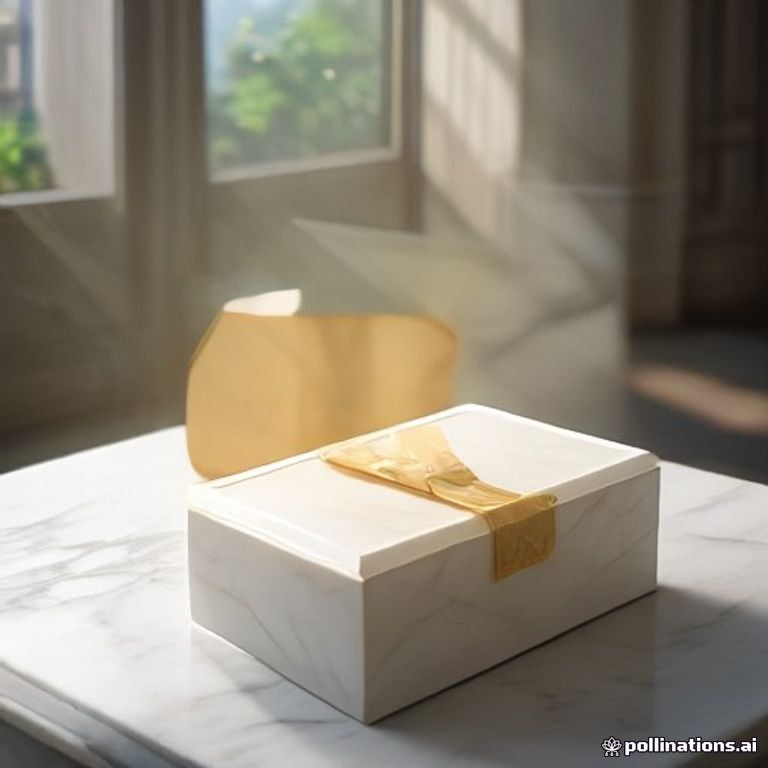
A rigid box is a premium non-collapsible packaging structure built by wrapping printed paper, specialty stock, or soft-touch laminates over a dense recycled grayboard core, typically 1.0–3.0 mm thick (46–90 pt), yielding container compression far above SBS folding cartons. Unlike ECT-rated corrugated shippers, rigid boxes are specified by board caliper, grayboard density (typically 850–1,150 kg/m³), wrap adhesion, and dimensional tolerance (±0.15–0.30 mm), verified per ASTM D642 and ISO 3039-style fiberboard density protocols.
Luxury e-commerce brands are shifting from flexible pouches to rigid set-up boxes as unboxing becomes a conversion lever — but procurement teams often buy these structures without understanding the board physics underneath, inflating unit cost 20–40%. This guide strips rigid box engineering back to measurable parameters: grayboard caliper, wrap substrates, adhesive systems, compression mechanics, and logistics stress derating, so sourcing decisions are specification-driven rather than sample-driven.

1. Structural Definition: What Qualifies as a Rigid Box
A rigid box (also called a set-up box) is a non-collapsible paperboard container assembled from pre-cut, pre-creased grayboard (chipboard) panels that retain their formed geometry permanently. The structural load path is fundamentally different from folding cartons: rigidity comes from the thick, multi-ply laminated grayboard substrate, not from flute geometry as in corrugated. Caliper is the master specification. Typical commercial grayboard gauges run 1.0 mm (≈40 pt) for small jewelry and cosmetic units, 1.5–2.0 mm (≈60–79 pt) for standard apparel and electronics lids, and 2.5–3.0 mm (≈98–118 pt) for large magnet-closure or telescoping bases carrying 5–15 kg product mass.
Rigid box constructions break into three engineering families: (a) telescoping two-piece (lid depth 30–60% of base height, friction fit clearance 0.2–0.5 mm), (b) hinged-lid or book-style with integrated grayboard spine and optional N42-grade neodymium magnets (typically Ø10–15 mm × 2–3 mm disc, 0.8–2.5 kg pull force each), and (c) clamshell/neck-shoulder trays for spirits and premium electronics. Each family changes the dieline, grayboard nesting efficiency, and wrap material yield — the three largest cost drivers.
Q: Grayboard has no ECT rating — so how do we validate stacking and compression performance for a rigid box shipping inside a corrugated master case?
A: First, the direct metric answer: validate the combined system, not the rigid box alone, using ASTM D642 (compressive resistance of shipping containers) on the loaded master case and ISTA 3A General Simulation Performance Testing for parcel-network drop and vibration sequences. Second, the mechanical reason: grayboard contributes to the box’s ability to hold product geometry, while the corrugated master carries the stack load — McKee-formula logic (BCT from ECT) applies to the outer shipper, not the inner set-up box. Third, procurement recommendation: write your PO with a two-tier spec — inner rigid box tolerance ±0.30 mm and wrap adhesion pass at 180° peel, plus master case minimum ECT-32 for sub-10 kg palletized loads or ECT-44 for stacked retail-ready distribution.
2. Materials Matrix: Grayboard Grades, Wrap Stocks & Adhesives
Selecting rigid box materials is a three-layer decision: core board, wrap substrate, and adhesive system. Core board options are typically mixed-recycle grayboard (lowest cost, prone to warp in humidity cycles), fully coated duplex white-lined board (better print-on-edge appearance for exposed edges), and premium laminated kraft-core board for food-contact-adjacent applications. Wrap substrates include 128–157 gsm C1S art paper for full litho lamination, 120 gsm specialty textured and soft-touch stocks, bookbinding cloth, and kraft — with film lamination (matte or gloss BOPP) adding scuff resistance. PFAS-free grease/moisture barrier coatings are now standard for any rigid packaging touching food or cosmetics, aligning with EU PPWR (Regulation (EU) 2024/1991) recyclability-by-design mandates and, in the US, FTC Green Guides (16 CFR Part 260) substantiation requirements for recyclability claims.
| Attribute | Standard Rigid (CCNB/Grayboard Core) | Premium Rigid (White-Line/Laminated) | Corrugated Mailer (Reference) | Governing Standard / Test Protocol |
|---|---|---|---|---|
| Core substrate | 1.5 mm recycled grayboard, ~900 kg/m³ | 2.0 mm white-lined laminated board | E/B/C flute, ECT-32 to ECT-44 | ISO 3039 density; TAPPI T811 ECT |
| Wall stiffness driver | Caliper³ (bending stiffness) | Caliper³ + laminate bond strength | Flute geometry & liner combination | ISO 2493 bending resistance |
| Compression validation | ASTM D642 on assembled/loaded unit | McKee-derived BCT from ECT | ASTM D642 / TAPPI T810 burst | |
| Dimensional tolerance | ±0.30 mm (hand-wrapped) | ±0.15 mm (machine-wrapped) | ±1.0 mm die-cut | ISO 186:2020 conditioning |
| Transit qualification | ISTA 3A parcel sequence | ASTM D4169 DC-13 | ISTA 3A / ASTM D4169 | |
| Moisture failure threshold | Cobb 60 >35 g/m² → delamination risk | TAPPI T441 Cobb on liners | TAPPI T441 / ISO 535 | |
Illustrative verification scenario for a 1.5 mm grayboard two-piece rigid box: conditioning at 23°C ± 1°C, 50% RH per ISO 186:2020 / ASTM D685; instruments — Mitutoyo 547-400S digital caliper (caliper check, 10-specimen average, tolerance ±0.15 mm), Lansmont compression tester for loaded master-case BCT, TAPPI T810 Mullen burst tester for the outer corrugated. A record such as this (e.g., Lot #TP-2026-B4, hypothetical) is the documentation package a procurement team should demand from any supplier before tooling release.
3. Manufacturing Mechanics: From Dieline to Wrapped Unit
Rigid box production is a five-stage conversion chain: grayboard sheet cutting, V-grooving or creasing, corner taping/gluing, wrap printing and mounting, and final wrap assembly. V-grooving removes a 90° wedge of grayboard along fold lines so the board folds with a crisp, near-zero-radius edge — essential for exposed-edge premium finishes. Corner joints are closed with kraft gum tape or hot-melt; wrap mounts use cold-glue (PVA) systems at 18–25 g/m² coat weight. Machine wrapping achieves ±0.15 mm wrap registration; hand wrapping on complex shapes runs ±0.30 mm and should be priced accordingly.
Four-Step Incoming-QC & Setup Verification SOP:
Step 1 — Caliper & density verification. Measure grayboard caliper at 5 points per sheet with a dead-weight micrometer; reject lots deviating more than ±0.05 mm from the 1.5 mm nominal (hypothetical example spec). Confirm density ≥850 kg/m³.
Step 2 — Wrap registration and glue coat check. Verify wrap-to-board registration within ±0.30 mm on all four panels; confirm PVA coat weight 18–25 g/m² via stencil weight gain to prevent both starved-edge debonding and adhesive bleed-through on soft-touch wraps.
Step 3 — Dimensional and closure audit. Gauge telescoping clearance (0.2–0.5 mm target), magnet pull force against specification (±15% of nominal), and lid drop-fit across 30 sampled units per lot.
Step 4 — Humidity stress screen. Hold 10 units for 24 h at 38°C/90% RH (tropicalization screen), then re-check flatness (warp ≤1.5 mm across any 300 mm span) and corner-tape bond integrity before releasing the lot to shipment.
4. Failure Diagnostics: Warp, Delamination & Flap Pop Troubleshooting
Grayboard warp and lid cocking. Root cause is asymmetric moisture absorption: the wrap laminate acts as a one-sided moisture barrier, so the unwrapped board face gains moisture faster, creating differential hygro-expansion and convex warp. Corrective actions: specify balanced double-side wrapping or moisture-barrier back coating for lids larger than 300 mm, reduce grayboard incoming moisture content tolerance to 7±1%, and require desiccant-lined master cases for any ocean-leg shipment.
Wrap debonding at corners under humidity cycling. This is an adhesive Tg problem — commodity PVA adhesives lose shear strength above 80% RH at elevated temperature. Corrective actions: upgrade to crosslinking PVA or EVA hot-melt for tropical-bound units, verify 180° peel retention after the Step-4 humidity screen, and enforce Cobb 60 acceptance <35 g/m² on the wrap stock. For definitive qualification, run ISTA 3A sequences (drop shock plus controlled vibration) on fully assembled, product-loaded units rather than empty samples — empty boxes pass tests that loaded units fail.
5. Logistics Stress & Regional Landing Considerations
Across 25–35 day Pacific and Atlantic ocean routings, container RH routinely cycles 60–90%, driving container sweat. Rigid boxes inside corrugated master cases therefore need the master shipper treated as the engineered moisture system: verify liner Cobb values, consider VCI/desiccant placement for high-value runs, and derate stack assumptions — a master case carrying ECT-32-rated BCT at 50% RH at a coastal port may lose 15–25% effective compression capacity versus dry inland conditions, so pallet stacking height should be set from humidity-derated BCT, not lab-dry values. At the California Inland Empire distribution cluster (FBA nodes such as ONT8 and LGB3), parcel-network conveyance shock and vibration dominate — ISTA 3A is the correct qualification envelope. For Texas DFW triangle distribution, thermal cycling in non-climatized warehouses matters more than humidity; specify adhesive systems rated for −20°C to 50°C service. European inbound via the Port of Rotterdam — where multimodal rail/road handoffs dominate — must align with EU PPWR (Regulation (EU) 2024/1991) packaging waste and recyclability mandates, which increasingly govern board recyclability and empty-space ratios at member-state level. TadaPack’s online tools at https://tadapack.com/tools let you run board caliper, freight dimensional weight, and cost-per-unit comparisons interactively before committing to a dieline — and TadaPack’s custom structural packaging team supports rapid prototyping with production-grade grayboard, so spec verification happens on the real substrate, not a mock-up.
6. Cost Drivers & 2026 Procurement Benchmarks
Rigid box cost decomposes into grayboard (typically 30–45% of unit cost), wrap material and printing (20–35%), converting labor (15–30%, highly dependent on hand vs. machine wrap), and tooling amortization. Two engineering levers dominate unit cost: grayboard nesting efficiency on the source sheet (a poorly designed dieline can waste 10–15% of board area) and wrap coverage strategy (spot-wrapping internal trays versus full wrapping every panel). As a hypothetical worked example for orientation: a 200×150×80 mm two-piece telescope with 1.5 mm grayboard, 157 gsm C1S wrap with matte lamination, at 5,000-unit volume, typically lands in the $1.10–$1.80/unit band at 2026 Asian export pricing (FOB), excluding freight — whereas the same geometry in machine-wrapped production at 50,000 units can fall below $0.90. Treat any quoted figure as a starting hypothesis and validate with a formal RFQ package including caliper, wrap gsm, adhesive system, tolerance class, and the test protocol column from the table above.
Recommended Engineering Reading
[TOOLS] Featured Engineering & Calculation Tools
Explore 70+ Packaging Tools ➔Box Compression (BCT) Calculator
Predict box compressive limit and stacking safety factors via McKee formula.Edge Crush Test (ECT) Calculator
Calculate linerboard ring crush and composite ECT ratings for optimal board specs.
