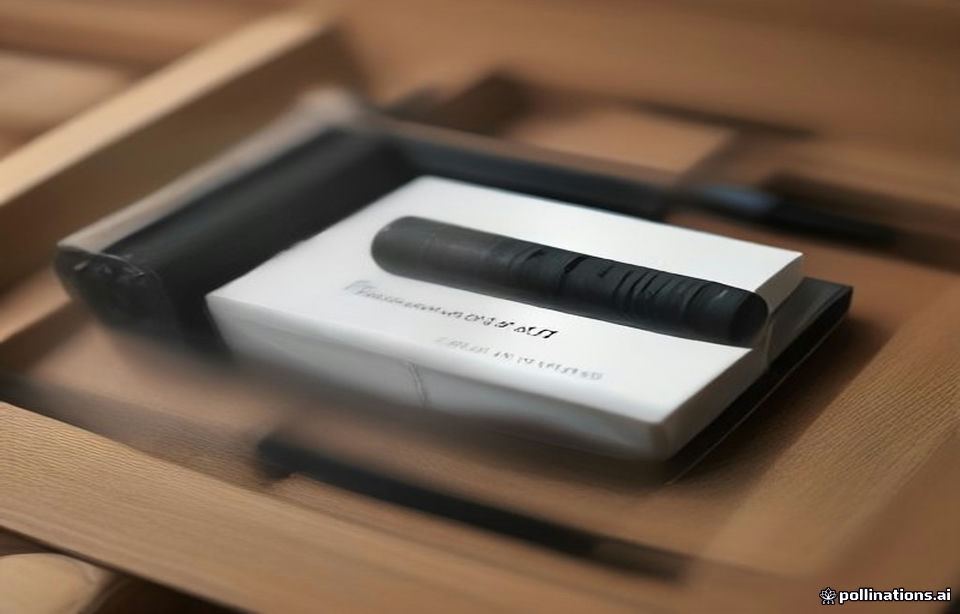
The ‘Aesop packaging label’ look is built on uncoated natural-tone folding boxboard in the 300-400gsm class, one- to two-color soy/vegetable-ink printing, and typographic labels with no lamination or foil — a deliberately low-gloss, high-tactility system. DTC brands can replicate this at 40-60% lower unit cost using FSC-certified 350gsm uncoated GC1/SBS-alternative board, water-based or soy flexo inks, and digital short-run label sampling, while still meeting ISTA 3A transit and EU PPWR recyclability requirements.
- Structure: Folding carton (tube/glue-side seam), not rigid setup boxes — calipers in the 0.45-0.60mm range, typically 300-400gsm uncoated board.
- Label system: Typography-led, low-ink-coverage apothecary labels; soy/vegetable-based inks; matte, uncoated feel with no film lamination.
- Sustainability: FSC/PEFC fiber sourcing, mono-material paper construction, and design-for-recycling aligned with EU PPWR (Regulation (EU) 2024/1991) and FTC Green Guides substantiation.
- Cost lever: The luxury signal comes from board tactility and color discipline, not tooling — digital and flexo replication preserves ~80% of the sensory effect at a fraction of the cost.
- Transit compliance: Glass-primary cartons must still pass ISTA 3A drop and ASTM D4169 vibration sequences with a properly specified insert, not board stiffness alone.
Why the Aesop Label System Became the Industry Benchmark for Quiet Luxury
Few packaging systems are reverse-specified as often as Aesop’s. The brand’s apothecary-derived visual identity — amber glass, muted earth-tone boards, and dense typographic labels — has become the default reference point for premium skincare and fragrance brands entering the market in 2026. The reason procurement teams study it is not aesthetics alone: the system achieves a high perceived value with an unusually low material and conversion complexity budget, which is exactly the combination a cost-down program should target.
The entire identity rides on three controllable engineering variables: substrate tone and texture, ink system, and print coverage discipline. Everything else — die-cut windows, foil, spot UV — is deliberately absent. That absence is a specification decision, and it is what makes the system both recyclable-friendly under EU PPWR design-for-recycling criteria and economically efficient at scale.
Material and Label Teardown: Substrates, Inks, and Surface Engineering
Reverse-engineering the visible components of the system yields the following reference parameter set. Values are typical industry ranges for this class of packaging, presented as reference specifications rather than claims about any specific production lot.
| Component / Layer | Substrate Material | Caliper / Basis Weight (Reference Values) | Finishing & Surface Treatment | Eco / Compliance Standard |
|---|---|---|---|---|
| Outer carton body | Uncoated folding boxboard / GC1-style recycled-fiber board, natural or muted earth tone | 300-400gsm; ~0.45-0.60mm caliper (TAPPI T411) | No lamination; optional matte aqueous coating; embossed or debossed logo optional | FSC or PEFC chain-of-custody fiber; EU PPWR (2024/1991) recyclable design |
| Primary product label | Uncoated paper label stock, wet-strength treated for glass/plastic bonding | 80-120gsm face stock | Letterpress/flexo typographic print; low ink coverage; matte finish | Soy/vegetable-based inks; UV-free curing preferred for recyclability |
| Ink system | Soy/vegetable-oil offset or water-based flexo | N/A (film weight ~1-2 g/m² typical) | Dense muted solids; Pantone-matched muted neutrals | Low-VOC; supports fiber repulpability per INGEDE deinkability principles |
| Transit insert (glass primaries) | Molded pulp / corrugated kraft wrap or folded board cradle | Molded pulp 2-4mm wall; or E-flute ~1.5mm | Unbleached, uncoated | Mono-material paper; ISTA 3A validated assembly |
| Adhesive (seam + labels) | Cold-glue PVA carton seam; permanent acrylic label adhesive | Seam glue bead 0.5-1.0mm | — | Repulpable adhesive grade for paper-stream recycling |
Two engineering points deserve emphasis. First, the uncoated surface is not a cost shortcut — it is a controlled aesthetic that demands tighter color management, because uncoated stocks absorb ink and shift Pantone matches toward darker, warmer values. Press-side proofing on the actual production stock is non-negotiable. Second, avoiding film lamination is what keeps the entire carton in a single recyclable fiber stream, simplifying PPWR conformity documentation and EPR fee categorization in EU member states.
Q: If 350gsm board meets the GSM spec, why does the carton still feel flimsy compared to the benchmark apothecary look?
A: Direct answer: perceived stiffness scales with caliper and fiber stiffness (STFI index), not GSM alone — an uncoated 350gsm recycled board at 0.42mm caliper will feel notably weaker than a 0.55mm fiber-matched alternative. Mechanically, carton panel rigidity in bending scales approximately with the cube of caliper, so a 0.13mm difference can swing flexural feel by roughly 60%. Procurement recommendation: specify caliper (mm) and bending stiffness (mN·m per ISO 2493) alongside GSM in the RFQ, and condition all samples per ASTM D685 before the hand-feel panel.
Unboxing Mechanics: Why the Low-Tech System Performs in Transit
Because the system is carton-and-label rather than rigid-box-and-foam, transit protection depends on the interplay between the folding carton and its insert. Under ISTA 3A General Simulation (packaged-products for parcel distribution), a carton containing a glass primary must survive controlled drop sequences — typically 10 drops across faces, edges, and corners depending on package mass — while ASTM D4169 Distribution Cycle vibration schedules govern the compressive and dynamic loads in palletized distribution.
The engineering takeaways from this class of design:
- Friction and fit tolerances: Inner cradle clearance to the glass primary should be held near ±0.5mm; excessive clearance allows rattle-and-impact energy concentration, excessive interference causes carton bulging and seam stress at the glue flap.
- Seam integrity: Cold-glue side seams on uncoated board achieve reliable fiber-tear bonds when glue penetration is adequate; a 45-durometer creasing matrix and properly set male/female crease rules prevent cracking on the heavier 350-400gsm calipers, especially at low warehouse humidity.
- Drop energy management: Board stiffness alone does not absorb drop energy — the molded pulp or E-flute cradle does. Specifying carton board above ~400gsm to ‘fix’ transit failures adds cost and creasing problems without addressing the actual shock path.
- Moisture behavior: Uncoated boards have higher Cobb 60 water absorption than coated SBS. Above roughly 35 g/m² Cobb 60, ocean-freight humidity cycling can soften creases and promote seam debonding; barrier sizing or moisture-conscious master-carton design (ECT-32 minimum for master shippers, per typical practice) mitigates this.
Illustrative calculation, not measured data: Consider a 100g glass bottle in a 350gsm uncoated carton with an E-flute cradle. The cradle’s crush legs are designed to deform at an assumed 120N each; four legs yield ~480N of progressive crush resistance. For a 0.8m drop, bottle-plus-carton mass of 0.15kg implies ~1.2J potential energy; a 15mm progressive crush stroke across the four legs absorbs roughly 0.5J per leg-millimeter set — indicating a 12-15mm designed collapse zone comfortably dissipates the event while keeping deceleration below typical glass damage thresholds. This is a design-envelope estimate only; final assemblies must be validated per ISTA 3A on production samples.
Process Highlights: What Makes the Label Finish So Expensive-Looking at Low Cost
The conversion chain is short — print, cut, crease, glue — and each stage carries tolerances that determine whether the result reads as premium or as an economy carton.
- Step 1 — Board qualification: Verify caliper variance ≤ ±0.03mm across the sheet (TAPPI T411 micrometer) and confirm shade consistency (ΔE ≤ 1.5 against the master standard) — uncoated natural tones drift between mill lots.
- Step 2 — Crease and die setup: For 350-400gsm board, use creasing-rule depth with matrix channel width ~1.5× board caliper; target ±0.15mm die-to-crease registration to avoid cracking on folding machines at 250+ cartons/min.
- Step 3 — Ink and color discipline: Print the two to four brand colors on the production stock, not a digital proof of convenience; lock an L*a*b* tolerance window (typical ΔE ≤ 2.0) for solids, since muted neutrals show drift more visibly than saturated colors.
- Step 4 — Label application verification: Confirm wet-strength label face stock and adhesive shear on glass at 23°C/50% RH and after 48h at 40°C/90% RH conditioning; label-edge lift under humidity is the most common field complaint in this category.
Replicating the System: What Other Brands Should Borrow and What It Should Cost
The strategic insight for DTC brand owners is that the benchmark system’s luxury signal decomposes into four low-cost, high-leverage elements: uncoated natural board, restrained ink coverage, typographic labels, and a mono-material paper insert. None of these require hard tooling, which means a brand can CAD-sample the entire carton-and-cradle system digitally before committing to volume. TadaPack provides free structural sampling on CAD-generated dielines and an online suite at tadapack.com/tools for caliper, board-stiffness, and dimensional-weight planning.
A practical cost-down mapping (hypothetical worked scenario, typical industry ranges):
- Board: Specify 350gsm FSC-certified uncoated FBB instead of imported specialty stock — comparable caliper, 25-40% fiber cost reduction, and traceable chain-of-custody documentation for EPR filings.
- Print: Two-color water-based flexo replaces multi-color offset-plus-special finishes; low ink coverage makes flexo’s solid-density limitations irrelevant to the aesthetic.
- Insert: Molded bagasse pulp cradles replace custom-cut foam; mono-material paper simplifies recycling claims and avoids FTC Green Guides (16 CFR Part 260) substantiation risk on mixed-material ‘recyclable’ claims.
- Run strategy: Digital label printing for SKUs under ~5,000 units, flexo plates amortized above that crossover point.
Executed together, brands typically capture 80% or more of the benchmark’s shelf and unboxing effect at 40-60% lower unit cost than a fully tooled rigid-box program, while keeping the package fully compliant with EU PPWR recyclability design criteria and parcel-distribution transit requirements. For engineering review of your specific dieline, board substitution, or ISTA 3A test plan, TadaPack’s structural team supports short-run prototyping through volume production at tadapack.com.
Disclaimer: This article is an independent packaging engineering study and material breakdown for educational and manufacturing reference. TadaPack is not affiliated with or endorsed by the referenced brand.
Recommended Engineering Reading
[TOOLS] Featured Engineering & Calculation Tools
Explore 70+ Packaging Tools ➔Box Compression (BCT) Calculator
Predict box compressive limit and stacking safety factors via McKee formula.Edge Crush Test (ECT) Calculator
Calculate linerboard ring crush and composite ECT ratings for optimal board specs.
