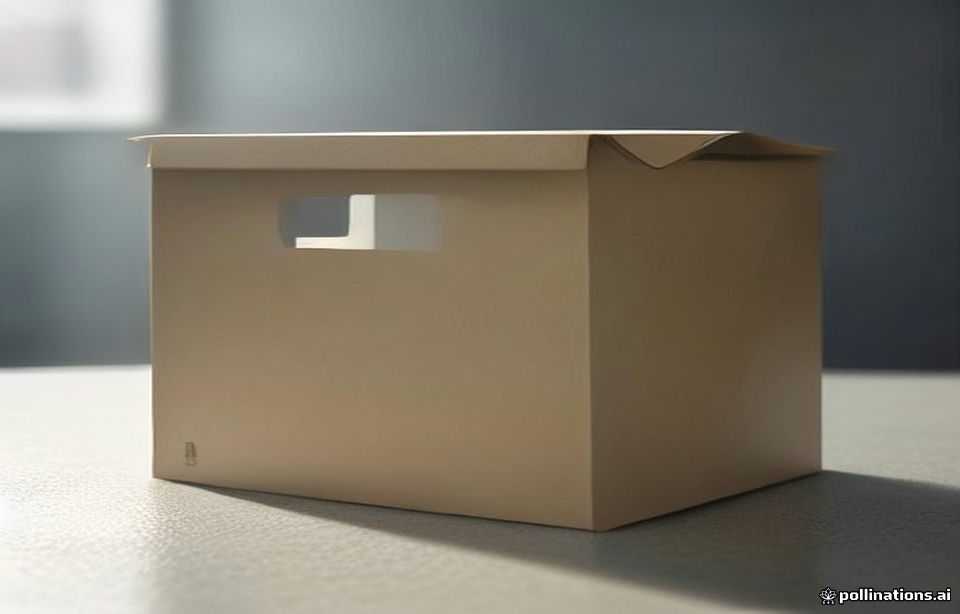
Executive Teardown Summary: lululemon’s primary e-commerce box is a one-piece, friction-fit wrap-around rigid-style carton (slide-lid over a fixed base tray, no magnet) constructed from ~1000-1200 GSM laminated duplex paperboard/grayboard with a matte soft-touch or low-sheen litho overwrap. Signature finishing is restrained: single-color typography, minimal foil or spot gloss, soy/vegetable-based inks, and FSC-certified fiber. The design relies on vacuum release air gaps and controlled slide friction for the 2-3 second ‘slow descent’ unboxing reveal, and ships in master cartons validated under ISTA 3A.
lululemon’s e-commerce packaging box is a magnet-free one-piece rigid-style slide carton in ~1000-1200 GSM laminated paperboard with FSC fiber, vegetable-based inks, and a soft-touch matte finish, dimensioned to pass ISTA 3A parcel drop testing without plastic foam. Brands can match most of its unboxing physics using 1.5mm grayboard or E-flute litho-laminated structures at 40-60% lower unit cost.
- lululemon’s box is a friction-fit slide carton, not a magnetic 2-piece rigid box — removing magnets is the single largest rigid-box cost-down lever (typically 8-15% of BOM).
- Core substrate: high-density laminated paperboard in the ~1000-1200 GSM class (1.5-2.0mm caliper), overwrapped or litho-laminated with a 120-157 GSM matte art sheet.
- Unboxing kinematics are engineered: controlled slide friction, air-release gaps, and internal fit geometry deliver the slow-descent reveal while satisfying ISTA 3A.
- Sustainability claims (FSC fiber, plastic-free, soy/vegetable inks) must be substantiated per FTC Green Guides (16 CFR Part 260) and EU PPWR (Regulation (EU) 2024/1991) recyclability criteria.
- TadaPack zero-tooling CAD sampling lets SMEs validate this structure in 5-10 days before committing to tooling or MOQ.
1. Structural Teardown: Why lululemon Chose a Friction Slide Carton Over a Magnetic Rigid Box
From a structural engineering standpoint, lululemon’s primary shipper is best classified as a one-piece wrap-around slide carton with an internal friction tray — a hybrid between a rigid setup box (ANSI/Broadspec-style ‘RSC is out; setup box is in’ logic) and a hinged-lid carton. The lid panel slides over an integrated base sleeve, with thumb cut-outs at the opening edge for finger purchase.
Three engineering reasons drive this choice over a conventional 2-piece magnetic rigid box:
- Compression path: A wrap-around one-piece construction creates a continuous fiber loop around all four verticals, improving stacking resistance versus two separate lid/base components — relevant when the box must survive ASTM D642 compressive resistance testing and dynamic stack loads in parcel networks.
- No magnet = no delamination risk: Rare-earth magnets glued into chipboard are the #1 rigid-box field failure (adhesive debond under 30-day ocean humidity, Cobb 60 absorption >35 g/m² on uncoated grayboard). Friction closure eliminates the failure mode entirely.
- Flatter nesting: One-piece wrap constructions ship pre-glued and flat with only a final folding operation, reducing inbound freight cube versus fully setup rigid boxes that often ship semi-assembled.
2. Material & Engineering Spec Sheet: Reverse-Engineered BOM
The following is a hypothetical worked example BOM reconstructed from observable construction characteristics — not proprietary client data. Use it as a procurement target, not a certified specification.
| Component / Layer | Substrate Material | Caliper / Basis Weight | Finishing & Surface Treatment | Eco / Compliance |
|---|---|---|---|---|
| Lid & base wall | High-density duplex grayboard, laminated | 1000-1200 GSM (1.5-2.0mm) | Wrapped or litho-laminated | FSC Mix/Coc; ISO 186 conditioning |
| Print overwrap sheet | Matte-coated art paper | 120-157 GSM | Soft-touch matte, low-sheen | Repulpable adhesive, no lamination film |
| Inks & coatings | Soy/vegetable-based ink system | — | Water-based matte varnish; optional blind emboss logo | FTC Green Guides 16 CFR Part 260 substantiation |
| Tissue interleaf | 17-20 GSM acid-free tissue | 17-20 GSM | Unprinted or 1-color flexo | FSC; plastic-free |
| Internal fit / garment presentation | Fold geometry on garment itself; optional molded pulp or paperboard cradle | 350-400 GSM CCNB where used | Die-cut, ±0.2mm cutting tolerance | EU PPWR (2024/1991) recyclability by design |
| Closure | Friction-fit slide + thumb notch | ±0.3mm wall clearance tolerance | No adhesive latch, no magnet | Mono-material for recycling stream purity |
Compression targets: for a parcel shipper of this footprint, design BCT (box compression strength) should target ≥ 3-4× the expected top load, derived from ECT via the McKee formula; board selections in this class typically carry ECT equivalents in the 32-44 lb/in range for corrugated secondary packaging (master carton per ASTM D642).
3. Unboxing Kinematics: Slide Friction, Air Release, and the 3-Second Reveal
The perceived ‘luxury’ of this box is applied physics, not decoration:
- Slide friction tolerance: The lid-to-base clearance is engineered in the ±0.3mm band. Too loose and the lid free-falls (feels cheap, risks garment displacement); too tight and the lid binds, triggering consumer ‘pry’ behavior that tears the wrap. Target sliding resistance is roughly 2-4 N of pull force — enough for a deliberate pull, low enough for one-handed opening.
- Vacuum/air release: As the lid slides closed, trapped air in the cavity must vent. Micro-clearance vents or deliberate slack at the thumb notches act as release pinholes; without them, closing force spikes and the last 5mm of travel ‘pops’ open — a classic QA rejection.
- Slow-descent reveal: The garment sits on a slight internal ridge or cradle so that as the lid opens, the garment lowers over roughly 2-3 seconds rather than dropping — kinematic friction between tissue and board does the work. This costs nothing extra and is pure geometry.
- Transit validation: The complete shipper system is validated under ISTA 3A General Simulation (parcel delivery, 5-25 kg class), which sequences drop, vibration, and compression; the internal fit — not foam — absorbs drop energy by garment immobilization.
Q: If the McKee formula derives BCT from ECT, why do enterprise POs still mandate ASTM D642 compression testing?
A: McKee is a design estimate with ±15-20% scatter; ASTM D642 gives the actual compressive resistance of the finished, glued container including wrap-panel stiffening that the formula ignores. Procurement teams mandate D642 because a rigid slide carton’s load path differs fundamentally from corrugated RSC assumptions. Practical recommendation: design with McKee, then always confirm with physical D642 testing on glued production samples, conditioned per ISO 186 (23°C, 50% RH).
4. Sustainability & Compliance: What the Claims Legally Require in 2026
Under the EU Packaging and Packaging Waste Regulation (PPWR, Regulation (EU) 2024/1991), recyclability-by-design is now a compliance requirement, not a marketing angle — all packaging placed on the EU market must meet recyclability criteria on the mandated timeline, pushing brands toward mono-material paperboard with repulpable adhesives and aqueous coatings (PFAS-free barriers, no plastic film lamination). In the US, any ‘recyclable’ or ‘plastic-free’ claim must be substantiated per FTC Green Guides (16 CFR Part 260). lululemon’s packaging program — FSC-certified fiber, vegetable inks, plastic-free closure — is consistent with these constraints; SMEs copying the structure must match the compliance stack, or the marketing claims collapse in audit.
5. Defect Diagnostics: The Two Field Failures That Kill This Structure
- Wrap debonding at edges (grayboard warping): Root cause is uncoated grayboard absorbing >35 g/m² (Cobb 60) during ocean transit, swelling at the board edge and lifting the overwrap. Corrective action: spec sealed-edge wrapping or wax-saturated back boards; require adhesive-coated wrap with full-bleed coverage, and verify board warp ≤2mm over 300mm at incoming QC.
- Lid slide binding or popping: Root cause is cumulative caliper variance — a +0.3mm drift across lid and base walls consumes the entire clearance band. Corrective actions: enforce ±0.15mm lamination caliper tolerance at converter QC, add 0.2mm deliberate relief at the thumb notch shear line, and run 20-piece slide-force sampling (target 2-4 N) on each production lot.
6. SME Replicability: The 4-Step Verification SOP
Scaling brands can reproduce this architecture with the following procurement SOP:
- Step 1 — Substrate selection: Choose 1.5mm (≈1000 GSM) laminated grayboard for garments under 1 kg; move to 2.0mm (≈1200-1300 GSM) only if the unit exceeds 1.2 kg or the box spans >400mm. Confirm Cobb 60 ≤35 g/m² on all exposed board.
- Step 2 — Clearance engineering: Model lid-to-base clearance at +0.3mm on nominal wall caliper (±0.15mm lamination tolerance); CAD-verify thumb notch geometry with 0.2mm shear relief before die-cut release.
- Step 3 — Compliance printing: Specify soy/vegetable inks, water-based matte varnish (no film lamination), and FSC-certified board so PPWR (EU) 2024/1991 recyclability and FTC Green Guides claims hold.
- Step 4 — Transit validation: Condition finished shippers per ISO 186 (23°C ± 1°C, 50% ± 2% RH), then run ISTA 3A drop and vibration sequences plus ASTM D642 compression on the master carton before first production release.
7. Cost-Down Math: Getting 80% of the Luxury at 40-60% Lower Unit Cost
Full setup rigid boxes with wrapped walls, magnets, and hand assembly typically run $2.20-4.00+ per unit at SME volumes (hypothetical benchmark ranges). The cost-down levers, in descending impact:
- Drop the magnets (save 8-15% of BOM): The friction slide closure is the core lululemon mechanism anyway — magnets are not required for the reveal.
- Substitute full wrap with litho-laminated E-flute or CCNB (save 20-30%): A 350-400 GSM CCNB body with litho-laminated art sheet gives comparable face stiffness at a fraction of grayboard cost for smaller footprints.
- Machine gluing over hand assembly (save 15-25%): One-piece wrap construction is fully machine-erectable; hand-wrapped rigid boxes are not.
- Reduce finishing: Matte soft-touch varnish + blind emboss delivers most of the perceived premium; skip foil stamping and spot UV (save 10-15%).
Net effect for a hypothetical 50,000-unit run: a friction slide carton at $0.90-1.40 vs. $2.20-4.00 rigid-equivalent — roughly 40-60% savings while retaining the slide reveal, soft-touch feel, and ISTA 3A compliance path. TadaPack offers zero-tooling CAD sampling to validate this structure in days; use the free BOM and freight-cube calculators at https://tadapack.com/tools to verify unit economics before tooling commitment.
8. Procurement Verification Checklist Before You Release the PO
- Board caliper verified at ±0.15mm on incoming lots (TAPPI T411 micrometer method)
- Cobb 60 ≤35 g/m² certified for all exposed grayboard surfaces
- Slide pull force sampled at 2-4 N, 20 pcs per lot
- Thumb notch shear relief present; no lid binding at +0.3mm clearance band
- ISTA 3A drop and vibration report on file for final shipper configuration
- ASTM D642 compression result ≥3× expected warehouse stack load
- FSC chain-of-custody documentation and PFAS-free coating declaration supplied
- PPWR (EU) 2024/1991 recyclability conformity statement for EU-bound SKUs
- Soy/vegetable ink and repulpable adhesive specification confirmed on artwork release
Wrap-up: lululemon’s packaging box succeeds because of disciplined engineering — friction closure, caliper control, and geometric reveal — not expensive components. Procurement teams that replicate the mechanism, the compliance stack, and the ±0.15mm tolerance discipline can match the unboxing experience at roughly half the unit cost, with TadaPack’s structural prototyping team supporting CAD sampling and ISTA 3A validation from first sample.
Disclaimer: This article is an independent packaging engineering study and material breakdown for educational and manufacturing reference. TadaPack is not affiliated with or endorsed by the referenced brand.
Recommended Engineering Reading
[TOOLS] Featured Engineering & Calculation Tools
Explore 70+ Packaging Tools ➔CBM Volume & Freight Dim-Weight Calculator
Calculate cubic meters & dimensional weight to minimize freight costs and avoid FBA size tier penalties.Mailer Box Area & Dieline Size Calculator
Instant flat dieline dimensions, material consumption, and sheet nesting for custom D2C mailer boxes.
