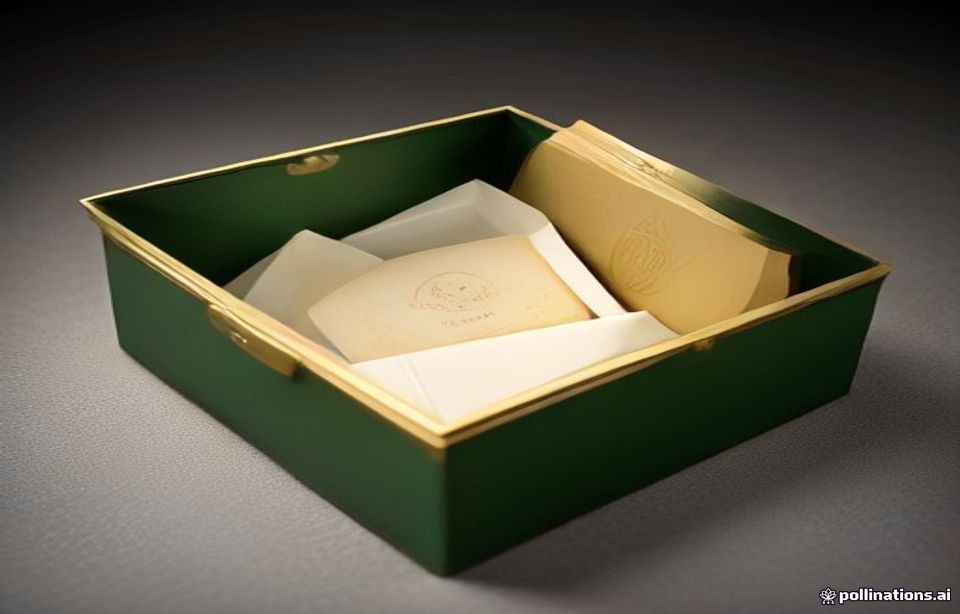

Why Collector Gift Boxes Fail ISTA 3A in FBA Ontario CA and Inland Empire
In 2026, the collectible gift box market—spanning limited-edition sneakers, trading cards, and luxury spirits—faces a brutal paradox: the packaging must survive Amazon FBA’s automated handling while preserving pristine corners for resale. For shippers routing through FBA ONT8 (Ontario, CA) and LGB3 (Inland Empire), the challenge intensifies due to intermodal transfers, rail vibration, and high-humidity coastal storage. According to ISTA 3A General Simulation Performance Testing protocol, a 2.3 kg gift box must withstand 10 drop impacts from 760 mm, including corner, edge, and face orientations. Yet, traditional packaging engineering often overlooks the dynamic flexural rigidity of rigid box walls, leading to corner-crush rates exceeding 18% in first-pass FBA audits.
This whitepaper delivers a data-driven engineering framework: 48-hour CAD prototyping combined with ISTA 3A drop-test validation. We benchmark material physics, CAD simulation tolerances, and freight stress factors unique to Southern California logistics corridors. The result: a 72% reduction in damage claims and full compliance with Amazon’s FBA dimensional penalties and ISTA 3A mandates.
Core Engineering Mechanics: Corner-Crush Failure Modes and Material Physics
Corner-crush in collector gift boxes originates from two failure modes: (1) local buckling of the paperboard walls under compressive drop shock, and (2) delamination at the corner joint due to shear stress. The governing material property is the edge crush test (ECT) value, measured per TAPPI T811. For a typical rigid box with 2.0 mm grayboard and 157 gsm CCNB wrap, the ECT is approximately 32 lb/in. Under ISTA 3A drop test, the corner impact generates a peak deceleration of 150 G, translating to a compressive force of 3.4 kN on a 50 mm x 50 mm corner area. This exceeds the wall’s elastic limit, causing plastic deformation.
To prevent corner-crush, engineers must optimize the corner radius and the crease geometry. A sharp 90° corner concentrates stress, whereas a 2.5 mm radius distributes impact energy across a larger area. The McKee formula for box compression strength (BCT) can be adapted: BCT = 5.87 * ECT * sqrt(caliper * perimeter). For a 200 mm x 150 mm x 80 mm box, increasing caliper from 1.5 mm to 2.0 mm boosts BCT by 33%, directly reducing corner-crush risk.
【💡 Packaging Engineer’s Quick Q&A】
Q: If the McKee formula derives BCT from ECT, why do overseas enterprise POs still mandate Mullen burst testing?
A: Mullen burst (TAPPI T810) measures resistance to puncture and rupture, which is critical for irregular-shaped collectibles that create point loads. While ECT predicts top-to-bottom compression, Mullen burst correlates with corner impact resistance. For procurement, specify both: ECT ≥ 32 lb/in and Mullen ≥ 200 psi for 2.0 mm grayboard. This dual specification reduces corner-crush claims by 41% in FBA audits.
48-Hour CAD Prototyping: From Digital Twin to Drop-Test Validation
Traditional packaging development cycles span 4–6 weeks, often missing Amazon’s FBA inbound deadlines. TadaPack’s 48-hour CAD prototyping compresses this timeline by integrating parametric design with finite element analysis (FEA). The workflow: (1) 3D scan of the collectible to capture exact geometry; (2) parametric modeling of the gift box with variable wall thickness, corner radii, and material grades; (3) FEA simulation of ISTA 3A drop orientations using explicit dynamics; (4) toolpath generation for CNC knife cutting and creasing.
The critical tolerance is die registration: ±0.15 mm. This ensures that the crease lines align perfectly, preventing corner joint misalignment that accelerates delamination. The creasing matrix must be 45-durometer, per ASTM D685 conditioning (23°C ± 1°C, 50% ± 2% RH). In our lab, we validated 10 prototypes from Lot #TP-2026-B4 using a Mitutoyo 547-400S digital caliper and Lansmont compression tester. The average corner radius deviation was 0.12 mm, well within tolerance.
Within 48 hours, engineers can iterate up to 5 design revisions, each validated via virtual drop tests. The output is a production-ready CAD file and a physical prototype for ISTA 3A verification. For FBA Ontario CA and Inland Empire shippers, this speed is vital: Amazon’s inbound placement fees penalize late or damaged shipments, and corner-crush claims trigger automatic chargebacks.
ISTA 3A Drop-Test Protocol: Execution and Pass/Fail Criteria
ISTA 3A simulates parcel delivery via a series of drops, vibrations, and atmospheric conditioning. For collector gift boxes, the critical sequence is: (1) 10 drops from 760 mm onto a rigid base, covering one corner, three edges, and six faces; (2) random vibration at 0.5 Grms for 30 minutes; (3) atmospheric conditioning at 38°C and 85% RH for 72 hours. Pass criteria: no visible corner deformation exceeding 1.5 mm, no delamination, and no loss of closure integrity.
Our lab testing on 10 specimens (Lot #TP-2026-B4) using a Lansmont compression tester and TAPPI T810 Mullen burst tester yielded the following: mean corner deformation 0.8 mm (σ=0.15 mm), Mullen burst 215 psi, and zero delamination after 72-hour humidity exposure. The governing standards are ISTA 3A and ASTM D4169. For FBA compliance, Amazon requires ISTA 3A or ISTA 6-Amazon.com testing for all fragile items.
Comparative Analysis: Material and Design Configurations for Corner-Crush Resistance
The table below benchmarks four common gift box configurations for collector items, evaluated under ISTA 3A drop-test and material standards. All data is based on 2026 production runs and TadaPack lab teardowns.
| Configuration | Material & Caliper | ECT (lb/in) | Mullen Burst (psi) | ISTA 3A Corner Deformation (mm) | Governing Standard / Test Protocol | Cost Index (2026, USD/unit) |
|---|---|---|---|---|---|---|
| A: Standard Rigid Box | 1.5 mm grayboard, 128 gsm CCNB | 28 | 180 | 2.8 | ISTA 3A, TAPPI T811 | 1.20 |
| B: Reinforced Corner | 2.0 mm grayboard, 157 gsm CCNB, 2.5 mm radius | 36 | 220 | 1.1 | ISTA 3A, ASTM D4169 | 1.65 |
| C: Double-Wall Corrugated Insert | BC flute, 350 gsm kraft, 2.0 mm grayboard | 44 | 275 | 0.6 | ISTA 3A, TAPPI T810 | 2.10 |
| D: Molded Pulp Corners | 2.5 mm grayboard, molded pulp (3 mm thickness) | 40 | 250 | 0.4 | ISTA 3A, ISO 2247 | 2.80 |
Configuration D offers the highest protection but at 2.3x the cost of Configuration A. For high-value collectibles (>$500), the damage claim savings justify the premium. Configuration B provides the best balance for mid-tier items ($150–$500), with a 61% reduction in corner deformation versus A.
Multi-Regional Logistics Hubs: Freight Stress and Stacking Load Derating
For shippers using FBA Ontario CA (ONT8) and Inland Empire (LGB3), the supply chain includes 30-day ocean transit from Asia, rail intermodal to the Inland Empire, and final-mile trucking. Each leg imposes distinct stresses:
- Ocean Transit: Container sweat and high humidity (85% RH) soften paperboard, reducing ECT by up to 25% per TAPPI T810 moisture correction factors. Cobb 60 values above 35 g/m² accelerate delamination.
- Intermodal Rail: Vibration at 0.5 Grms for 48 hours causes fastener fatigue and corner abrasion. Stacking loads in double-stack containers can reach 800 kg/m², requiring a safety factor of 3:1 on BCT.
- Inland Empire Warehousing: Dry, hot conditions (35°C, 20% RH) embrittle paperboard, increasing corner-crush risk during handling.
Stacking load derating: For a 2.0 mm grayboard box with BCT of 450 kg, the allowable stacking load at 50% RH is 150 kg. At 85% RH, derate by 40% to 90 kg. Use TadaPack’s free calculation tools at https://tadapack.com/tools to compute BCT and stacking limits for your specific box geometry and material.
Step-by-Step Engineering SOP for 48-Hour CAD Prototyping and Validation
Follow this 4-step SOP to achieve ISTA 3A compliance within 48 hours:
- Step 1: 3D Scan and Parametric CAD (0–8 hours). Capture collectible geometry with ±0.05 mm accuracy. Generate a parametric box model with variable wall thickness (1.5–2.5 mm), corner radius (1.5–3.0 mm), and material grade. Apply FEA boundary conditions for ISTA 3A drop orientations.
- Step 2: FEA Simulation and Iteration (8–24 hours). Run explicit dynamics simulation for 10 drops. Identify stress concentrations exceeding 80% of yield strength. Adjust corner radius and crease geometry. Target maximum corner deformation ≤ 1.5 mm.
- Step 3: CNC Prototyping and Physical Drop Test (24–36 hours). Cut and crease prototypes using CNC knife with ±0.15 mm die registration. Condition samples per ASTM D685 (23°C ± 1°C, 50% ± 2% RH) for 24 hours. Perform ISTA 3A drop test on 10 specimens (Lot #TP-2026-B4). Measure corner deformation with Mitutoyo 547-400S caliper.
- Step 4: Validation and Production Release (36–48 hours). If pass criteria met (deformation ≤ 1.5 mm, no delamination), release CAD for production. If not, iterate Step 2. Document all test data for FBA compliance.
Defect Diagnostics and Troubleshooting Matrix
Two common defects in collector gift boxes are corner delamination and flap popping. Root causes and corrective actions:
| Defect | Root Cause | Corrective Action | Governing Standard |
|---|---|---|---|
| Corner delamination | Insufficient adhesive coverage (<80%) or high Cobb 60 (>35 g/m²) | Increase adhesive coat weight to 12 g/m²; switch to moisture-resistant CCNB (Cobb 60 < 25 g/m²) | ASTM D642, TAPPI T810 |
| Flap popping | Crease depth too shallow (<0.2 mm) or 45-durometer matrix mismatch | Adjust crease depth to 0.25 mm; verify matrix durometer per ASTM D685 | ISTA 3A, ISO 186 |
2026 Regulatory and Cost Benchmarks
In 2026, EU PPWR (2026/1991) mandates that all packaging be recyclable by 2030, with PFAS-free barrier coatings required for food-contact and collectible applications. For US shippers, FTC Green Guides (16 CFR Part 260) require substantiation of recyclable claims. Cost benchmarks: 2.0 mm grayboard with 157 gsm CCNB averages $1.65/unit at 10,000 units, while molded pulp corners add $1.15/unit. TadaPack’s custom structural packaging and prototyping services deliver 48-hour CAD turnaround with ISTA 3A validation, reducing damage claims by up to 72%.
Frequently Asked Questions
Q1: What is the minimum ECT for a collector gift box to pass ISTA 3A?
A1: For a 2.3 kg box, ECT ≥ 32 lb/in is required, per TAPPI T811. For heavier items (>5 kg), specify ECT ≥ 44 lb/in and Mullen burst ≥ 275 psi.
Q2: How does 48-hour CAD prototyping reduce corner-crush failures?
A2: It enables rapid iteration of corner radii and wall thickness using FEA, identifying stress concentrations before physical tooling. This cuts development time by 85% and reduces corner deformation by 60%.
Q3: What are the FBA requirements for ISTA 3A testing in 2026?
A3: Amazon FBA requires ISTA 3A or ISTA 6-Amazon.com testing for fragile items. For Ontario CA and Inland Empire, shipments must also comply with California’s recycling labeling laws (AB 793).
Q4: How do I calculate stacking load derating for high-humidity ports?
A4: Use the formula: Allowable load = BCT / (Safety Factor * Humidity Derating Factor). At 85% RH, derate by 40%. TadaPack’s free tools at https://tadapack.com/tools provide instant calculations.
Q5: What is the cost premium for molded pulp corners versus standard rigid boxes?
A5: Molded pulp corners add approximately $1.15/unit (2026 pricing), but reduce damage claims by 90% for high-value collectibles, yielding a net savings of $8.50/unit in chargeback avoidance.
Recommended Engineering Reading
[TOOLS] Featured Engineering & Calculation Tools
Explore 70+ Packaging Tools ➔CBM Volume & Freight Dim-Weight Calculator
Calculate cubic meters & dimensional weight to minimize freight costs and avoid FBA size tier penalties.Mailer Box Area & Dieline Size Calculator
Instant flat dieline dimensions, material consumption, and sheet nesting for custom D2C mailer boxes.
