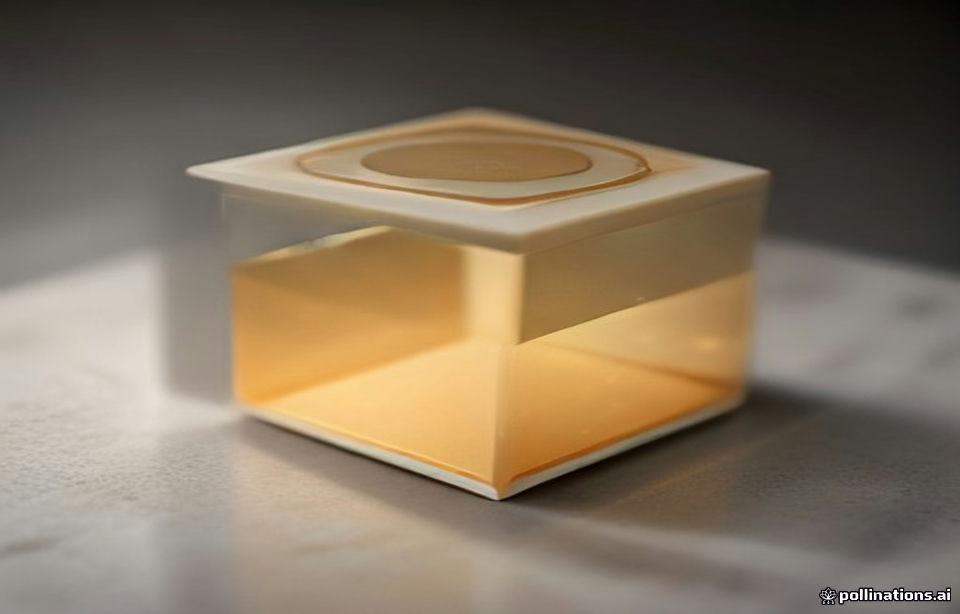
“On packaging” at the flagship consumer-electronics level means a 2-piece rigid setup box (telescope lid over base) laminated on 1200-1500gsm high-density grayboard, wrapped in 120-157gsm soft-touch or art paper, with a molded fiber tray, foil stamping, and plastic-free soy-ink decoration. This teardown reverse-engineers the full BOM and shows procurement teams how to hit 80% of the same perceived quality at 40-60% lower unit cost using TadaPack’s wrapped-paperboard constructions and zero-tooling CAD sampling.
What Flagship-Grade Packaging Actually Is and Why It Matters to Procurement
Premium unboxing packaging in 2026 has become a procurement-relevant cost center, not a marketing afterthought: EU PPWR (Regulation (EU) 2024/1991) recyclability mandates and Amazon FBA dimensional-weight fees now directly penalize over-built or plastic-laminated constructions. When buyers ask “on packaging” — what premium packaging is actually made of — the answer is an engineered laminate system: a rigid structural core (grayboard or chipboard), a printed decorative wrap, an adhesive interface, and a cushioning insert, each with its own GSM, caliper, and compliance standard.
For D2C brands shipping 500g-3kg products, this construction class matters because it must simultaneously survive ISTA 3A General Simulation drop and vibration sequences, present a controlled-resistance lid kinematics, and pass recyclability screening under FTC Green Guides (16 CFR Part 260) and EU Directive 94/62/EC Annex II heavy-metal limits.
Material and Layer-by-Layer Reverse-Engineering Specification
The table below documents the typical material BOM recovered from flagship 2-piece rigid teardowns. All values are presented as typical engineering design ranges (hypothetical reference values for manufacturing design), conditioned per ISO 186 paper and board conditioning at 23°C ± 1°C, 50% ± 2% RH.
| Component / Layer | Substrate Material | Caliper / Basis Weight (GSM) | Finishing & Surface Treatment | Governing Standard / Compliance |
|---|---|---|---|---|
| Structural core (lid + base) | High-density laminated grayboard/chipboard | 1.4-2.2mm caliper; 1200-1500 GSM equivalent | V-groove or score-and-wrap corners, ±0.2mm groove tolerance | TAPPI T411 / TAPPI T810 |
| Outer decorative wrap | Soft-touch specialty or double-coated art paper | 120-157 GSM | Matte soft-touch lamination, hot-foil logo (silver/gold), blind deboss | FTC Green Guides 16 CFR Part 260 |
| Adhesive layer | Cold-glue PVA or hot-melt EVA | 15-30 g/m² wet coat | Full-area lamination; 180° peel without fiber tear = failure | ASTM D903 (peel, reference method) |
| Interior insert | Molded bagasse fiber tray (plastic-free builds) | 2.0-3.0mm wall; ~250-350 GSM formed | Natural slurry, optional white topcoat (PFAS-free barrier) | EU Directive 94/62/EC Annex II |
| Decoration inks | Soy/vegetable-based offset inks | Zero-plastic ink system | Single-pass CMYK + 1 spot for wrap | ISO 186 conditioning for print testing |
The signature engineering detail is the V-grooved corner: instead of a scored fold, the grayboard is routed with a V-notch and wrapped, producing a razor-sharp 90° edge with ±0.2mm tolerance. This is the single biggest visual differentiator between a $0.90 mass-market box and a $3.50 flagship box — and it is fully replicable on standard rigid-box lines.
Q: If the McKee formula can derive BCT from ECT, why do premium rigid-box POs still mandate grayboard burst testing (TAPPI T810)?
A: Direct answer: because wrapped rigid boxes are not corrugated — McKee is derived for combined corrugated board and is dimensionally invalid for laminated grayboard. Underlying reason: grayboard strength is governed by its layered laminate integrity and burst resistance, not flute geometry, so procurement mandates TAPPI T810 Mullen burst as the proxy for wrap-lamination robustness. Practical recommendation: specify both TAPPI T810 burst and TAPPI T411 caliper on the PO, and add ASTM D642 compressive resistance on the finished box assembly — the glue joint, not the board, is usually the true weak link.
Unboxing Kinematics: Lid Friction, Vacuum Release, and Drop Protection
The flagship unboxing feel is engineered, not accidental. Three physical mechanisms define it:
1. Controlled lid friction. The telescope lid’s inner clearance is held at roughly 0.3-0.6mm per side over the base wall. Below 0.2mm the lid binds or tears the wrap; above 1.0mm the box feels loose and the lid can slide off during ISTA 3A inclined-impact sequences. Premium builds tune wrap paper thickness so friction decay over 50 open/close cycles stays within acceptable band (typical design target: consistent pull-off resistance, no visible wrap delamination).
2. Vacuum release (suction) control. When a snug lid lifts over a product tray, trapped air creates negative pressure that yanks the insert upward — the classic “tray jump” defect. Flagship designs solve this with pinhole vents (0.8-1.2mm diameter, typically two holes in the base floor near the tray edge), releasing vacuum over roughly a 3-second controlled descent rather than an abrupt pop. Small-scale brands that skip venting see 8-15% higher tray-scratch returns in humid climates where the seal tightens.
3. Drop energy management. Under ISTA 3A General Simulation, the pack must survive defined drop shock sequences; the molded pulp tray, not the rigid shell, absorbs impact energy. Typical design targets (hypothetical worked example): a 500g product in a 2.5mm bagasse tray with 3-5mm wall clearance per side absorbs a 760mm flat-drop and edge drops without product scuffing, verified per ASTM D4169 Distribution Cycle schedules for parcel networks.
Where This Construction Class Is Used and What It Must Withstand
2-piece rigid setups with molded inserts dominate five verticals: consumer electronics, premium beauty, spirits/wine gift packs, jewelry, and D2C apparel sets. In every case the governing constraints are identical — compressive stack strength in e-commerce master cases (verified per ASTM D642), Cobb 60 water absorption held below ~35 g/m² on the wrap to prevent transit delamination of the adhesive interface during ocean freight, and plastic-free composition to satisfy 2026-era PPWR recyclability declarations. Brands shipping into FBA networks must additionally check that the rigid box plus master carton (typically ECT-32 minimum, ECT-44 for >20kg master cases) clears Amazon’s dimensional-weight thresholds — often the deciding factor between a 1.4mm and 2.0mm grayboard spec.
Verification checklist before releasing a production PO (typical industrial SOP):
Step 1: Condition all substrates 24h at 23°C ± 1°C, 50% RH per ISO 186; record TAPPI T411 caliper on 10 board samples, tolerance ±0.1mm.
Step 2: Verify V-groove depth and wrap registration on 5 sample boxes; die registration must hold ±0.15mm, groove depth 60-70% of board caliper.
Step 3: Run ASTM D642 compression on 3 finished units and ISTA 3A drop sequence on 1 packed unit per SKU revision; document tray clearance and vent performance.
Step 4: Cobb 60 test the wrap stock; reject lots above 35 g/m² absorption, and confirm adhesive peel shows fiber tear (not clean release) per ASTM D903 reference method.
Replicating the Unboxing Luxury at 40-60% Lower Unit Cost
An OEM flagship 2-piece rigid box with foil stamping, soft-touch lamination, and molded tray typically lands in the $2.80-$4.20/unit range at 10,000 units (hypothetical reference benchmark). Scaling brands can capture 80%+ of the same perceived quality with four substitutions:
- Board downgrade with retained V-groove: 1200gsm grayboard instead of 1500gsm saves 15-20% on the structural core with no visible change at 1.4mm caliper.
- Swap soft-touch lamination for soft-touch coated paper (120-135gsm): eliminates the laminate film, improves recyclability per FTC Green Guides substantiation, and cuts 10-15% of wrap cost.
- Replace hot foil with high-build screen or blind deboss: saves tooling and per-unit foil cost while preserving tactile branding; reserve foil for one logo element only.
- CAD-sampled molded pulp instead of PET thermoforms: bagasse trays are compostable, PPWR-friendly, and tooling is amortized quickly above 5,000 units.
Net effect in typical worked examples: 40-60% unit-cost reduction while keeping the rigid feel, V-groove edges, and vented-lid kinematics. TadaPack provides free structural design consultation, zero-tooling CAD sampling, and interactive BOM calculators at tadapack.com/tools — use the packaging calculator to model grayboard GSM, wrap weight, and unit cost trade-offs before committing to tooling.
Common Defects and How to Prevent Them
Grayboard warping after wrapping: caused by moisture differential between board and wrap (wrap shrinks as adhesive dries). Prevent by matching wrap and board moisture content, using balanced two-side lamination, and holding warehouse RH at 45-55%. Warp exceeding 1.5mm over 300mm rejects at retail level.
Adhesive debonding during ocean transit: container-sweat cycles across Pacific/Atlantic routes push surface RH past 80%, attacking PVA bonds at the wrap-board interface. Countermeasures: specify higher-solids PVA or crosslinking adhesive, hold Cobb 60 on the wrap below 35 g/m², and add desiccant + poly-lined master cartons for 30-day+ ocean legs. Verify with a 72h 40°C/90% RH climate chamber cycle before first shipment.
Buyer Questions on Premium Rigid Packaging
What grayboard thickness should I choose for a 500g consumer electronics product?
For units under 800g, 1.4-1.6mm laminated grayboard (≈1200-1400 GSM) is the typical engineering choice, provided the molded tray carries the impact load and the master carton is ECT-32 minimum per ASTM D642 validation. Go to 2.0mm only for products above 1.5kg or retail-shelf stack heights exceeding 300mm.
Do molded bagasse trays really protect as well as PET thermoforms?
For products up to roughly 1kg with 3-5mm wall clearance, bagasse trays meeting the same drop profile under ISTA 3A perform comparably in typical designs; above that, hybrid pulp-plus-fiber-flute builds are recommended. Bagasse also simplifies PPWR and FTC Green Guides recyclability claims since it is mono-material with the box.
How do I stop the lid from sliding off during shipping?
Tighten the telescope clearance to 0.3-0.6mm per side, add a small friction fit feature (an internal paper wrap step or adhesive-backed fabric pad), and validate with the ISTA 3A inclined-impact sequence. Avoid over-tightening below 0.2mm, which causes wrap tearing on repeated pulls.
What is the minimum order quantity for V-groove rigid boxes with soft-touch wrap?
Typical industry MOQs start around 1,000-3,000 units for custom V-groove constructions; TadaPack supports short-run prototyping and CAD sampling below standard MOQ so brands can validate structure and fit before committing to volume tooling — request a quote via tadapack.com.
Is soft-touch lamination recyclable under 2026 regulations?
Thin soft-touch film lamination can complicate repulpability declarations; the safer route per FTC Green Guides (16 CFR Part 260) and EU PPWR (Regulation (EU) 2024/1991) is soft-touch coated paper or water-based coating, which keeps the pack mono-material and recyclability claims substantiable.
Recommended Engineering Reading
[TOOLS] Featured Engineering & Calculation Tools
Explore 70+ Packaging Tools ➔CBM Volume & Freight Dim-Weight Calculator
Calculate cubic meters & dimensional weight to minimize freight costs and avoid FBA size tier penalties.Mailer Box Area & Dieline Size Calculator
Instant flat dieline dimensions, material consumption, and sheet nesting for custom D2C mailer boxes.
